
GitHub debuts Copilot Fusion, a new model selection & orchestration system that beats Claude Code for half the API cost
The New Stack Meredith Shubel
GitHub launched Copilot Fusion, which picks and chains models for coding work. GitHub says it matches Claude Code on benchmark results for about half the API cost.
Based on reporting by The New Stack, Meredith Shubel — read the original for the full story.
Summary, retelling and take written by AI under human oversight; images are AI-generated illustrations. How we work · Report an error
GitHub used its flagship event in San Francisco to roll out Copilot Fusion, a new system meant to take model choice out of developers’ hands. Instead of making people decide which model to use for each coding task, Fusion handles selection and orchestration itself. GitHub says the idea is to let developers focus on the direction of the work, not on babysitting the model menu.
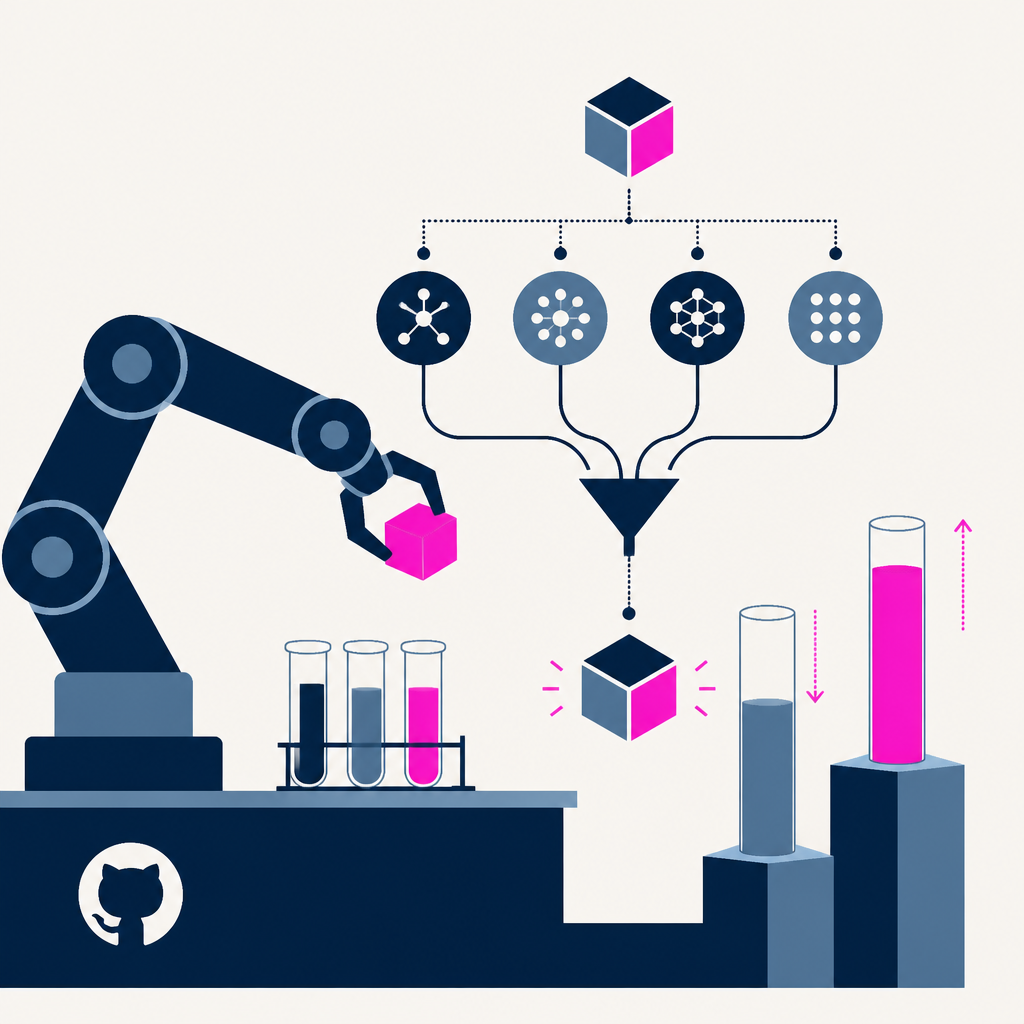
The system folds together two earlier pieces: the runtime orchestration from Project HydraFusion and Copilot Auto Model Selection. That gives GitHub a single layer that can route tasks across models, whether the job is reasoning, code generation, debugging, or tool use. Fusion can run as one model end to end, but it can also use a cascading setup where a quality check decides whether to accept an answer or escalate it, or a critique setup where one model reviews another.
GitHub is also giving users some control over how hard the system works. Copilot Fusion comes in Standard for everyday coding, High for more demanding tasks, and Max for the toughest work. Enterprise admins get another layer of control, including the ability to limit which models Fusion can pick, change policy settings per model, and decide whether Fusion is the default for Copilot users.
GitHub says the payoff is lower friction and better efficiency. In its own reporting on the Artificial Analysis Coding Agent Index, Copilot Fusion Max scored 60, within two points of Claude Code with Opus 5.5 Max, while using about half the average API cost per task, about half as many tokens, and about 40% less time per task. GitHub says the newer system improves on Project HydraFusion, which launched as a research preview in September 2026, and it’s already being framed as part of a broader push to make GitHub “the most comprehensive software delivery system in the world.”
My take — AI-written commentary, not fact-checked reporting
This is the direction every copilot product is headed: fewer human choices, more invisible routing, and a lot of confidence that the vendor knows best. Sometimes that’s sensible. Sometimes it’s just a fancy way to hide model sprawl behind a cleaner button. The real tell is whether enterprises keep the controls GitHub says they have, or hand them over because admin panels are always less exciting than savings claims.
Read more about this at: The New Stack
Related stories
 GitHub Introduces Project HydraFusion: Runtime Multi-Model Orchestration That Builds a Workflow Per Coding Task in Copilot CLI
MarkTechPost · 1 month ago ·
49
Copilot tops GitHub’s own AI code review benchmark. An independent one tells a different story.
The New Stack · 3 weeks ago ·
22
Microsoft's GitHub shifts to metered AI billing amid cost crisis
The Register · 6 months ago ·
54