Frontline Development in Defense Sector: Sakana AI Software Engineer Interview
Sakana AI ● Covered by 4 sources
Sakana AI shared an interview with a software engineer building AI systems for Japan's defense sector. It's a rare look at how AI coding work actually plugs into military command systems, not just chatbots.
Based on reporting by Sakana AI — read the original for the full story.
Summary, retelling and take written by AI under human oversight; images are AI-generated illustrations. How we work · Report an error
Sakana AI, the Tokyo-based AI lab known for its nature-inspired collective intelligence research, has spent 2025 pushing its tech into unglamorous but consequential territory: finance and defense. To put a human face on that shift, the company published an interview with Dai Ito, a software engineer who spent nearly a decade at LINE Yahoo before joining Sakana's Applied Team to work on defense products.
Ito's background is classic large-scale systems work. He built the metadata infrastructure for GYAO!, led backend modernization for Yahoo Movies, ran an ultra-low-latency C++ ad search engine, and eventually moved into real-time ML infrastructure. He credits Yahoo's internal transfer system for letting him hop across technical domains, but says he eventually wanted impact beyond a private company's web services.
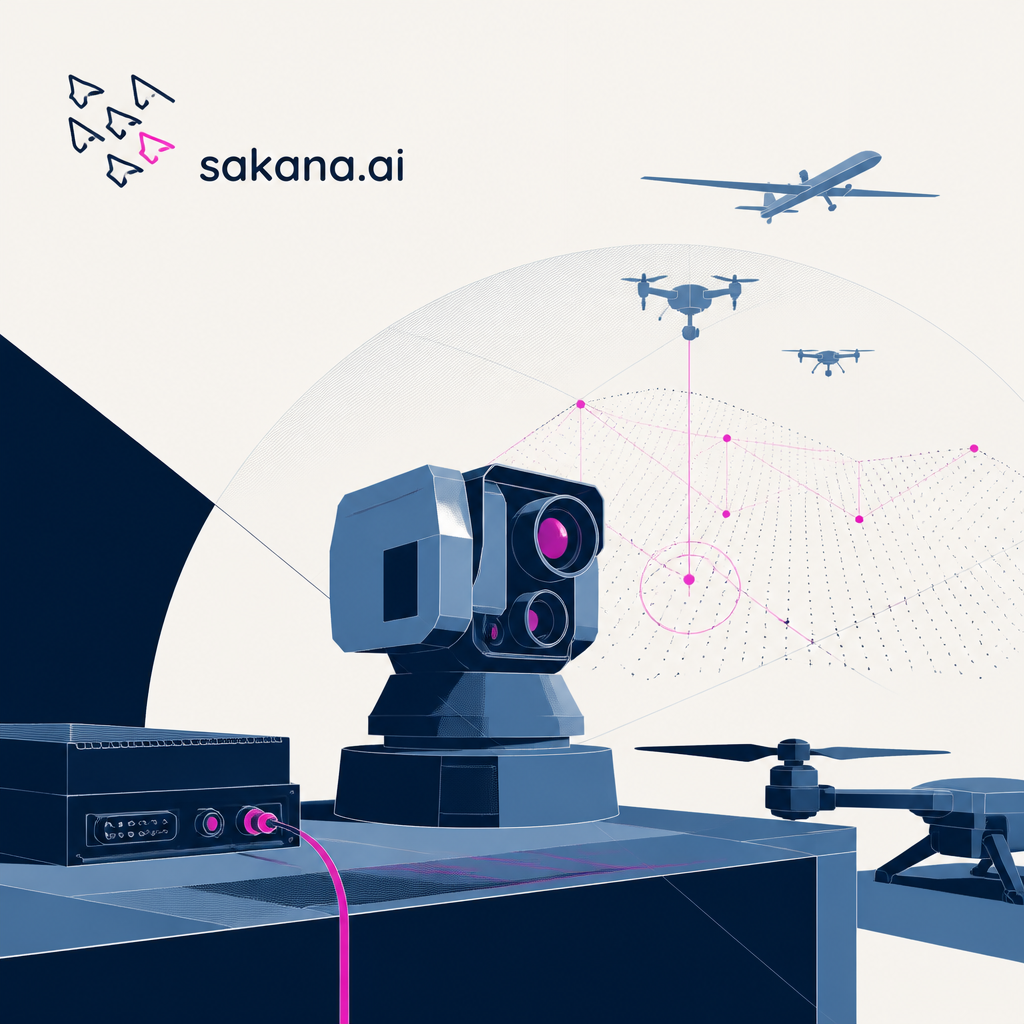
What pulled him to Sakana AI, oddly enough, wasn't the research reputation. He initially thought of it as some mysterious AI lab. A casual chat with a colleague named Iwai revealed the finance and defense products, and a conversation with CEO David Ha sealed it, mostly because Ha was candid about product roadmaps and the company's open-endedness philosophy. Now Ito works on two defense-adjacent problems: detecting disinformation on social platforms, some of it done jointly with Yomiuri Shimbun to visualize cognitive warfare campaigns, and building command-and-control systems that fuse drone and battlefield data to speed up decision-making.
The stack is unglamorous by design. Python backends, TypeScript and Next.js for web UI, Kotlin for Android, mise for tooling standardization. But the infrastructure splits hard when systems need to run in DDIL environments, meaning degraded, disrupted, intermittent, low-bandwidth conditions where a normal cloud setup falls apart. Generative AI is woven into the daily workflow for coding and even goal-setting, but Ito is blunt that human oversight has to check every output, because in his words the team's deliverables connect directly to the lives of Japan's Self-Defense Force personnel. That's not a metaphor for him. It's the actual stakes of shipping code in this space.
The team itself is still small and unstructured, mixing engineers with former Ministry of Defense and Foreign Affairs staff, and Ito admits he started with almost no knowledge of ground, sea, or air defense doctrine. He frames the lack of rigid role boundaries between research and engineering as an advantage for someone new, letting him contribute fast despite the learning curve.
My take — AI-written commentary, not fact-checked reporting
What strikes me here is how normal this all sounds until the stakes suddenly aren't normal at all, and that gap is exactly why defense-adjacent AI work deserves more scrutiny than a feel-good recruiting interview can offer. I'm generally pro building sovereign tech capacity in allied democracies rather than leaving it to a handful of American primes, but a company built on open-ended research culture pivoting hard into command-and-control systems is a real values test, not just a hiring pitch, and I'd want to hear a lot more about the guardrails than about the lunch subsidy.
Read more about this at: Sakana AI