
Forget robots on assembly lines. Foundational Industries wants AI to run the entire factory
Fortune Lily Mae Lazarus
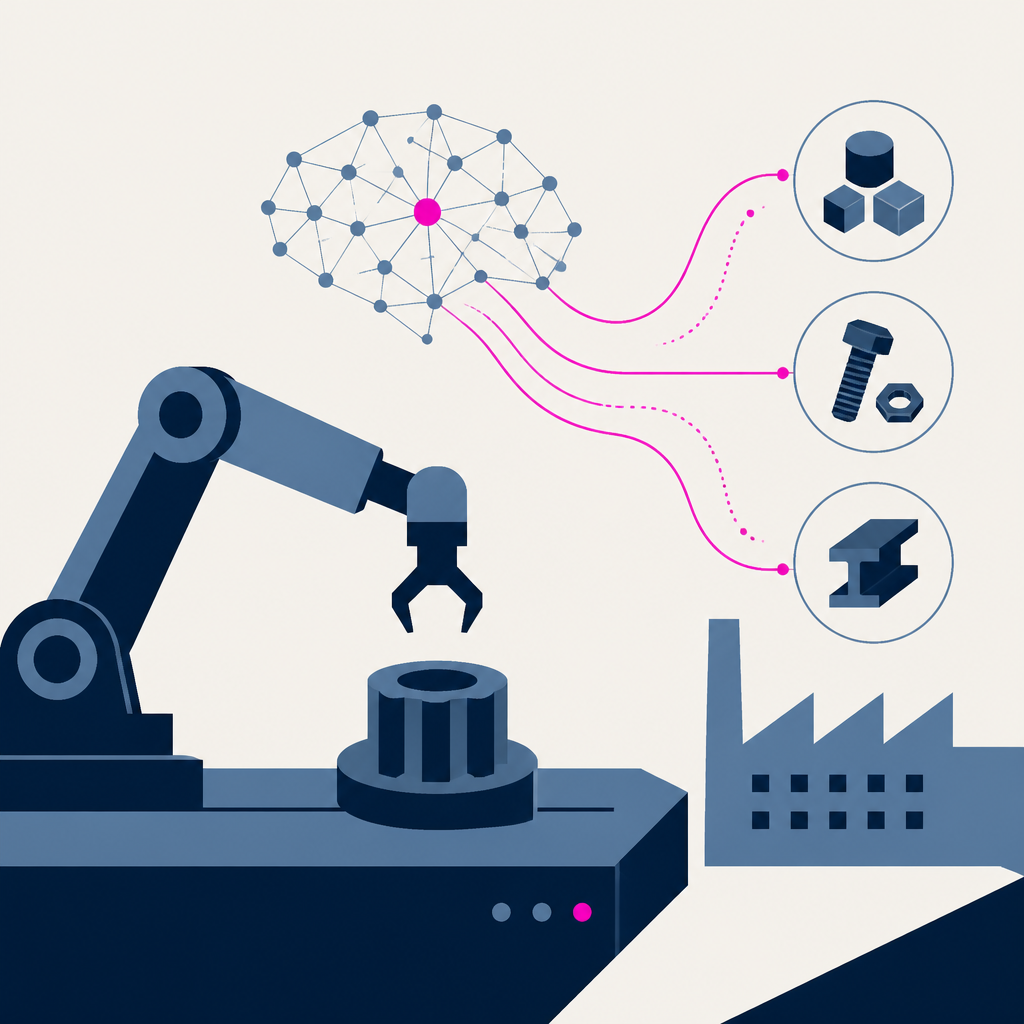
A startup called Foundational Industries raised $25M to build factories where AI runs everything, not just robot arms bolted onto old lines. Founder Jonathan Winer says the US is copying China's playbook when it should skip that fight entirely.
Based on reporting by Fortune, Lily Mae Lazarus — read the original for the full story.
Summary, retelling and take written by AI under human oversight; images are AI-generated illustrations. How we work · Report an error
Jonathan Winer has a theory that's a little uncomfortable for anyone who thinks reshoring manufacturing just means installing more robots. His startup, Foundational Industries, just closed a $25 million seed round led by BoxGroup and Zigg Ventures, with Abstract Ventures, Adverb Ventures, Buckley Ventures, and Offline Ventures also writing checks. The pitch isn't automation as an add-on. It's factories designed from the ground up to be run by software, starting with something unglamorous but timely: custom rack enclosures for data-center hardware.
Winer spent six years at Alphabet's Sidewalk Infrastructure Partners deploying more than $1 billion in capital, so he's not new to big infrastructure bets. But this seed round isn't about building a giant factory floor yet. He told Fortune the money funds a minimum viable product, and that Foundational has already built the entire factory in software using emulators before touching a single piece of steel. The first customers are data-center developers, neoclouds, and chipmakers who need enclosures built for new AI silicon running at different voltages and cooling demands than anything on the market before. Foundational wouldn't name names.
The more interesting part of Winer's argument is about China, and it's a pushback on a comfortable Washington narrative. The assumption there is that Chinese manufacturing wins on cheap labor and imitation. Winer says that's stale thinking. He describes Chinese factories as some of the most automated in the world, increasingly running homegrown industrial automation rather than just imported gear, backed by a dense industrial ecosystem that gets new products designed and launched fast. China has put over $1 trillion into advanced manufacturing over the past decade with heavy state subsidy behind it.
And that's exactly why Winer thinks copying China head-on is a losing move. The U.S. doesn't have the workforce or skill base to replicate that density, he argues, and even if it did, the economics wouldn't compete. So instead of chasing China's model, Foundational is betting on two things America still has: strong AI models and researchers, plus far more compute. Winer says that combination lets his system take a customer's product intent and spit out a bill of materials and manufacturing process almost instantly, work that used to take months by hand.
There's also a structural bet buried in here. Winer thinks China's automated factories, despite their sophistication, are still built on an older automation model that needs constant utilization to justify the subsidies keeping them running. He put it bluntly: they need to feed the beast. Foundational's wager is that AI-native factories get cheaper and faster with every new one built, which is a very different cost curve than a system that has to stay busy to make sense on paper.
My take — AI-written commentary, not fact-checked reporting
Betting that America can out-software China's manufacturing base instead of out-automating it is a bold call, and Winer's China argument is more honest than most of what passes for industrial policy talk in Washington. But a $25 million seed round buying an emulator and a rack-enclosure customer is a long way from proving factories can be run by AI at any real scale, and the piece is careful never to say Foundational has shipped a physical product yet. Worth watching, not worth believing yet.
Read more about this at: Fortune
Related stories
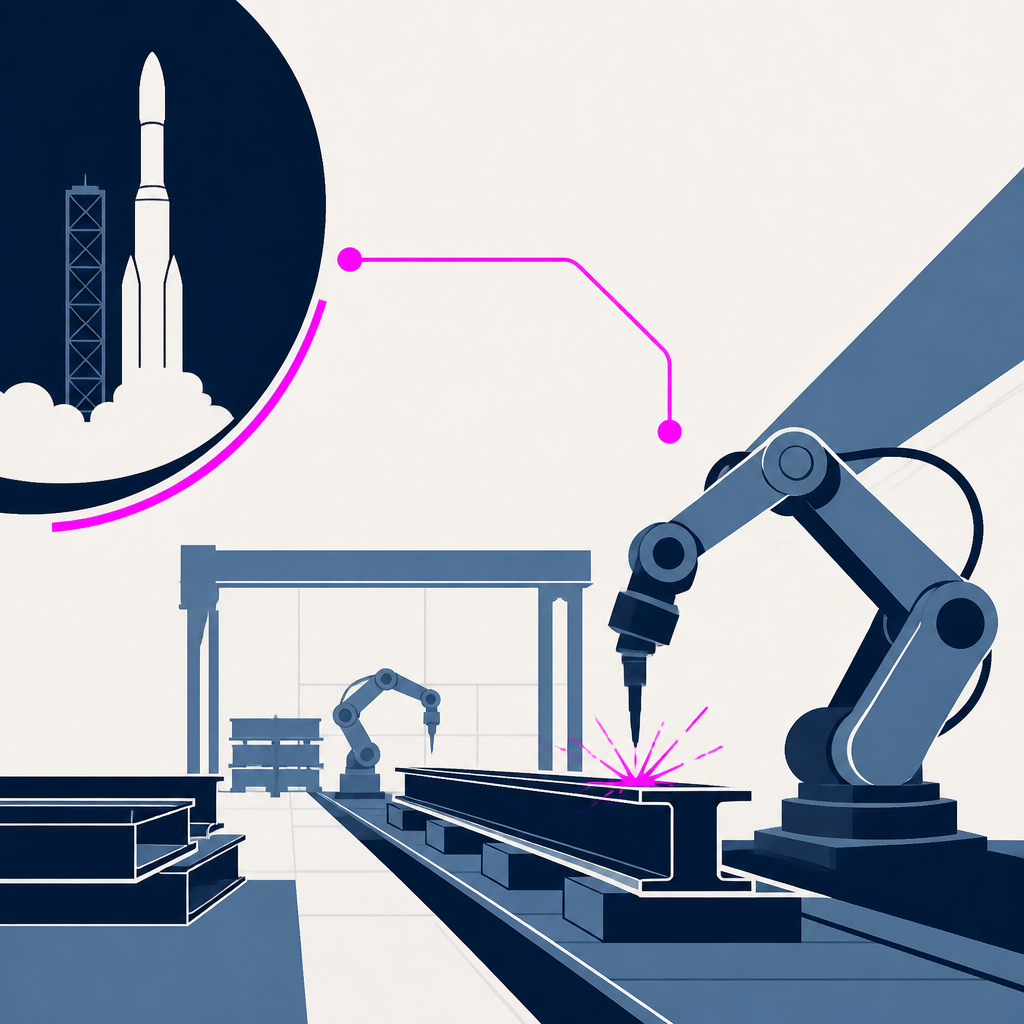 Former SpaceX engineers are building a robotic factory for making steel parts
Ars Technica · 1 month ago ·
33
OpenAI and Foxconn collaborate to strengthen U.S. manufacturing across the AI supply chain
OpenAI · 10 months ago ·
50
Factory jumps to $5B in 5 months with $200M for its AI ‘Droids’
Tech Funding News · 1 week ago ·
46
Former SpaceX engineers are building a robotic factory for making steel parts
Ars Technica · 1 month ago ·
33
OpenAI and Foxconn collaborate to strengthen U.S. manufacturing across the AI supply chain
OpenAI · 10 months ago ·
50
Factory jumps to $5B in 5 months with $200M for its AI ‘Droids’
Tech Funding News · 1 week ago ·
46