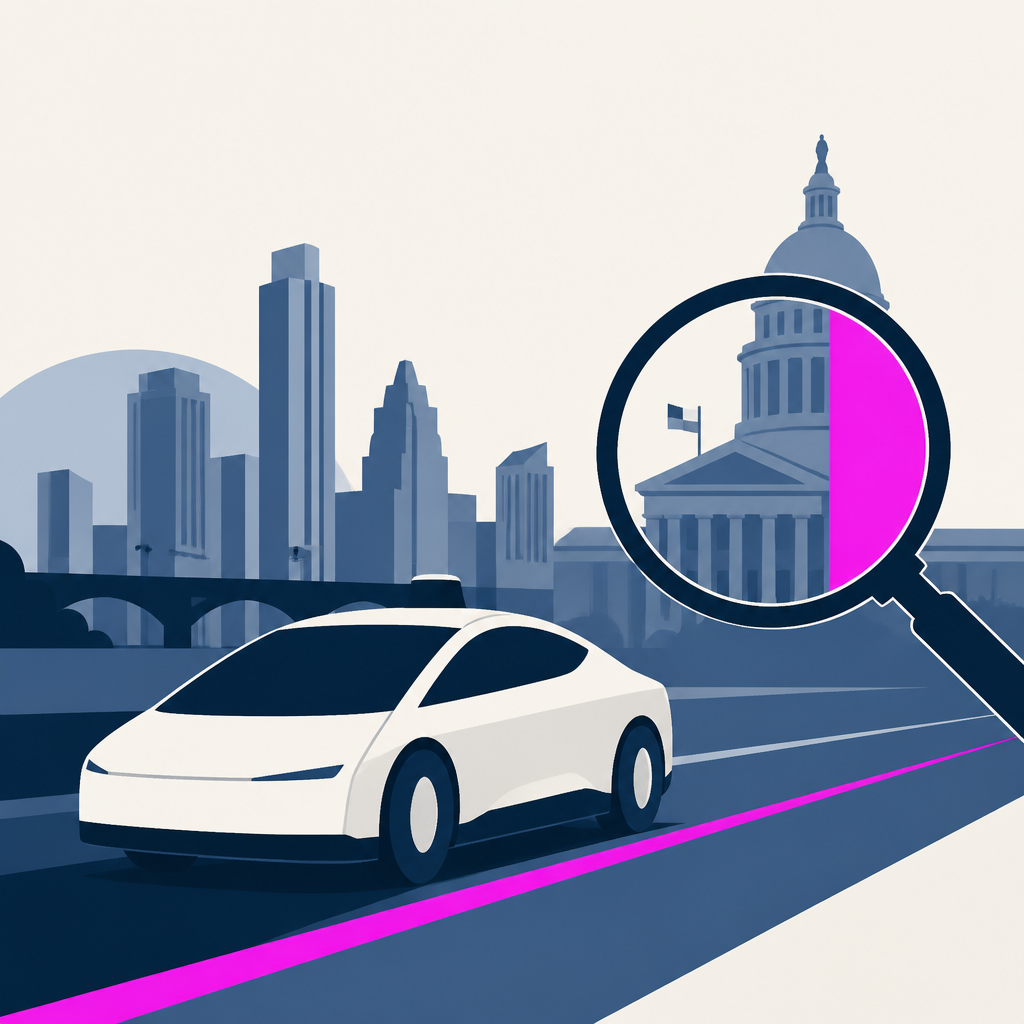
Feds want robotaxis to signal ‘I’m driving’ with cyan-colored lights
The Verge Andrew J. Hawkins
The U.S. wants robotaxis to use cyan lights to show nobody’s driving. It’s a rare federal standard for self-driving cars, not a zoo of custom signals.
Based on reporting by The Verge, Andrew J. Hawkins — read the original for the full story.
Summary, retelling and take written by AI under human oversight; images are AI-generated illustrations. How we work · Report an error
After years of arguing over how a car with nobody in the driver’s seat should announce itself, federal regulators have picked a color: cyan. The National Highway Traffic Safety Administration has proposed changes to Federal Motor Vehicle Safety Standard No. 108 that would update the rules for autonomous vehicles and make the signal consistent instead of leaving it up to each company.
The change would add cyan-colored marker lamps for robotaxis and other driverless vehicles. The point is to make these cars clearly stand out and say, in effect, that they’re operating on their own. Regulators are trying to do two things at once here: remove some of the old rules that don’t fit human-free designs, while also setting a common visual language for the road.
That matters because the industry has spent years tossing around different ideas for the same basic problem. Flashing text, audio alerts, special lights — all of it sounds clever until you imagine a street full of competing versions. Cyan is the federal answer, at least for now.
The proposal is still a proposal. But if it sticks, autonomous vehicles won’t be left improvising their own little light shows every time they roll out without a human at the wheel.
My take — AI-written commentary, not fact-checked reporting
This is the right kind of boring regulation: one color, one signal, no startup theatrics. The self-driving crowd loves pretending every problem needs a new interface; the government just said no, pick cyan and move on. That’s probably the healthiest thing anyone has done for robotaxis in a while.
Read more about this at: The Verge