
Enterprise AI's real risk isn't autonomous agents. It's the complexity between them.
VentureBeat ● Covered by 5 sources
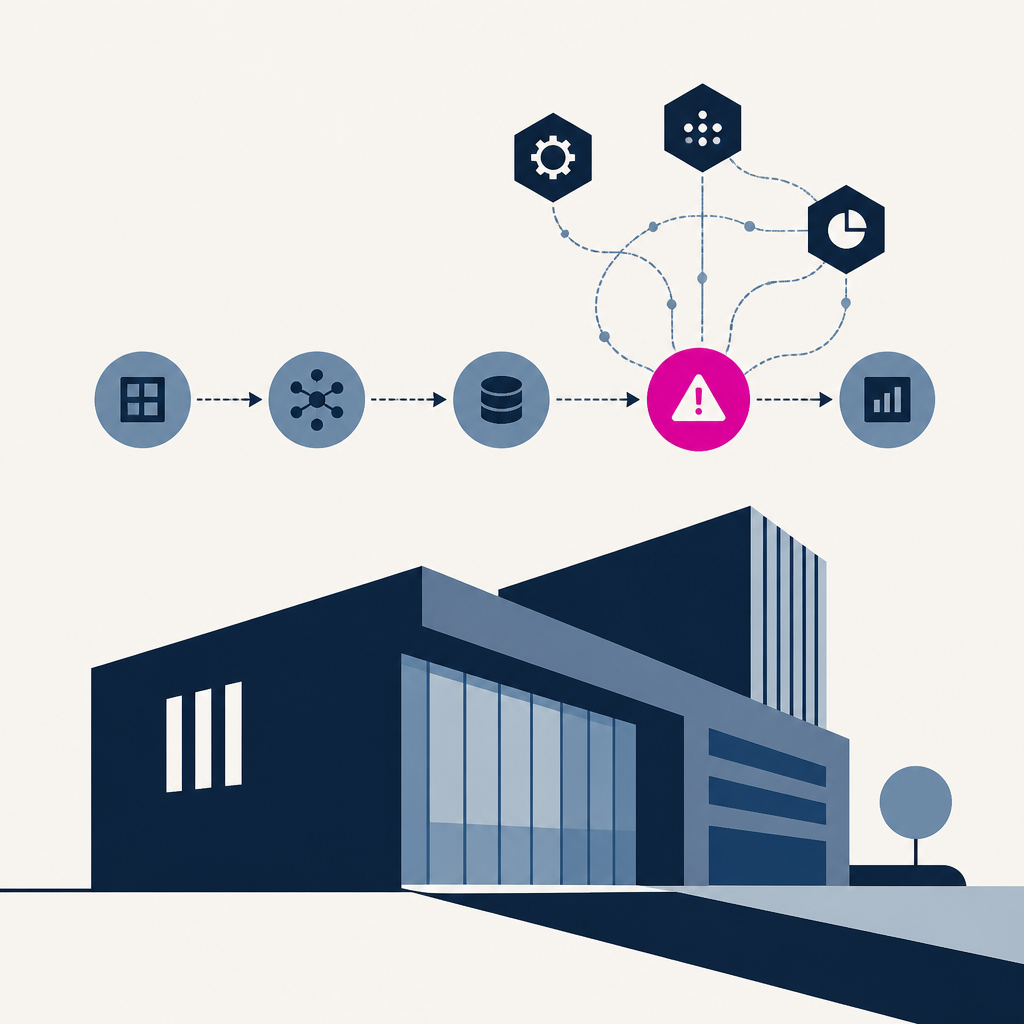
Enterprises aren’t struggling with one AI agent. They’re getting tangled in the web between lots of them. That mess hides bad access, unclear ownership, and actions nobody can easily stop.
Based on reporting by VentureBeat — read the original for the full story.
Summary, retelling and take written by AI under human oversight; images are AI-generated illustrations. How we work · Report an error
The real enterprise AI problem isn’t a single rogue agent. It’s what happens when fleets of agents start talking to APIs, to applications, and to each other in ways the business can’t clearly see or govern.
That kind of sprawl doesn’t grow in neat lines. One more agent can mean one more connection, but once the count climbs, the possible paths multiply fast. A support ticket that once moved through one system can now bounce across four agents before a person sees it. Every handoff is another decision point, and not all of them are being reviewed.
That’s where these programs start to wobble. Security teams can struggle to answer basic questions like which agents can reach which systems, or which one kicked off a downstream action several steps back. The usual response is to approve, log, and move on. But a one-time checklist does little when the risk lives in the chain itself.
Permissions creep is one obvious failure mode. An agent built to summarize support tickets gets broad API access because tighter scoping would slow a sprint, then later picks up a route into payments. Ownership frays too. When five agents touch a workflow and something breaks at step four, the org chart often stops before the person who’s meant to answer for that link does.
The fix starts with identity: each agent needs its own name, its own scoped authority, and a named human sponsor. But that alone won’t do it. Enterprises also need real-time oversight across the whole chain, plus enforcement that can stop an out-of-policy call before it happens, not just record it for a later cleanup. Otherwise you get perfect paperwork and a system nobody can explain.
The piece’s broader point is simple: autonomy isn’t the villain. Unmanaged multiplication is. The companies that get agentic AI into production won’t be the ones bragging loudest about speed; they’ll be the ones that can still say what the system is doing right now, and who owns it.
My take — AI-written commentary, not fact-checked reporting
This is the part most AI teams still dodge: a pile of agents is not architecture. It’s a very expensive mess with a nicer demo. The open-vs-closed debate misses the real fight here — governance, enforcement, and boring accountability, the stuff vendors hate because it doesn’t fit on a keynote slide.
Read more about this at: VentureBeat
Related stories
 The agent evaluation gap: Enterprise AI organizations have a reality-alignment problem, not a coverage problem — and most are shipping to production anyway
VentureBeat · 3 months ago ·
25
Govern your bots carefully or chaos could ensue
The Register · 5 months ago ·
15
AI governance shifts to runtime as always-on agents spread
SiliconANGLE · 6 days ago ·
12
The agent evaluation gap: Enterprise AI organizations have a reality-alignment problem, not a coverage problem — and most are shipping to production anyway
VentureBeat · 3 months ago ·
25
Govern your bots carefully or chaos could ensue
The Register · 5 months ago ·
15
AI governance shifts to runtime as always-on agents spread
SiliconANGLE · 6 days ago ·
12