🔮 Does AI make you dumb? And why our forecasts suck #576
Exponential View Azeem Azhar ● Covered by 3 sources
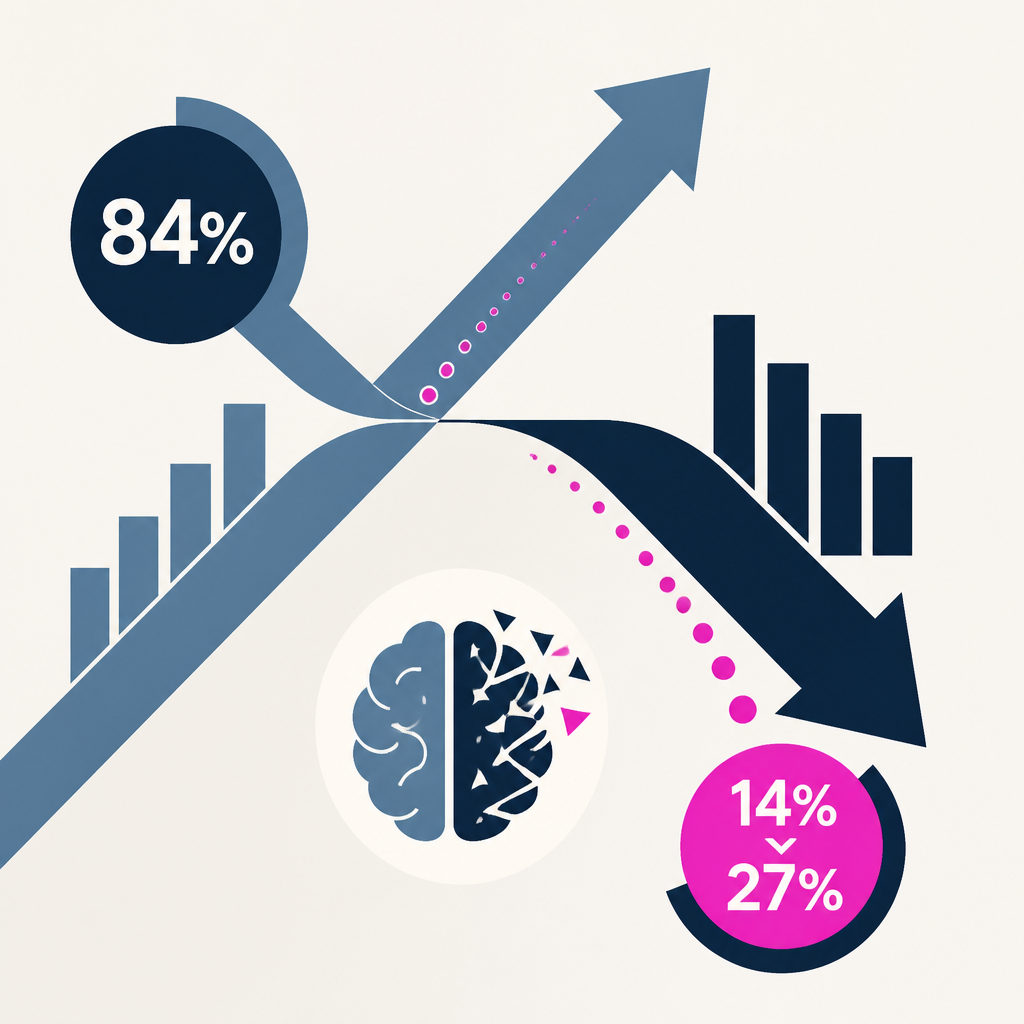
AI makes individual workers faster, but companies aren't seeing the gains multiply up. One exec put it bluntly: 1+1+1+1=1.5.
Based on reporting by Exponential View, Azeem Azhar — read the original for the full story.
Summary, retelling and take written by AI under human oversight; images are AI-generated illustrations. How we work · Report an error
Azeem Azhar spent time recently with a senior executive at a major public tech company, someone overseeing roughly a thousand engineers, nearly all of whom now use Claude Code daily. Ask her whether AI has made her people faster, and she'll say yes without hesitation. Ask whether it's made her organization faster, and the answer gets murkier. Her own summary of the situation, delivered over tea, was blunt: "1+1+1+1=1.5."
That little equation is the puzzle Azhar and Nathan Warren tried to unpack in a new piece for Exponential View this week. Individual productivity with AI tools is measurably real. Engineers write code faster, draft documents faster, research faster. But that speed isn't translating into proportional output at the company level, and the gap between personal gains and organizational gains is wide enough that executives are starting to notice and worry about it.
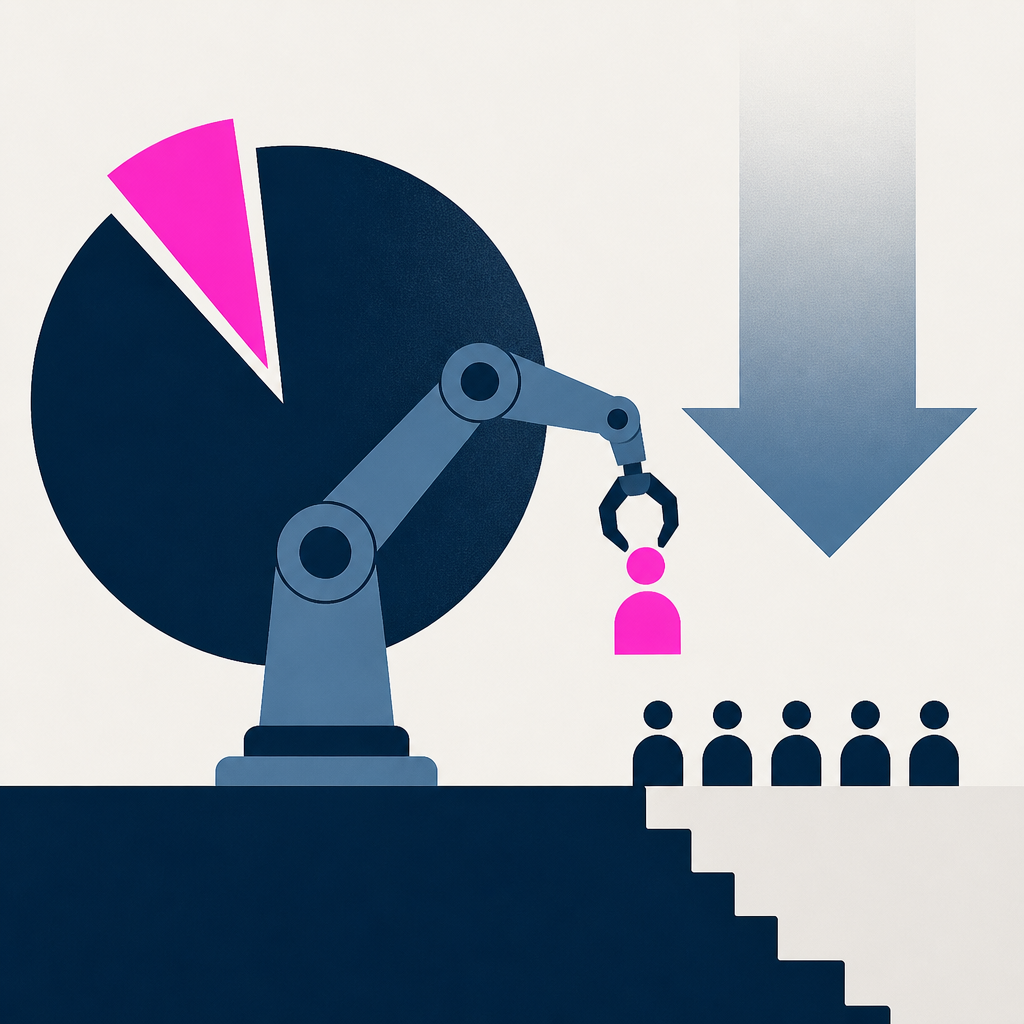
The explanation isn't mysterious once you say it out loud: organizations aren't just collections of individual tasks. They're bottlenecked by coordination, review cycles, decision-making chains, and dependencies between teams that don't get any faster just because one person's slice of the work does. If an engineer finishes a feature in half the time but still has to wait three days for a product review or a security sign-off, the org-level clock barely moves. Speeding up the fastest part of a pipeline does nothing if the pipeline's constraint sits somewhere else entirely.
Azhar and Warren frame this as a structural mismatch between where AI delivers value and where companies actually measure and reward value. Most firms built their processes, incentives, and management layers around a world where individual output was the scarce resource. Now individual output is cheap and abundant, but the surrounding scaffolding, the meetings, the approvals, the handoffs, hasn't been redesigned to match. The bottleneck moved, but the org chart didn't.
Which is really the uncomfortable takeaway here: throwing Claude Code at a thousand engineers doesn't automatically make the company a thousand times more capable, or even meaningfully more capable, if nothing else about how work moves through that company changes. The tools are ready. The org design mostly isn't.
My take — AI-written commentary, not fact-checked reporting
This tracks with something I've been saying for a while: the AI productivity story is almost entirely about individuals right now, and companies love to skip straight to the org-wide ROI slide without doing the unglamorous work of redesigning how decisions and approvals actually flow. Give a thousand engineers a superpower and bolt it onto a 1990s management structure, and you get exactly what that exec described. The firms that fix the scaffolding, not just the tooling, are the ones that'll actually see the multiplier.
Read more about this at: Exponential View