
COPD diagnosis is broken. TidalSense wants to fix it with 75 seconds of breathing
Tech.eu Cate Lawrence
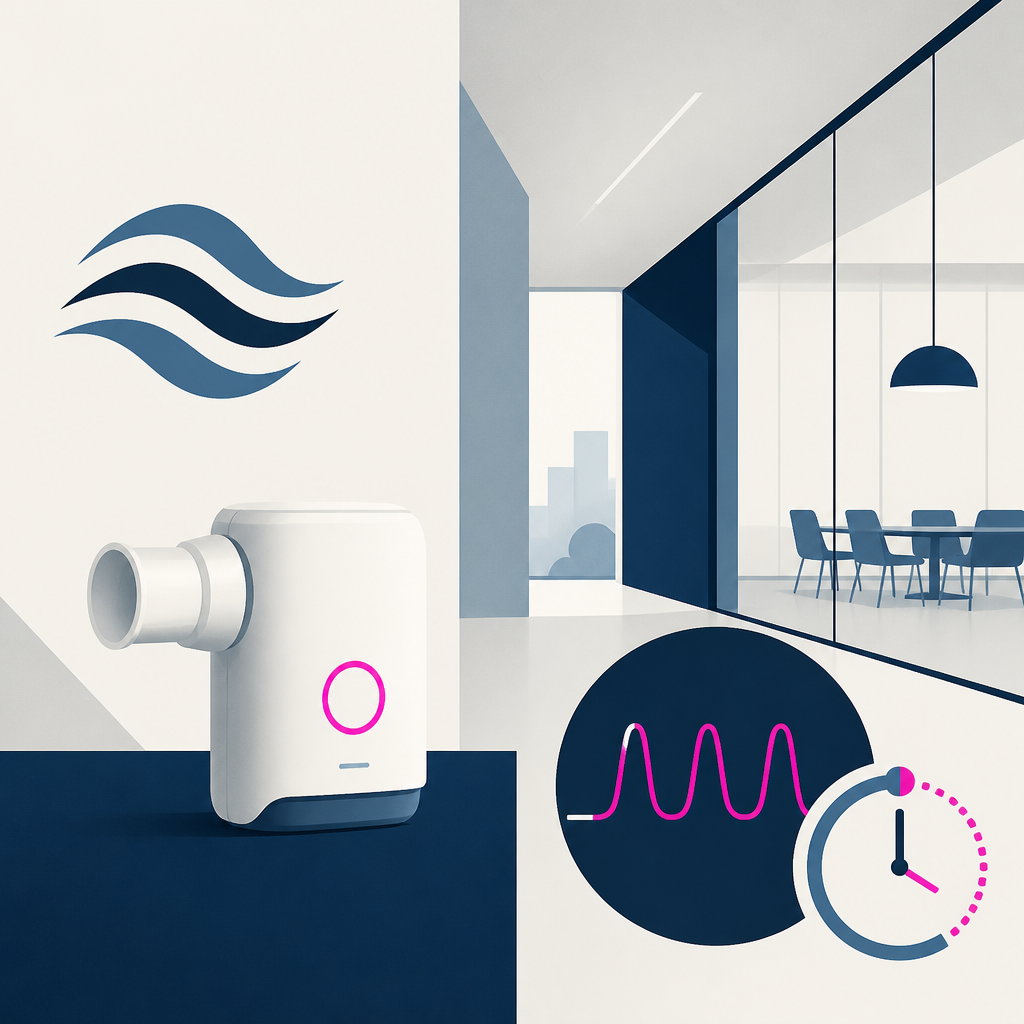
TidalSense says 75 seconds of breathing can spot COPD without spirometry. That could catch a lot of people who are missed until they land in hospital.
Based on reporting by Tech.eu, Cate Lawrence — read the original for the full story.
Summary, retelling and take written by AI under human oversight; images are AI-generated illustrations. How we work · Report an error
COPD is being missed, and TidalSense thinks the fix is to make diagnosis far simpler than the industry’s default. The UK has about 1.7 million people with COPD, and at least 600,000 more are waiting for a formal diagnosis. Too many only find out after they end up in hospital. A quarter of patients are diagnosed after their first admission, which is a brutal way to discover a lung disease.
The problem starts with spirometry, the standard lung-function test. It asks patients to force air out and follow instructions precisely. That rules out plenty of people in practice: some are too breathless, frail, or unable to make the seal the test requires. Patel also says clinicians can fall into a shortcut of treating smoking plus symptoms as COPD, which means non-smoking patients can get overlooked.
TidalSense’s answer is N-Tidal Diagnose. Instead of forced exhalation, patients breathe normally into a handheld device for 75 seconds. The system captures a CO₂ waveform, sends the data to the cloud, and uses signal processing and machine-learning models to classify the result. The whole thing is meant to be quick. The hardware warms up in around a minute, and the median test time comes in under five minutes. The result is available in the same appointment and can be exported into patient records.
The pitch is as much about workflow as medicine. TidalSense says any healthcare professional can be trained to run the test in 10 minutes, including healthcare assistants, pharmacy technicians, and paramedics. In NHS clinics already using it, appointments run 10 to 15 minutes, and Patel says the system is easier to use, maintain, and look after than spirometry. That matters because spirometry is not just awkward for patients; it also needs specialist staff, calibration, consumables, and time.
TidalSense has been around since 2013, and Patel says the company spent its first six years making sure the hardware and sensors were reliable in clinical settings before building the diagnostic layer on top. It is live in the East of England, with pilots in Wales and the South of England, plus a new deployment in Scotland. COPD is the first target, but asthma is next, especially in children, where Patel says diagnosis is still a mess.
My take — AI-written commentary, not fact-checked reporting
This is the kind of healthcare AI story that actually deserves the word “useful”: less magic, more removing dumb friction. A 75-second breathing test beats a heroic, specialist-heavy ritual that many patients can’t complete anyway. The bigger point is that medical tech wins when it fits the clinic, not when it demands applause from it.
Read more about this at: Tech.eu
Related stories
 UK healthtech challenger using AI to cut lung disease test time clinches $19M
Tech.eu · 2 months ago ·
24
CardioMirror: This Smart Mirror Knows Your Pulse, Breathing and Stress Level
Trending Topics · 1 month ago ·
50
UK healthtech challenger using AI to cut lung disease test time clinches $19M
Tech.eu · 2 months ago ·
24
CardioMirror: This Smart Mirror Knows Your Pulse, Breathing and Stress Level
Trending Topics · 1 month ago ·
50
 Teladoc’s SoloScribe drafts clinical notes and estimates vital signs via camera
ir.teladochealth.com · 1 week ago ·
3
Teladoc’s SoloScribe drafts clinical notes and estimates vital signs via camera
ir.teladochealth.com · 1 week ago ·
3