Anthropic Introduces Enterprise Frontier Safeguards (EFS): Zero-Data-Retention Privacy Plus Cross-Session Misuse Detection
MarkTechPost Michal Sutter ● Covered by 2 sources
Anthropic wants enterprise customers to keep prompts private and still catch misuse across sessions. The twist: monitoring data lives in the customer’s cloud, not Anthropic’s.
Based on reporting by MarkTechPost, Michal Sutter — read the original for the full story.
Summary, retelling and take written by AI under human oversight; images are AI-generated illustrations. How we work · Report an error
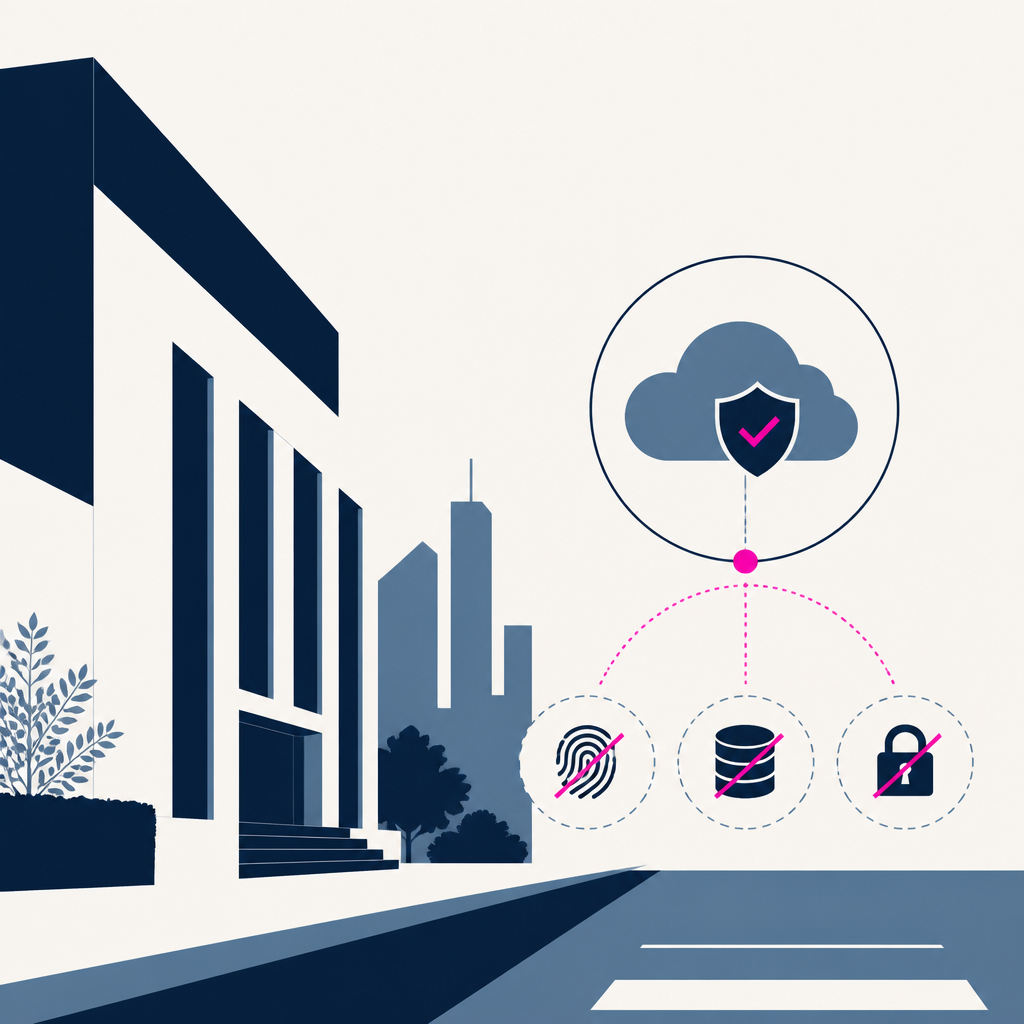
Enterprise AI has had a nasty little trade-off baked into it: either keep the data private, or keep enough of it to spot abuse. Anthropic says Enterprise Frontier Safeguards, or EFS, is meant to break that stalemate. The company’s pitch is simple enough. Monitoring data sits in cloud infrastructure controlled by the customer, while Anthropic’s systems still do the actual detection. Custody, encryption keys, and human review stay on the customer side.
That matters because the abuse Anthropic is worried about does not look like a single suspicious prompt. The company says the serious cases spread across multiple tasks, sessions, and accounts, including situations involving stolen or misappropriated enterprise credentials. A classifier that looks at one interaction and drops it immediately can miss that pattern entirely. So Anthropic is keeping a rolling window for detection, but moving the storage window into the customer’s own cloud account.
EFS is not broadly available yet. It is rolling out in phases, access is request-based, and Anthropic says the goal is wider availability later this fall. Until then, eligible customers can use Claude Fable 5 and Fable 5.1 under zero data retention. Anthropic also says it has never trained on enterprise data without explicit permission, and that the 30-day retention introduced with Fable 5 was about detection quality, not model training.
The design was shaped with more than 100 customers across financial services, healthcare, manufacturing, telecom, law, retail, and the public sector, plus AWS, Google Cloud, and Microsoft Azure. Anthropic says the conversations also included the Analysis and Resilience Center for Systemic Risk, whose membership includes CISOs at Goldman Sachs, Morgan Stanley, Citi, Bank of America, and Wells Fargo, along with teams at Comcast, KPMG, Mastercard, Salesforce, and Visa. The company says the design work reached a quarter of the Fortune 100 and every US global systemically important bank.
Three choices define EFS. Monitoring data can live in the customer’s own S3, Azure Blob, or Google Cloud Storage bucket, under the customer’s encryption keys, access policies, and audit logging. If a pattern looks bad, the signal goes straight to the customer rather than to Anthropic for manual review. And Anthropic says automated systems handle the scan with no human review required on its side. The service itself is free; storage and egress are billed by the customer’s cloud provider.
My take — AI-written commentary, not fact-checked reporting
This is the rare enterprise AI move that sounds boring and is actually interesting. Anthropic is admitting that “trust us” is not a security strategy, which should be obvious by now, yet somehow still counts as a product feature. The real story here is not privacy theater; it’s that regulated buyers finally got a way to keep the keys without giving up the alarm system.
Read more about this at: MarkTechPost