
America bet everything on trust 250 years ago. That bet is being tested again
Fortune Keith Krach
Opinion — commentary, not a factual news event.
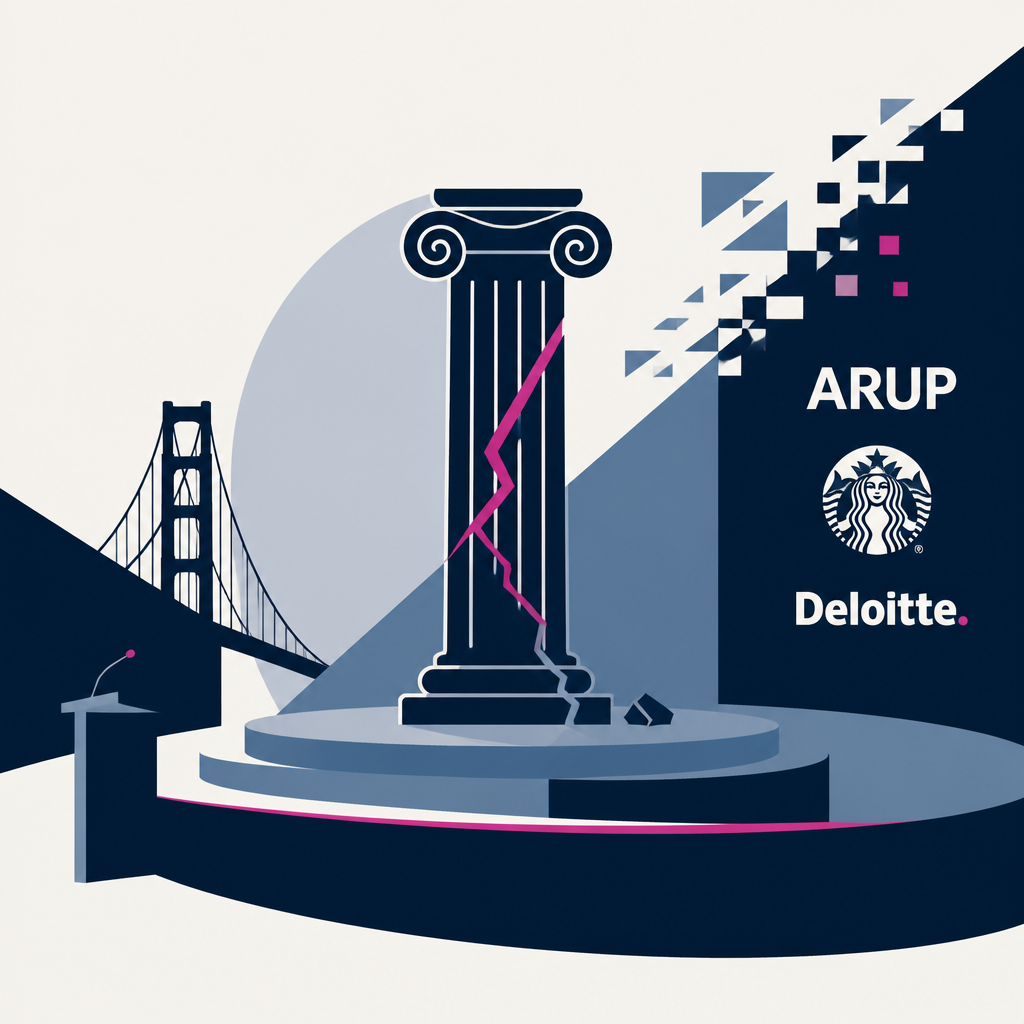
AI keeps blowing up trust: a deepfake video call tricked staff into wiring $25.6M, and Deloitte had to refund a report full of fake quotes. The real bottleneck for AI isn't capability, it's whether anyone can believe what it tells them.
Based on reporting by Fortune, Keith Krach — read the original for the full story.
Summary, retelling and take written by AI under human oversight; images are AI-generated illustrations. How we work · Report an error
Somebody at Arup, the engineering giant, sat through a video call with what looked and sounded like senior leadership. It wasn't. It was a deepfake, and by the time anyone figured that out, $25.6 million had already left the building. Around the same time, Starbucks quietly killed an AI inventory tool after nine months because baristas said it miscounted stock and made their shifts worse. Deloitte's Australian arm had to hand back part of a $290,000 government fee after its AI-assisted report cited academic papers that don't exist and a court quote nobody ever said.
Three companies, three totally different use cases, one identical failure. Nobody could trust the output, the identity behind the request, or the system producing the numbers. That's the actual story here, more than any single blooper: trust has quietly become the scarce resource in enterprise AI, and most organizations are not treating it like one.
A Fortune essay this week frames this as the second test of an old American wager — the idea, baked into the 1776 Declaration, that strangers and future generations could be trusted with self-governance and property rights, without a king checking their homework first. That bet let entrepreneurs start companies without royal permission and let capital move because contracts actually meant something. Two and a half centuries later, AI is running the same experiment at machine speed: it can clone a CFO's voice in seconds, fabricate a citation that looks peer-reviewed, or auto-generate an inventory decision nobody can explain. The upside is real. So is the exposure.
The fix isn't slowing AI down, it's building verification into it the way DocuSign had to build enforceability into a digital signature before anyone would replace pen and ink. Provenance tracking, identity checks that can catch a synthetic face on a Zoom call, independent audits, and a clear human who owns the outcome when the system is wrong. Companies skipping that step aren't saving time, they're accumulating risk that shows up later as fraud, refunds, or a product nobody wants to touch.
There's a geopolitical layer too. The essay points to an IMF estimate that severe fragmentation of the global tech ecosystem could shave 7% off world output, and argues the US-China AI contest is less about which model scores higher on a benchmark and more about which entire system — talent, supply chains, allied buyers — earns enough confidence to actually get adopted. Boards that can't answer basic questions about who controls their data and what happens if that access vanishes aren't managing a PR issue. They're carrying an operating risk they haven't priced yet.
My take — AI-written commentary, not fact-checked reporting
The Arup and Deloitte stories aren't really AI failures, they're accountability failures — someone shipped a system nobody stress-tested against a competent liar, human or synthetic. Every company racing to bolt AI onto finance, legal, or ops workflows without a verification layer is betting its balance sheet on nobody ever trying to trick it, which is a bizarre wager given how cheap deepfakes have gotten. Regulators will eventually force provenance and identity checks the hard way, through lawsuits and refunds, when they could just be built in now for a fraction of the cost.
Read more about this at: Fortune
Related stories
 Dario Amodei admits AI suffers from a crisis of trust, saying people worry companies or governments are 'cooking up some new way to screw them over'
Fortune ·
8
Trust, not budget: Why AI adoption in finance comes down to governance
SiliconANGLE · 1 week ago ·
7
AI was supposed to win people over by now — it hasn’t
TechCrunch · 1 month ago ·
25
Dario Amodei admits AI suffers from a crisis of trust, saying people worry companies or governments are 'cooking up some new way to screw them over'
Fortune ·
8
Trust, not budget: Why AI adoption in finance comes down to governance
SiliconANGLE · 1 week ago ·
7
AI was supposed to win people over by now — it hasn’t
TechCrunch · 1 month ago ·
25