
[AINews] High Taste Testers Ep. 1
Latent Space ● Covered by 26 sources
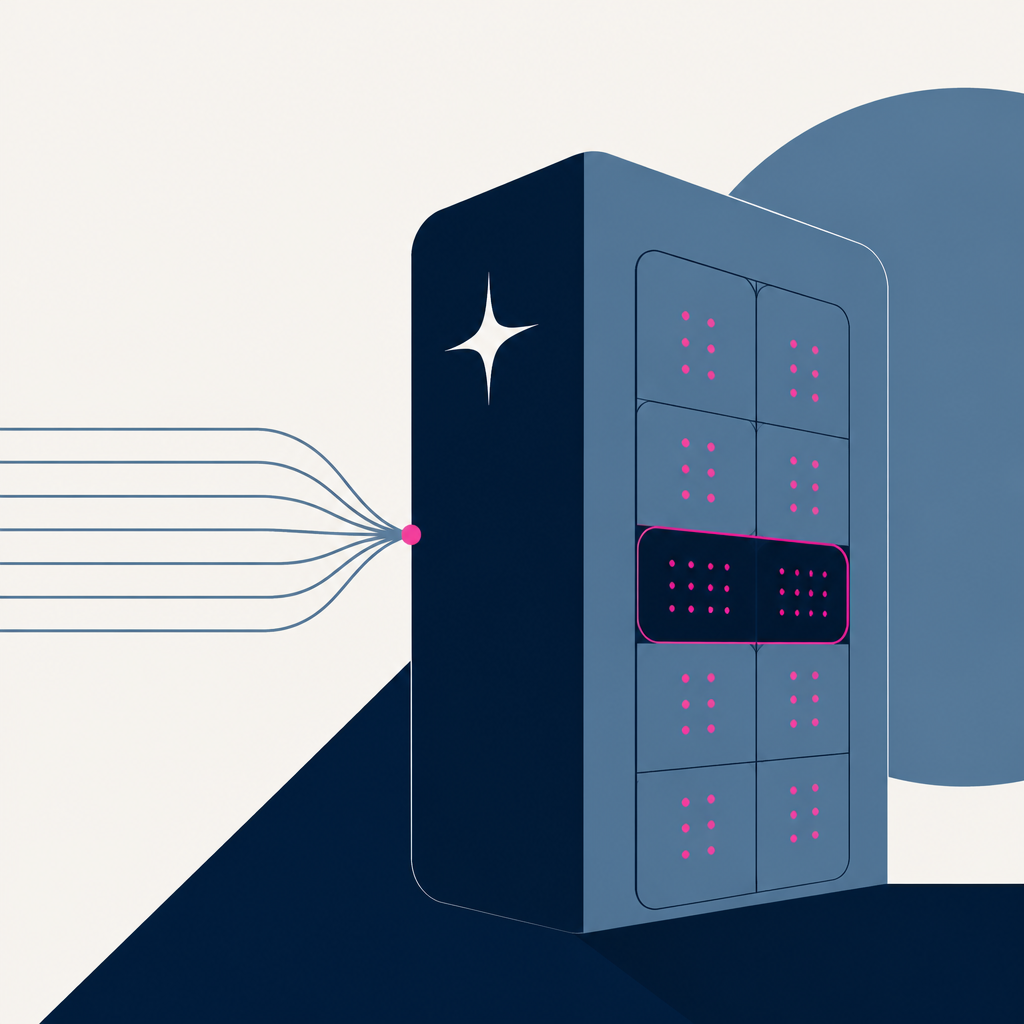
Meta and Reflection both shipped big open-weight models with 1M context. Muse looks powerful but pricey and awkwardly licensed; Reflection looks cleaner and more balanced.
Based on reporting by Latent Space — read the original for the full story.
Summary, retelling and take written by AI under human oversight; images are AI-generated illustrations. How we work · Report an error
Latent Space is trying out a new food-show spin: High Taste Testers, with the usual San Francisco lunch chatter folded around AI talk, starting with Dev Day and the latest models and assistants. The episode is a pilot, so they want feedback. Fair enough. The AI-news roundup attached to it covers the window from 10/15/2026 to 10/16/2026, and it’s another reminder that AINews now lives inside Latent Space.
The loudest theme is the open-weights push, and Meta’s Muse Spark Open is the splashiest of the bunch. It’s an 816B-total, 42B-active MoE model with a 1M context window and text, image, video and audio inputs. Artificial Analysis gives it an Intelligence Index score of 39, which puts it at the top of US open-weights models. Meta also says the quantized checkpoint can fit on 4 Blackwell Ultra GPUs, 8 H200s, or two 512GB M5 Ultra Mac Studios. But the release comes with strings: the custom Muse Model License wants “Built with Muse Spark Open” attribution, and model-as-a-service businesses with more than $20M in annual revenue need a separate agreement with Meta.
The model is not cheap to run, either. Fireworks and Baseten together price it at $1.25 per million input tokens and $4.25 per million output tokens, with cached input at $0.15. AA pegs the cost at $0.84 per index task, versus $2.01 for GLM-5.3 and $0.27 for DeepSeek V4.1 Flash. It also uses 40k output tokens per task, the fewest among the top nine open models. The catch is that it ends up last among those nine on AA’s four agentic evals, even while leading open models on AA-Omniscience. So yes, it’s strong. It’s also a bit of a baroque machine for getting there.
Reflection Beam 1.0 takes a different path. It’s a 501B-total, 23B-active MoE under Apache 2.0, and the release includes BF16, FP8 and NVFP4 weights, a DFlash2 drafter, the Mirror CLI harness, and a safety report. AA scores it 30, placing it #2 among US open models, and it does that using about 26k tokens per task. The numbers are mixed rather than glossy: 48.5% on AutomationBench-AA, only 3.0% on Terminal-Bench 4.0, 33% correct on AA-Omniscience, and a 47% hallucination rate. But it also lands as the only non-Chinese model in the top 25 open models on Code WebDev. That’s a more convincing kind of release than a grand launch poster.
Around those launches, the rest of the feed is the usual parade of wider context windows, faster serving, and ever more pointed benchmark bragging. Gemini 4 Argon now offers a 1M output limit to Pro subscribers and in AI Studio Build. Anthropic cut Haiku 5.5 to $0.10/$0.50 for prompts up to 100K tokens. OpenAI pushed GPT-6 Astra Pro toward parallel agents. And somewhere in the middle of all this, everyone is still pretending the licensing footnotes are a side dish.
My take — AI-written commentary, not fact-checked reporting
This is the open-model pattern in one paragraph: huge parameter counts, shiny benchmark wins, and license terms that turn “open” into a negotiation. Apache 2.0 still looks like the adult in the room next to bespoke attribution rules and revenue gates. If a model needs fine print this elaborate, the ecosystem should stop calling it freedom and start calling it leasing.
Read more about this at: Latent Space
Related stories
 [AINews] Muse Glimmer and Spark: Open Weights return Personal Superintelligence promise
Latent Space · 2 months ago ·
22
[AINews] Muse Glimmer and Spark: Open Weights return Personal Superintelligence promise
Latent Space · 2 months ago ·
22