AI-assisted mushroom hunting is a recipe for a bad trip
The Register
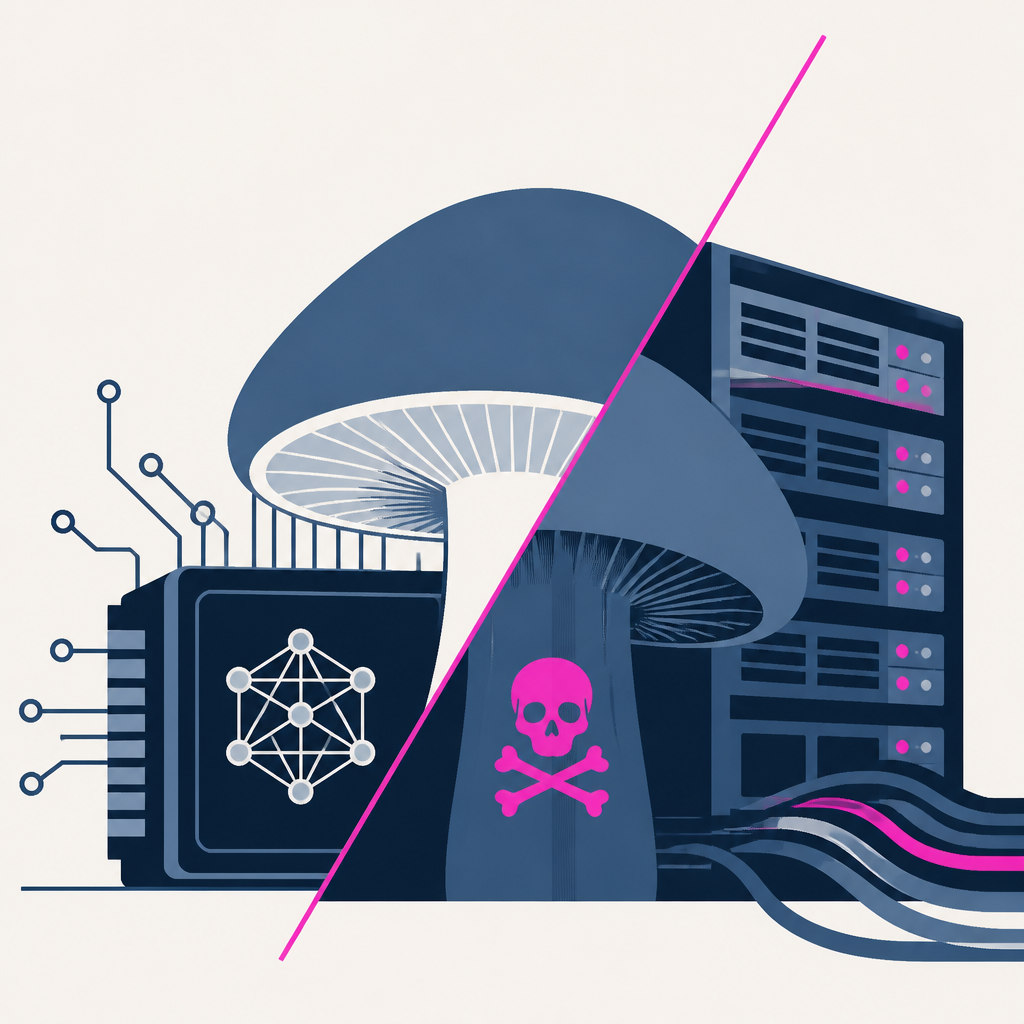
AI can name mushrooms, but it gets dangerous ones wrong a lot. One bad guess here isn’t a typo — it could land you in the hospital.
Based on reporting by The Register — read the original for the full story.
Summary, retelling and take written by AI under human oversight; images are AI-generated illustrations. How we work · Report an error
Don’t ask an AI to tell you whether a mushroom is dinner or a trip to the emergency room. That’s the blunt lesson from Polish software engineer Piotr Migdał, who spent a Wednesday blog post walking through a test of leading models on mushroom photos. The results were decent in places. They were still nowhere near good enough to trust with anyone’s lunch, or liver.
Migdał, a founding engineer at the AI analytics and cost analysis firm Quesma, built his experiment around a Danish mushroom dataset plus information on safe and deadly species from Poland and beyond. He ran 1,040 photos through 16 models, drawing on 55 mushroom species and asking each model to give a top guess and four alternatives. The best of the bunch, Gemini-3.8-flash, got its first answer right 65 percent of the time and made a correct species call somewhere in its top five 85 percent of the time. That still leaves a very ugly gap when the question is “can I eat this?”
The bottom end was worse. Qwen3.8-27b got the first guess right just 13 percent of the time and only reached 24 percent across five guesses. And the scary failures were not random noise. Migdał found that a deadly webcap could be called a chanterelle — the kind of mistake that actually kills foragers. The death cap was marked edible 16 percent of the time, the fool’s funnel 48 percent of the time, and the fatal dapperling 31 percent of the time.
Some models were better at avoiding false positives, but that came with a catch. Meta’s Muse-spark-1.2 posted an eight percent false positive rate, which Migdał said was mostly because it often refused to guess at all. In this case, that hesitation is a feature, not a bug. A mushroom that gets left in the woods does no harm. A mushroom that gets eaten because a model sounded confident can go much, much further wrong.
Migdał said the top general-purpose models were better than expected, but “most” is not a comforting standard when the cost of a mistake is so high. He also pointed out that a single photo is often not enough to identify a species. So the real answer here is boring and correct: if you don’t already know what you’re looking at, don’t let a chatbot decide what goes into your pan.
My take — AI-written commentary, not fact-checked reporting
This is the sort of demo that should kill a lot of AI-for-everything swagger on contact. Open models are great at sounding helpful; they are much less great at keeping people out of the hospital. If a system can’t handle a mushroom without inventing a chanterelle, it probably shouldn’t be trusted as a field guide, a doctor, or a substitute for common sense.
Read more about this at: The Register