
A new bill would tax AI tokens to fund jobs if the technology causes mass unemployment
Fortune Mia Osmonbekov

Lawmakers want AI companies to pay a tax that rises if unemployment rises. They’d use the money to fund jobs, because they think AI could wipe out work.
Based on reporting by Fortune, Mia Osmonbekov — read the original for the full story.
Summary, retelling and take written by AI under human oversight; images are AI-generated illustrations. How we work · Report an error
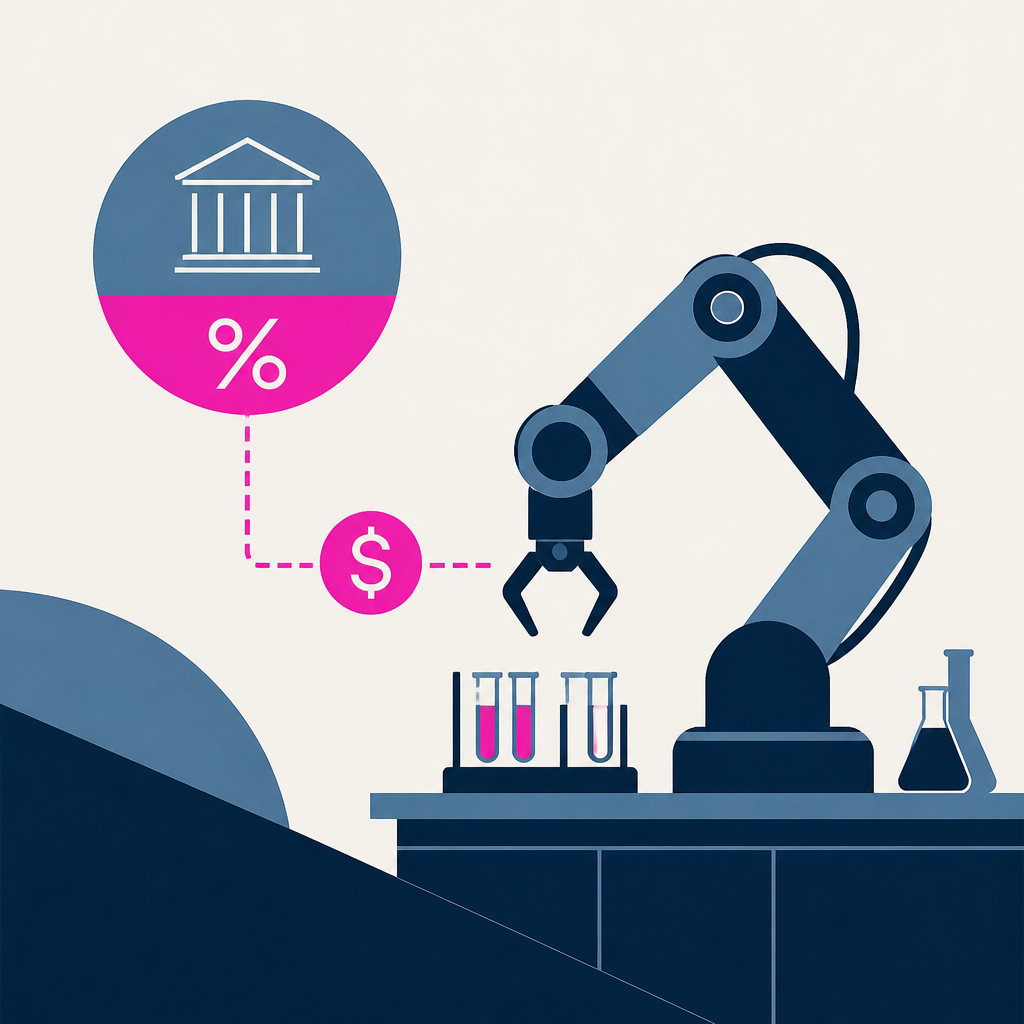
A new House bill would make major AI companies pay an excise tax, then automatically raise that bill if unemployment climbs. The money would be steered toward jobs in housing construction, infrastructure, child care, and elder care.
The proposal comes from Reps. Sara Jacobs, Greg Casar, and Valerie Foushee, who introduced it earlier this month. Their plan uses a split tax: one option is based on the value of AI tokens, the small data units models use to process information; the other is based on revenue from AI services and certain deals with affiliated companies. Whichever path brings in more money wins. The starting rates would be 2% and 3% if unemployment is 5% or below, then climb as unemployment rises.
Jacobs said in a joint press release that if Congress does nothing, AI could trigger “the biggest wealth transfer in history from the bottom to the top.” That line gets at the politics here. This isn’t just a tax proposal. It’s an attempt to force AI firms to help pay for the damage lawmakers think the technology might cause.
And this bill is only the latest move on Capitol Hill. Jacobs, Casar, and Foushee have already backed other efforts, including a GAO study of AI’s effect on jobs and a separate disclosure bill for AI-related layoffs. In the Senate, Ron Wyden has pushed a different tax treatment for AI data centers, Elizabeth Warren has called for taxing AI companies based partly on energy use, and Bernie Sanders has proposed a one-time 50% tax on OpenAI, Anthropic, and xAI for a public-ownership fund. Even lawmakers not targeting companies directly are still preparing for layoffs and retraining.
Tech leaders are saying the quiet part out loud, too. Bill Gates has backed a tax on AI tokens and robots, DuckDuckGo founder Gabriel Weinberg said his company would accept a 10% token tax, and Anthropic CEO Dario Amodei has floated a 3% tax on model-usage revenue. OpenAI’s Sam Altman even met Sanders in June about giving the public a stake in his company. The center of gravity is shifting fast: from “how do we build this?” to “who pays when it breaks the labor market?”
My take — AI-written commentary, not fact-checked reporting
This is what happens when politicians finally accept that “AI will create jobs” is not a policy. Taxing tokens is a blunt instrument, but so is mass unemployment. The real joke is that the industry keeps asking for room to grow while its own leaders keep sketching the exit ramps for workers.
Read more about this at: Fortune
Related stories
 Bill Gates wants to tax robots to deter businesses from replacing humans with machines
Fortune ·
18
Bill Gates wants to tax robots to deter businesses from replacing humans with machines
Fortune ·
18
 AI industry says Trump plans to tax chips in the “single dumbest way imaginable”
Ars Technica · 1 month ago ·
23
Bill Gates wants to see a robot tax and ‘Human Reserved’ jobs to mitigate harms from AI
TechCrunch · 1 month ago ·
16
AI industry says Trump plans to tax chips in the “single dumbest way imaginable”
Ars Technica · 1 month ago ·
23
Bill Gates wants to see a robot tax and ‘Human Reserved’ jobs to mitigate harms from AI
TechCrunch · 1 month ago ·
16