Latent Space
·
1 week ago
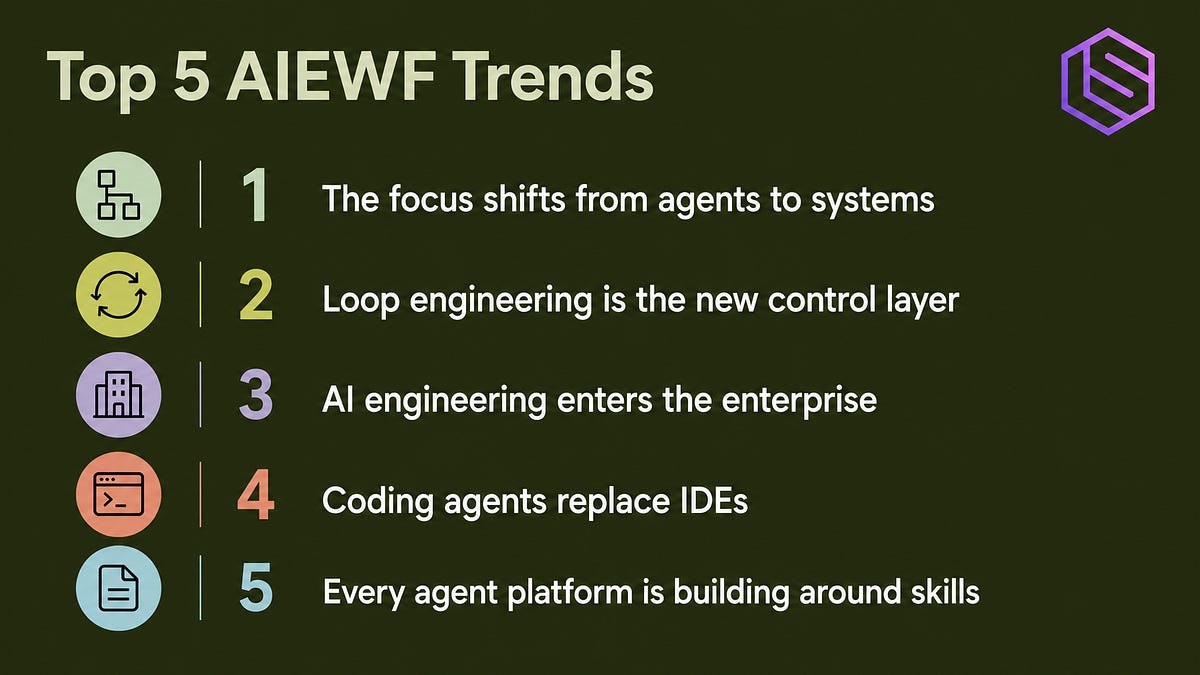
Developers are shifting focus from autonomous agents themselves to the systems that manage them, with "loop engineering" becoming central to how AI agents are controlled and evaluated in production. A survey by Barr Yaron identified coding agents as a key trend, with tools like Claude Code, Cursor, and Gemini CLI replacing traditional IDE-based development by handling broader objectives across multiple files. Enterprises are now deploying AI engineering specialists called forward-deployed engineers to implement AI capabilities, with companies building "software factories" that automate parts of the development lifecycle while keeping humans in control of critical decisions.

Simon Willison
·
1 week ago
A developer created a custom animated pet for Codex Desktop by using GPT-5.6 Sol and gpt-image-2 to generate sprite assets for a pelican riding a bicycle. The AI system required multiple rounds of image generation and refinement, starting with a detailed reference prompt that specified dimensions of 192x208 pixels and a magenta chroma-key background for animation. The resulting assets—including sprite sheets and animation loops—are now published in the developer's GitHub repository, with the underlying image generation and pet creation skills available as open-source Apache 2.0 licensed code.
MarkTechPost
·
1 week ago
Mistral Vibe for Code, Claude Code, OpenAI Codex, and Cursor were scored on five dimensions (scaffolding, testing, PR workflows, surface coverage, and cost/control) across a common engineering task of adding a subscriptions endpoint with tests and opening a pull request. Mistral Vibe for Code scored 22/25, leading on cost at $14.99/month, open-source availability, and self-hosting capabilities, while Claude Code and Codex tied at 21/25 but at higher costs ($20–$200/month). The comparison used documented features and published benchmarks as of July 14, 2026, rather than executing agents directly, and explicitly noted that benchmark figures across different suites are not directly comparable.

The New Stack
·
1 week ago
Tailscale is hosting a webinar on July 28, 2026 addressing how enterprises can manage network access for both human users and AI agents using a unified architecture rather than separate tools. The event will cover how traditional VPN and privileged access management tools designed for humans fall short when dozens or hundreds of AI agents need secure access to corporate networks. Organizations need consistent access policies that can handle requests from any source—developers, contractors, pipelines, and AI agents—while maintaining security audits and the ability to revoke access when tasks complete.
AWS Machine Learning
·
1 week ago
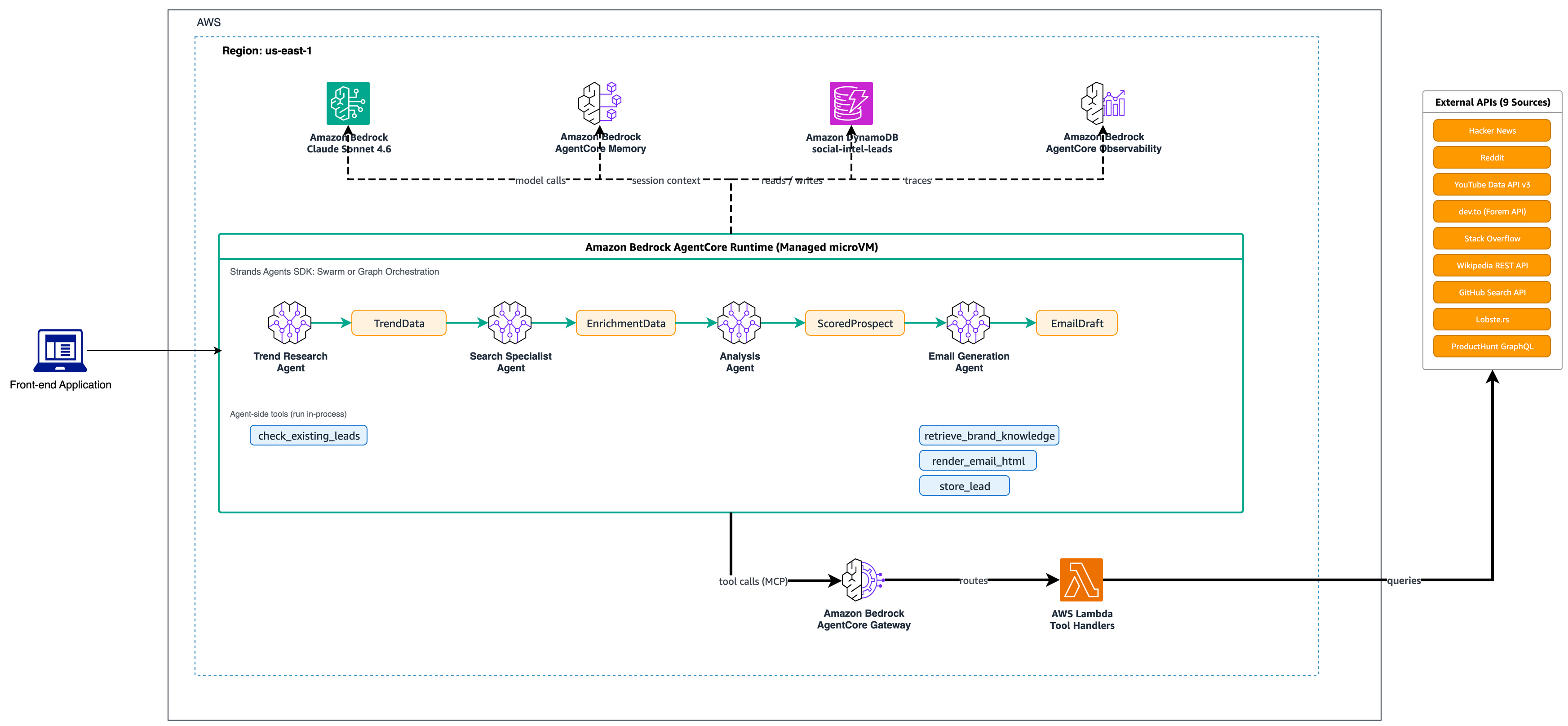
Thrad.ai built a multi-agent system using Strands Agents and Amazon Bedrock to automate lead research across six social platforms (Hacker News, Reddit, Stack Overflow, GitHub, dev.to, ProductHunt), reducing manual research time from 30-45 minutes per lead to an automated pipeline. The system deployed two orchestration patterns—Swarm and Graph—with Graph achieving 32-second average latency and $0.06 cost per prospect versus Swarm's 45 seconds and $0.08 cost, though Swarm produced higher email quality (8.2 vs 7.6 on human rating). Organizations can now automatically discover buying signals across multiple sources, score prospects 0-100 using weighted criteria and temporal decay, and generate personalized outreach at scale.
Simon Willison
·
1 week ago
Armin Ronacher argues that software projects maintain shared understanding through friction—code reviews, conversations, and coordination—which forces developers to align on concepts, boundaries, and system design. This synchronization process slows development but serves a purpose beyond waste reduction: it ensures mutual comprehension of how the system actually works. AI agents that bypass this friction risk eroding the distributed knowledge that keeps large systems coherent.
AWS Machine Learning
·
1 week ago
● 2 sources
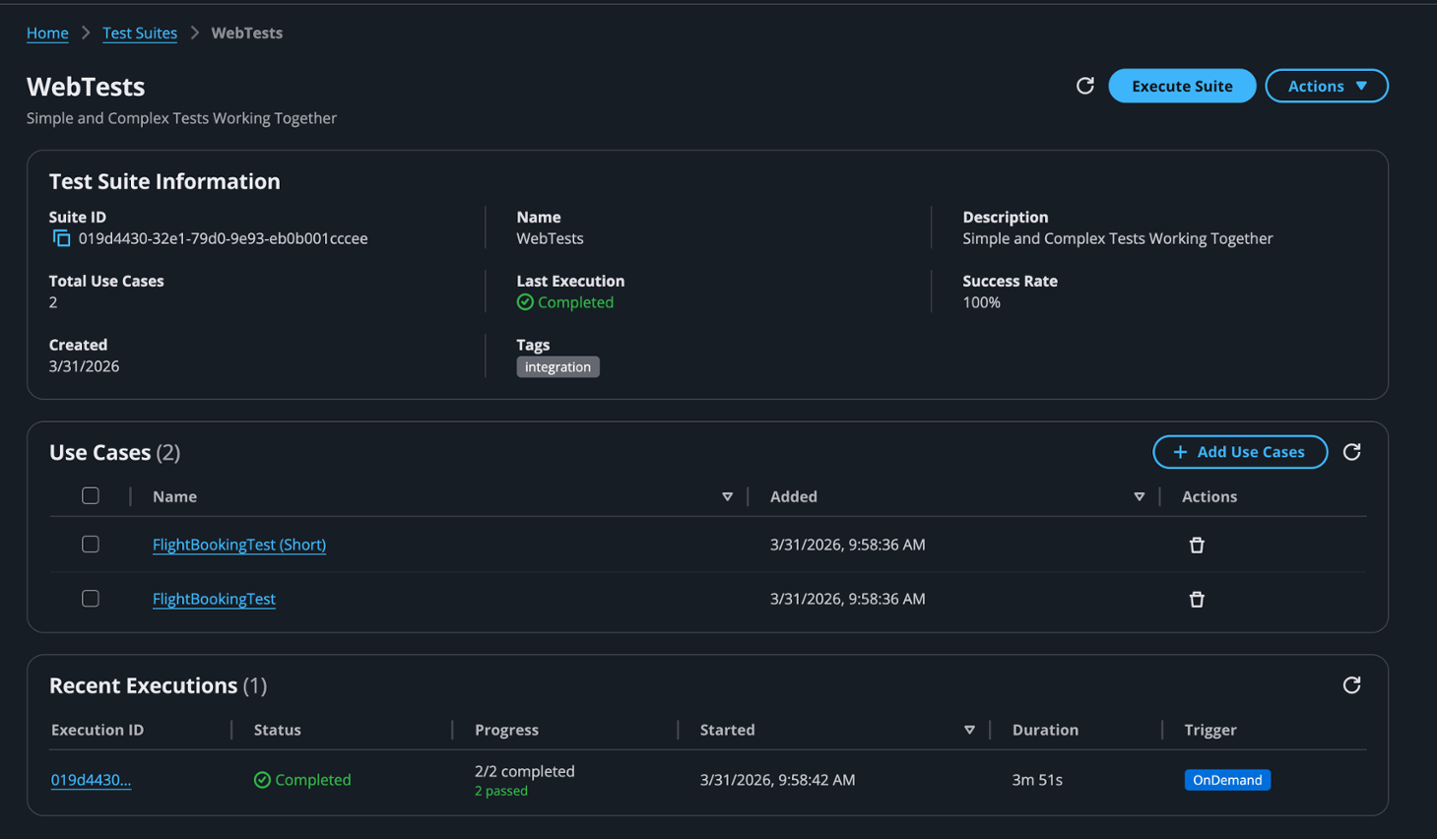
Amazon extended QA Studio, an agentic QA automation tool built with Amazon Nova Act, to support batch regression testing through test suites that execute use cases in parallel on AWS Fargate, and added a command-line interface for CI/CD pipeline integration with OAuth authentication and environment variable overrides. Test suites can run 20 concurrent tests instead of sequentially, reducing overall execution time while organizing tests by functional area or testing purpose. The CLI enables automated quality assurance in CI/CD pipelines with three exit codes distinguishing test failures from infrastructure errors, allowing teams to integrate AI-powered visual navigation testing into deployment gates.
AWS Machine Learning
·
1 week ago
● 2 sources
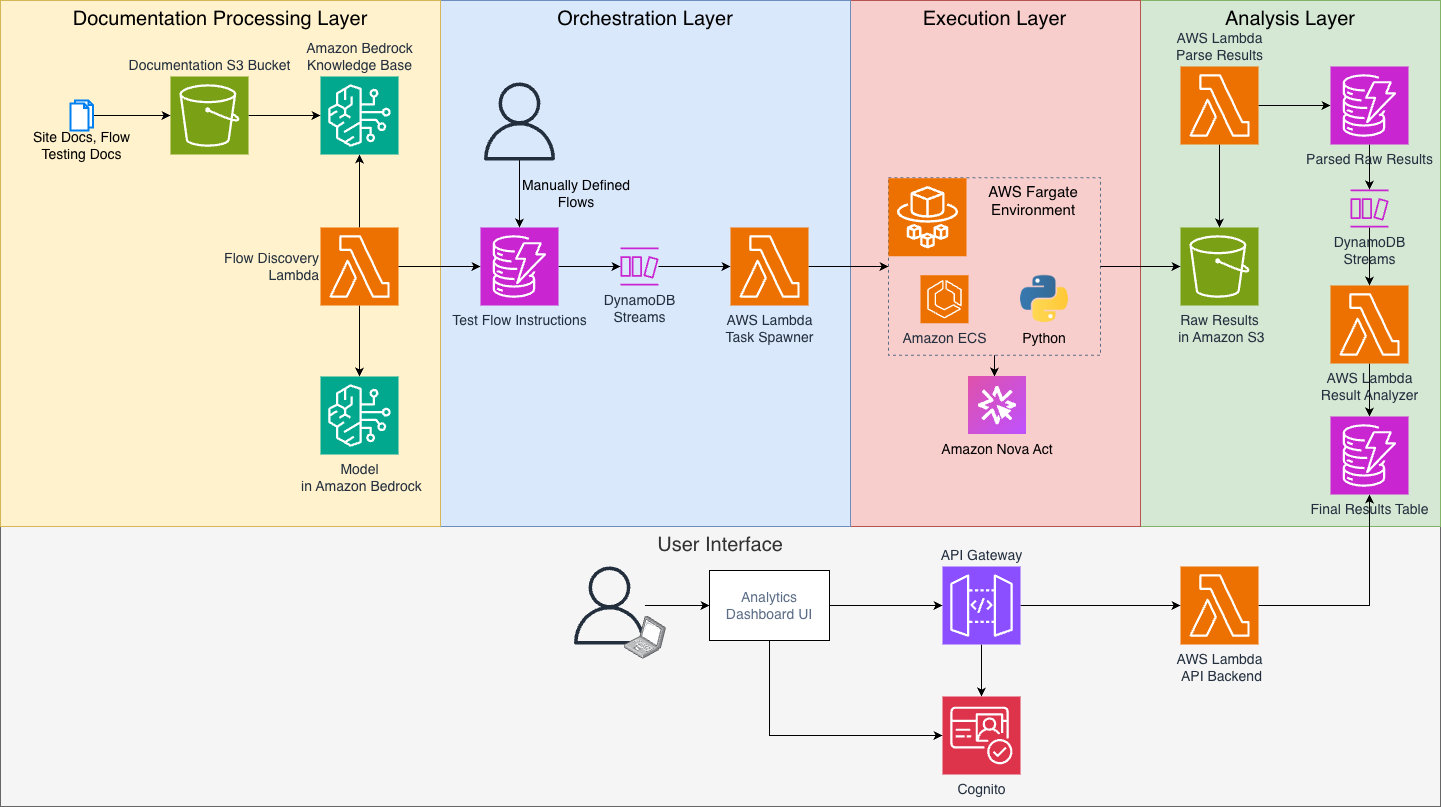
Amazon Nova Act is a multimodal AI model that automates UX testing by analyzing screenshots and navigating web interfaces visually, replacing brittle script-based tools. The solution generates test scenarios from documentation using Claude 4.5 Sonnet, executes tests in parallel across AWS infrastructure, and produces analysis reports identifying usability friction points. Organizations can now scale user flow testing across diverse journeys and interface changes without maintaining hard-coded automation scripts.
Simon Willison
·
1 week ago
Datasette released version 1.0a37, continuing its development toward a stable 1.0 release. The project has accumulated 1,526 monthly briefing subscribers as of July 14, 2026. Simon Willison is seeking sponsorship at $10 per month to fund continued development and curated LLM news digests.

The New Stack
·
1 week ago
Port, an agentic software development company, launched its Port AI Builder service to address concerns about ungoverned AI-assisted coding by adding governance controls, human review, and organizational context to code generation. The platform uses a Plan Mode that drafts code, asks clarifying questions, and requires human approval before building, with all plans versioned and audited for traceability. The service aims to shift software quality assurance from manual processes to AI validation combined with human oversight, enabling teams to build production-grade code without accumulating technical debt from rushed development.

The New Stack
·
1 week ago
Valantor acquired document intelligence company EyeLevel and launched its Enterprise Visual Intelligence platform to process unstructured data like PDFs, handwritten documents, and complex forms that large language models struggle to access. The company's GroundX platform processes visually complex documents through multi-pass orchestration, achieving 96% accuracy on policy questions for Air France-KLM and automating 85% of customer inquiries for AskVet. Organizations can now access the approximately 80% of corporate knowledge trapped in unstructured documents while maintaining data sovereignty and reducing processing costs by decomposing documents into smaller elements for cheaper AI models.

The New Stack
·
1 week ago
Model Context Protocol (MCP) faces criticism from developers for adding unnecessary complexity in small projects, but the skeptics overlook that enterprise agentic systems require MCP's capabilities for credential delegation, audit trails, and structural least privilege that direct API calls cannot provide. MCP enables security teams to embed authorization context at the tool-call level and structurally prevent agents from exceeding their assigned scope, whereas allowlists alone are insufficient governance in regulated environments. Enterprise adoption of agentic systems will require solving two remaining challenges: making capability-scoped server provisioning accessible to non-specialists and providing operational visibility tools for security teams to manage MCP connections across their environment.

TLDR Dev
·
1 week ago
Engram is a persistent memory system for AI coding agents that stores session context in a local SQLite database accessible via CLI, HTTP API, and MCP protocol, compatible with Claude Code, VS Code Copilot, Cursor, Windsurf, and other agents. The tool provides 20 MCP tools for saving, searching, and managing memories across coding sessions, with optional cloud replication and beta features for detecting conflicting memories using LLM-based semantic analysis. Memory persists between sessions, allowing agents to recall previous work through full-text search and context retrieval, with optional cloud sync across machines and a beta conflict-detection feature that costs nothing for Claude Pro/Plus/Max subscribers.

TLDR Dev
·
1 week ago
Clawk is a tool that runs coding agents like Claude Code inside disposable Linux virtual machines with restricted network access, preventing agents from affecting the host machine or accessing sensitive files while allowing them to install packages and execute code freely within the sandbox. The tool requires macOS 14+ on Apple silicon or Linux with firecracker support and provides features including network allow-listing, VM snapshots for hibernation, multi-repository ticket workflows, and automatic memory release for idle sandboxes. Users can run agents at full autonomy without per-action confirmation prompts because containment is enforced by the hypervisor boundary and network restrictions rather than permission checks.
TLDR Dev
·
1 week ago
A developer reduced token consumption in an AI agent workflow by 94% by converting natural-language task specifications into deterministic Python code, keeping LLM calls only for steps requiring semantic judgment like candidate selection and content generation. The compiled workflow achieved 87% lower latency while maintaining output quality by analyzing execution traces to identify which steps had become stable and predictable. This approach creates opportunities for builders to develop specialized tools that optimize recurring agent workflows, since large model vendors lack incentive to promote techniques that reduce token usage.
TLDR
·
1 week ago
Antirez argues that programmers should focus on controlling software ideas and designs rather than reviewing AI-generated code line-by-line, as LLMs excel at local optimization but struggle with architectural decisions. He cites the impracticality of manually reviewing thousands of daily lines of code and notes that code review time could be better spent on QA, testing, and designing new features. This shift requires documenting design decisions in human-readable formats so future developers understand the mental models behind the code rather than auditing its syntax.

TLDR
·
1 week ago
Apple's new SpeechAnalyzer API achieved a 2.12% word error rate on clean speech and 4.56% on noisy speech, outperforming Whisper Small (3.74% and 7.95% respectively) while running three times faster. The legacy SFSpeechRecognizer scored 9.02% on clean speech, representing a 3.5x to 4x increase in errors compared to the new engine. Developers using the older API should migrate to SpeechAnalyzer for English transcription on current Apple devices, as it is now the strongest on-device option available, though Whisper retains advantages for non-English languages and cross-platform support.
The Neuron
·
1 week ago
AgentKey launched a unified API platform that consolidates access to search, social media, finance, and cryptocurrency data sources through a single authentication key for AI agents. The service operates on a subscription model with shared credit balances across all integrated services, priced at rates like $3.55 per 120 web searches and $1.40 per 450 Twitter data requests. Users can now connect multiple data sources in one installation step without managing separate API keys, vendor dashboards, or per-service billing.
The Neuron
·
1 week ago
Osaurus is a macOS application that runs open-source AI models locally on Apple Silicon Macs without sending data to external servers. The software is free, MIT-licensed, and allows users to integrate ChatGPT, Claude, or Gemini for specific tasks while maintaining a shared memory across all models. Users can build autonomous agents with voice control, file monitoring, and browser extensions that operate offline and independently.
The Neuron
·
1 week ago
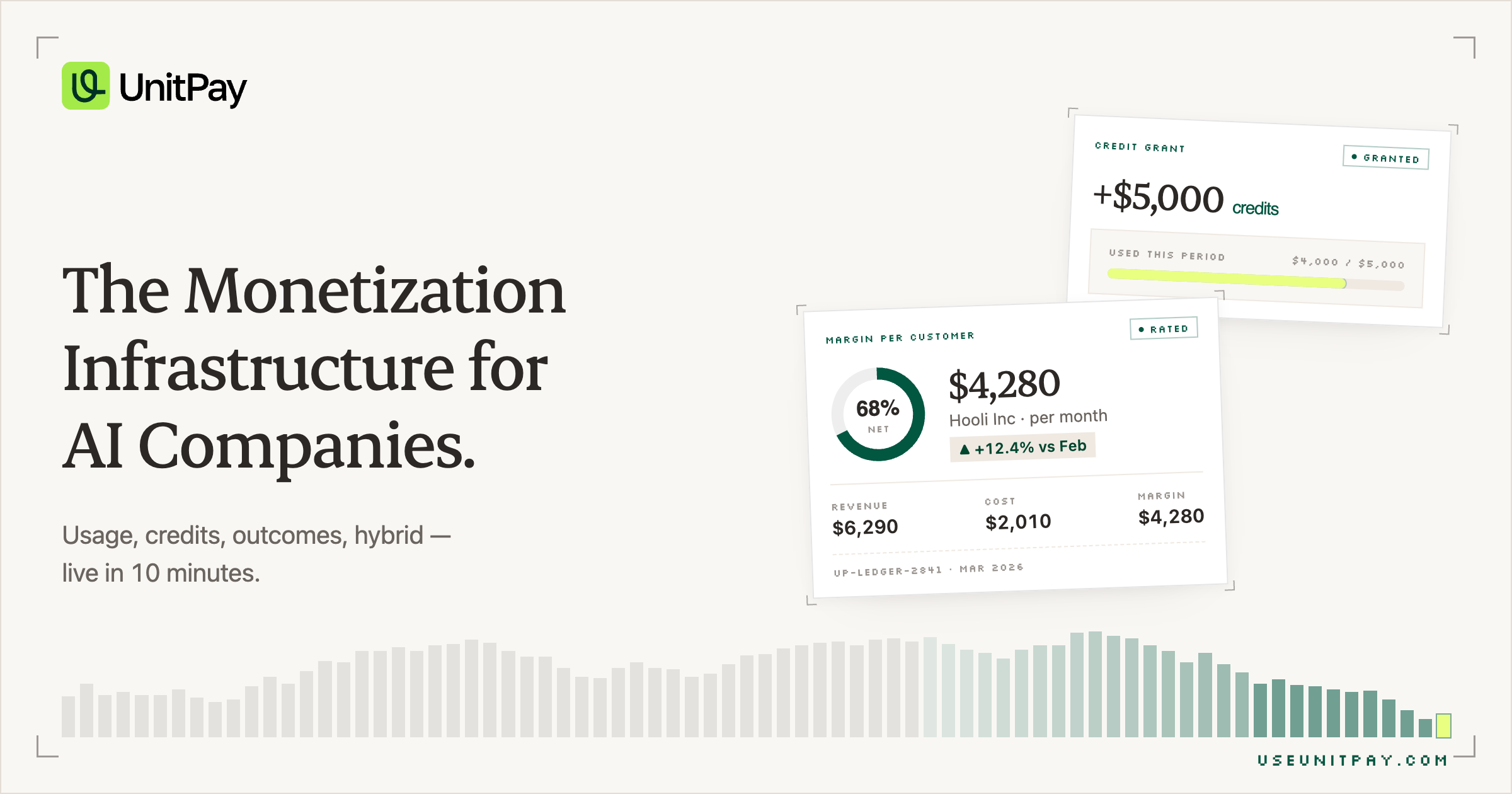
UnitPay launched a no-code billing platform designed to help AI product companies track usage-based revenue and automatically handle invoicing and payments. The platform supports setup in 10 minutes with a simple SDK integration and processes 50 million events per month with sub-12 millisecond latency. Customers gain visibility into per-model margins, churn prediction 30 days in advance, and can adjust pricing models without code changes.
MarkTechPost
·
1 week ago
Hayden Bleasel released Blume, an open-source documentation framework that converts Markdown folders into production documentation sites without configuration. The tool generates a hidden Astro project, ships version 1.0.3 on npm, and requires Node.js 22.12 or newer. Blume includes built-in AI features such as llms.txt support, per-page Markdown export, and a Model Context Protocol server for Claude and other tools to read documentation directly.
