Interconnects
·
1 month ago
Open-source AI advocates argue that banning or restricting open-source models would undermine education, innovation, and competition in the sector. Open-source software has already generated over 8 trillion dollars in economic benefits and now represents the primary counterweight to proprietary AI duopolies like Anthropic and OpenAI. Restricting open-source development would chill American innovation while incentivizing other countries to adopt closed-system approaches like China's.
ChinaTalk
·
1 month ago
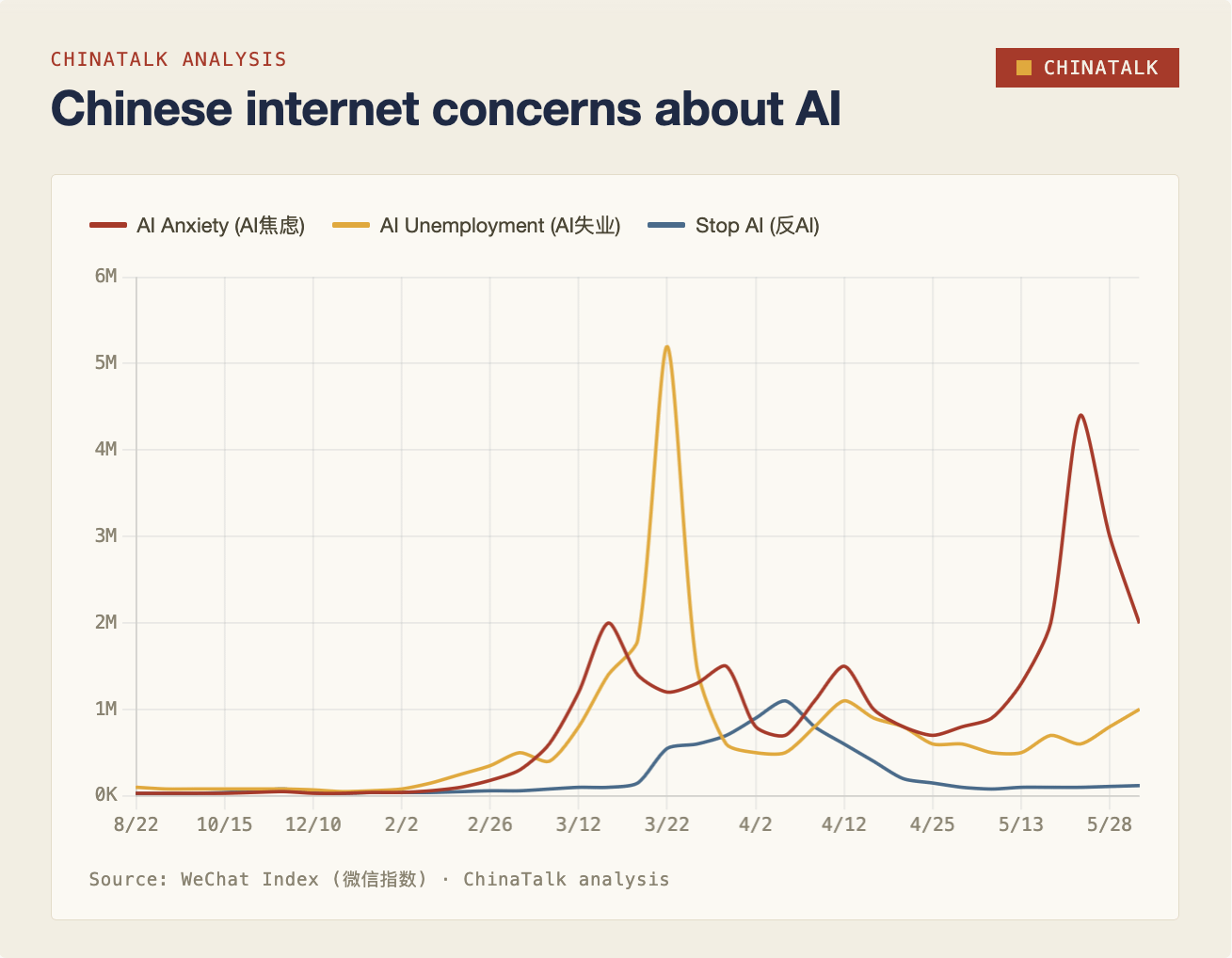
Chinese people are experiencing growing anxiety about AI's impact on employment, particularly young white-collar workers who invested heavily in education expecting stable desk jobs, while civil servants and state workers face less immediate displacement risk due to job security and relational labor practices that resist automation. Search data shows AI concern terms have spiked on Chinese social media in recent months, with surveys indicating 71.59% of young people worry about AI's impact on high-quality employment and nearly 80% fear professional skills devaluation. China's political structure limits workers' recourse through unions or strikes to address these concerns, creating a bind where the state must support both AI adoption policy and worker protections simultaneously.
AI Act
·
1 month ago
The EU Commission established the Advisory Forum on June 1, 2026, as a technical advisory body to support implementation of the EU AI Act. The Forum comprises 174 members selected from over 700 applications, including five permanent members from rights, cybersecurity, and standardization agencies, designed to balance input from industry, start-ups, SMEs, civil society, and academia. The Forum will provide technical expertise, prepare opinions on the AI Act's implementation, and advise on standardization requests.
