Trace.Space launches Trinity to tackle hardware engineering’s next bottleneck
Tech.eu Cate Lawrence
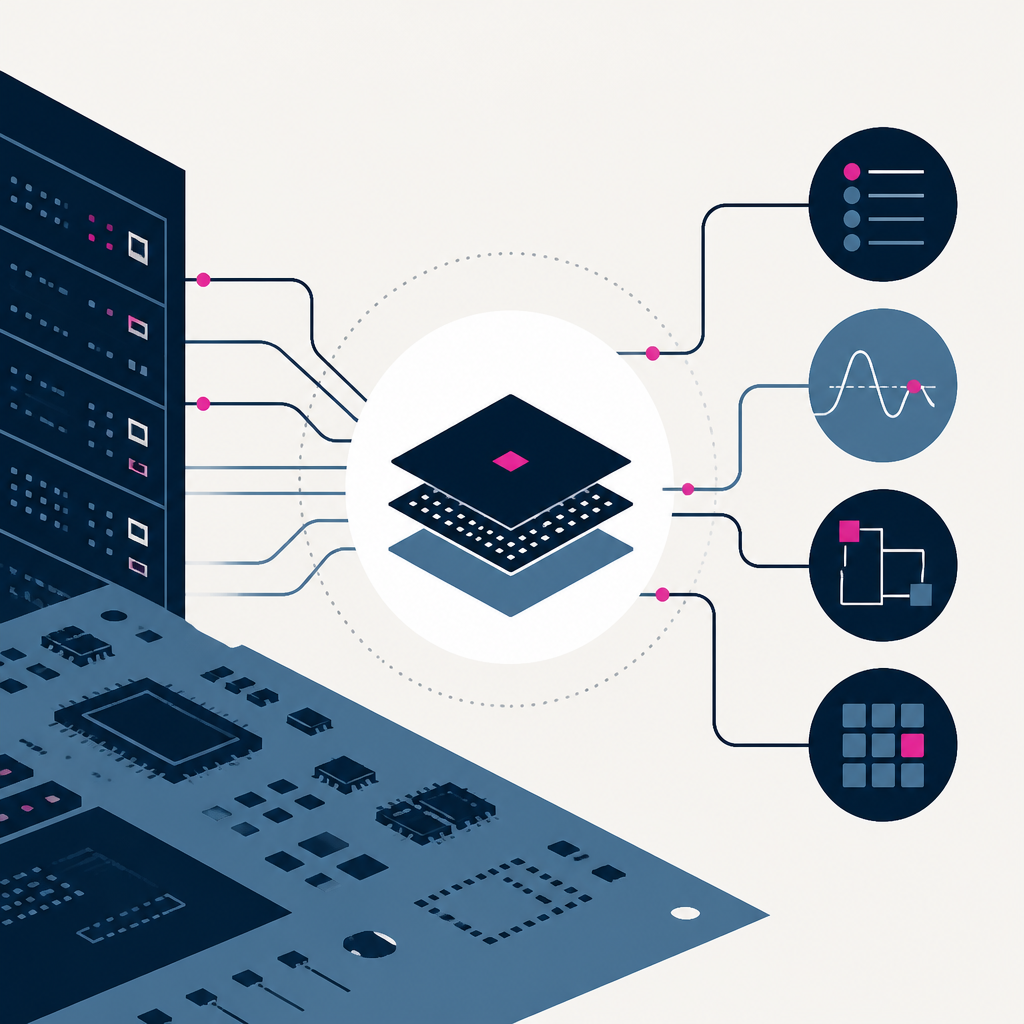
Trace.Space launched Trinity, a tool for hardware teams to keep requirements, tests, designs, and variants in one place. It’s meant to stop fast AI-driven prototyping from turning into a manufacturing mess.
Based on reporting by Tech.eu, Cate Lawrence — read the original for the full story.
Summary, retelling and take written by AI under human oversight; images are AI-generated illustrations. How we work · Report an error
Trace.Space has launched Trinity, a hardware engineering platform built for teams trying to move from prototypes to products at scale. The target list is broad: robotics, aerospace, automotive, defence, and other hardware-heavy businesses that are hitting the same wall once they leave the lab and enter production.
The pitch is simple enough, even if the problem isn’t. Trinity ties requirements, testing, design parameters, and product variants together in one system, and it gives AI agents access to that engineering data. Trace.Space says that matters because the old way is a tangle of spreadsheets, documents, and separate tools, which makes it hard to see what breaks when one part of a complex product changes.
That complaint comes from experience. Janis Vavere and Karlis Broders built Trace.Space after spending years on opposite sides of the same headache: Vavere at Jama Software, watching companies buy and adopt requirements-management systems, and Broders inside the enterprises trying to implement them. Their conclusion was blunt. Another feature on top of old software was not enough; the structure of the data itself had to change.
Trace.Space started in 2022 in Riga, and it now has offices there and in the US. It began with requirements management, then expanded into testing, design parameters, variant management, and AI-assisted engineering. The company says it wants to cover as much as 80 per cent of the product development lifecycle, and estimates Trinity already covers around 40 per cent, up from roughly 10 per cent when Trace.Space started.
The timing is convenient, and a little ominous. Trace.Space points to major funding flowing into robotics, defence tech, spacetech, and autonomous vehicles, but says the engineering stack underneath all that capital has not kept pace. Teams can prototype faster than ever, especially with AI, but scaling those ideas into fleets, variants, and regulated products is still messy. Trinity is Trace.Space’s attempt to make the mess visible, connected, and manageable before it turns into a very expensive mistake.
My take — AI-written commentary, not fact-checked reporting
This is the unglamorous truth of hardware AI: the bottleneck isn’t always building faster, it’s remembering what was built and why. Trace.Space is betting that the next big win is not another shiny agent, but better plumbing — which is exactly the kind of idea that usually ends up mattering. The companies that treat engineering data like an afterthought will keep shipping surprises, and surprises are a terrible manufacturing strategy.
Read more about this at: Tech.eu