
OpenAI Launches the Agents API in Public Beta, Putting the Codex Harness Behind One API Call
MarkTechPost Asif Razzaq ● Covered by 3 sources
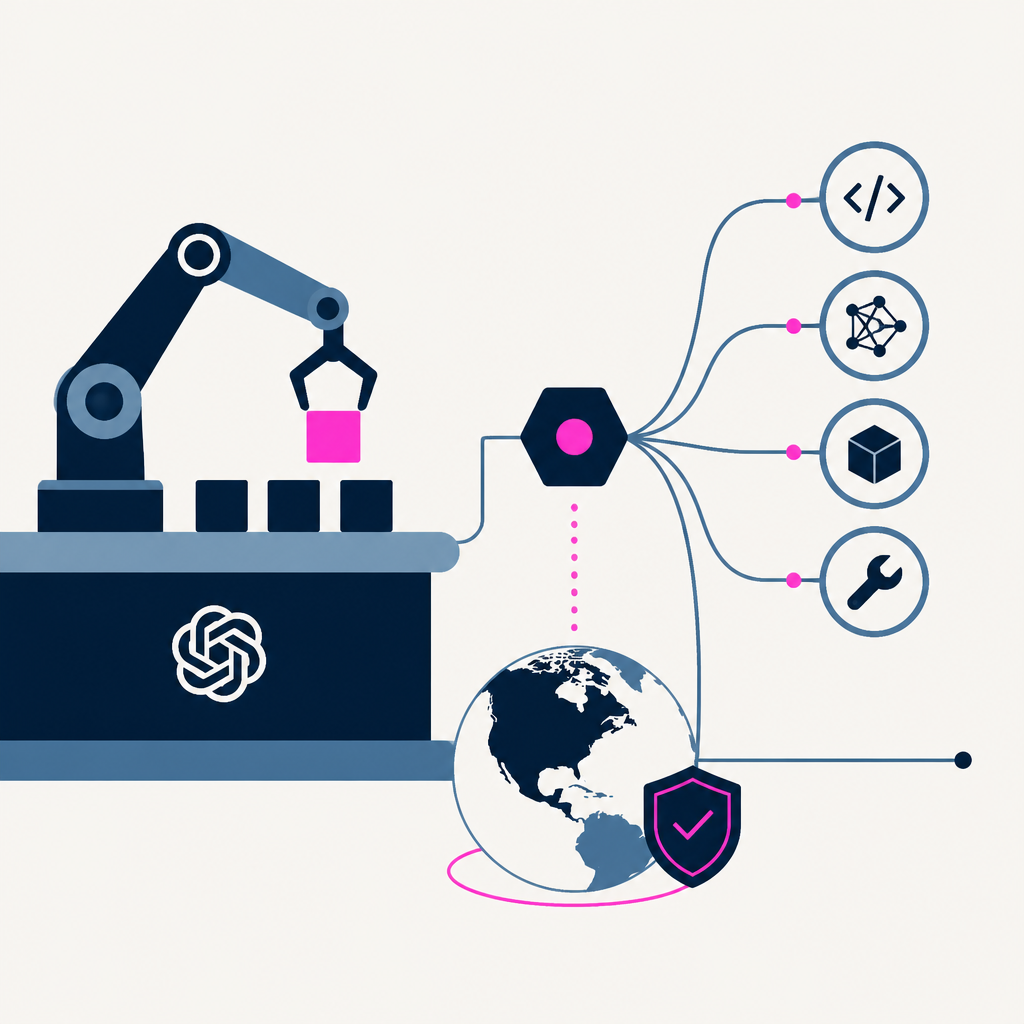
OpenAI put its Agents API into public beta. It wraps Codex’s harness in one call, but data stays US-only and ZDR isn’t supported.
Based on reporting by MarkTechPost, Asif Razzaq — read the original for the full story.
Summary, retelling and take written by AI under human oversight; images are AI-generated illustrations. How we work · Report an error
OpenAI has pushed its Agents API into public beta, and the pitch is simple: the company is letting developers tap the same harness and infrastructure that power Codex without having to build the plumbing themselves. OpenAI hosts and maintains that harness, while the agent can run in an OpenAI-managed sandbox, a self-hosted environment, or one of several partner sandboxes.
This is not just another wrapper. OpenAI says the work of scaling Codex and ChatGPT for Work made the needs of long-running agents painfully obvious: they need context management, efficient tool use, subagent coordination, and infrastructure that can keep them alive for days without falling apart. The API is organized around four pieces — agent, environment, session, and events/items — which is OpenAI’s way of turning all that into something developers can actually reason about.
The environment choice is the big architectural decision. OpenAI-hosted uses the same sandboxing stack behind Codex and ChatGPT, and can be configured with files, packages, skills, and plugins. Self-hosted users run codex exec-server in their own environment, register it with a restricted key, and connect over WebSocket, with outbound-only connections. And then there are partner sandboxes: Blaxel, Cloudflare, Daytona, DigitalOcean, E2B, Modal, Oracle, Runloop, and Vercel all get first-class support.
OpenAI also says the harness handles the annoying parts developers usually end up writing by hand. It compacts older context as sessions approach their limit, searches for tool definitions only when needed, supports parallel and chained tool calls, and lets the main agent split work across subagents that each keep their own context. The company’s comparison table puts the Agents API ahead of the Agents SDK and the Responses API for ease of integration, while still leaving the runtime choices open.
There are catches. Data residency is US-only, and Zero Data Retention is not supported, which makes this a tough fit for regulated workloads. OpenAI says there is no extra fee for the API itself; the bill comes from tokens, tools, and container time. The company also points to customer-reported gains — Ciridae, SafetyKit, Hypha, and Nash.ai — but those are vendor-supplied numbers, not independent benchmarks.
My take — AI-written commentary, not fact-checked reporting
OpenAI is doing the classic platform move here: make the hard part invisible, then call it simplicity. That’s useful, but the US-only data rule and no ZDR make this feel less like a universal agent layer and more like a polished demo with guardrails still on. Europe’s regulators will not be charmed by the word “public beta.”
Read more about this at: MarkTechPost