Launch HN: machine0 (YC S26) – Persistent CPU and GPU VMs from the CLI
machine0.io bwm
machine0 lets agents spin up persistent cloud VMs from the CLI, billed by the minute. It’s built for long-running jobs that can’t survive a laptop closing or a bad prompt injection.
Based on reporting by machine0.io, bwm — read the original for the full story.
Summary, retelling and take written by AI under human oversight; images are AI-generated illustrations. How we work · Report an error
Barnaby is pitching machine0 as a shell command for agent compute: type `machine0 new mybox`, and an agent gets its own persistent cloud VM. The pitch is aimed squarely at workloads that don’t fit the old “spin it up, finish it, shut it down” model. A coding agent can sit on a hard feature for 6 to 8 hours. Training and reinforcement learning runs can stretch into days. Some systems, like OpenClaw and Hermes, are already running all the time.
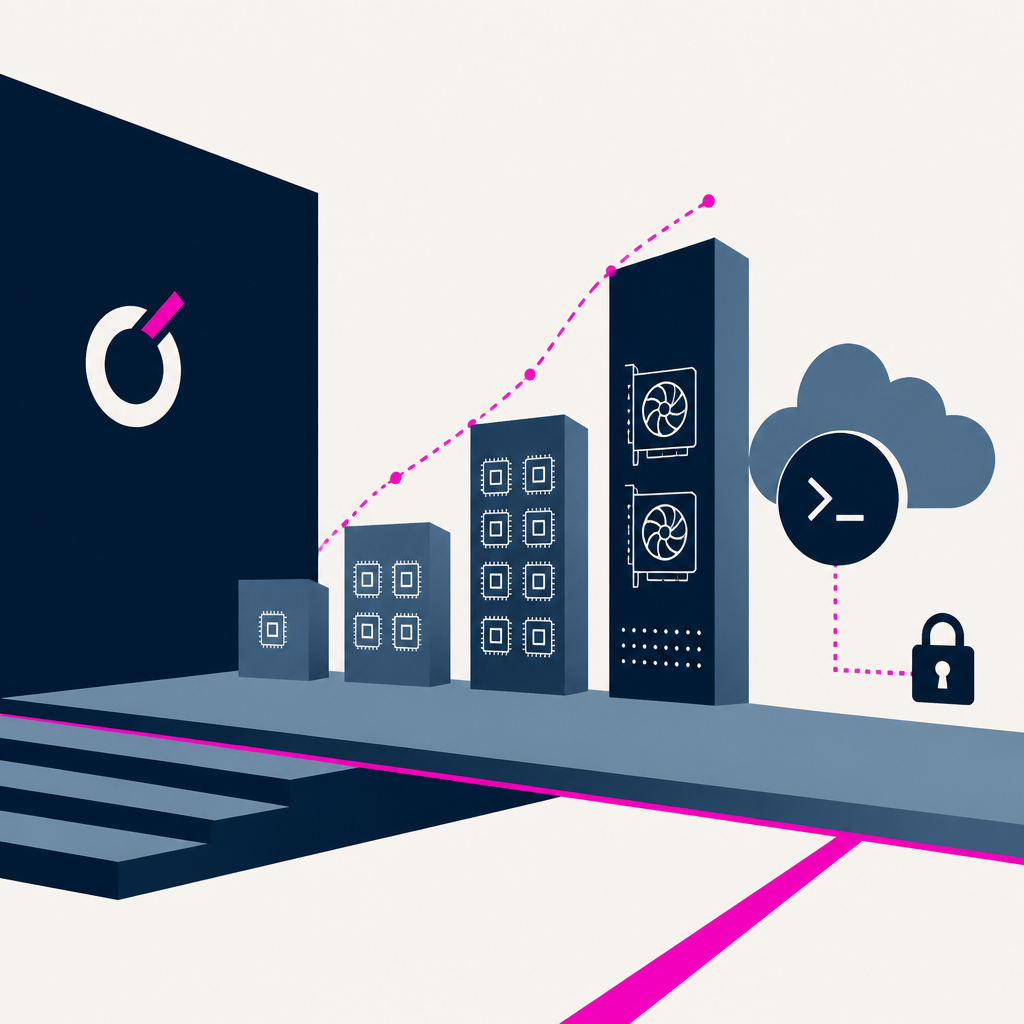
The basic idea is simple enough to fit in a terminal, which seems to be the point. A VM can be created with SSH access, a static IP and an HTTPS endpoint, then left on until someone turns it off. machine0 says it bills by the minute and starts at $0.013 an hour for 1 vCPU and 1 GB of RAM, then scales all the way up to 60 vCPU, 240 GB RAM and GPUs including H100s and H200s. It also says it offers 99.99% VM-level uptime.
What makes the product more than just cloud rental is the workflow around it. Users can suspend, snapshot and resume machines, keep persistent block storage from 10 GB to 16 TB, and inject profiles containing credentials, MCP connections, prompts and environment variables at creation time. The company says agents can even self-serve through the CLI or MCP server, so a model like Claude, Codex or OpenCode can spin up a box, snapshot it and tear it down without a human doing the clicking.
There’s also a stronger hardware claim underneath the convenience layer. machine0 says each machine is a full KVM virtual machine, not a container or sandbox, with the real GPU exposed to the guest, its actual driver, kernel-level access and no syscall interception layer in the middle. The stack itself is described as deliberately plain: TypeScript, Postgres and Redis. And that may be the real sell here. Not novelty, just a boring setup that stays out of the way while agents chew through long jobs.
Barnaby says the service is already being used for agent fleets, model optimization and RL environments, and even as the base for another product that gives each user session a fresh machine from a versioned image. One customer is said to run hundreds of machines at once; another keeps an H100 suspended overnight for inference-speed work. That’s a pretty good sign the target customer is not a hobbyist poking around on a Saturday.
My take — AI-written commentary, not fact-checked reporting
This is the right bet: if agents are going to do real work, they need their own box, not a shared toy with a fancy prompt. The industry keeps pretending “agent infrastructure” is magical, when most of the pain is still the oldest kind of pain — uptime, isolation, and not losing your session because someone closed a lid. Cloud vendors love a new category when it sounds shiny; this one is mostly about giving compute a clean leash.
Read more about this at: machine0.io