
Building Self-Evolving AI Agents with OpenSpace Using Skills, MCP, Lineage, and Low-Cost Reuse
MarkTechPost Sana Hassan
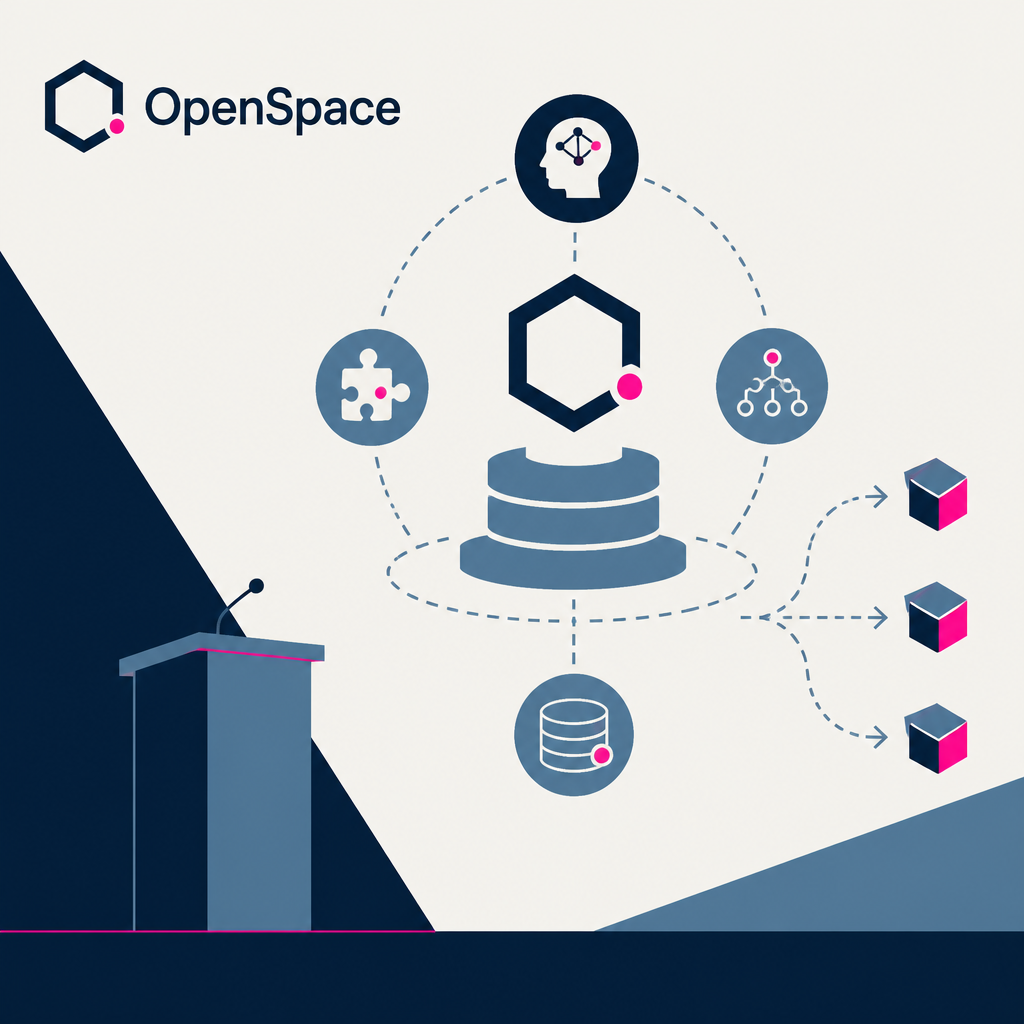
A step-by-step guide shows how to build AI agents with OpenSpace that save and reuse their own skills instead of starting over each time. Every fix or shortcut gets logged in a database, so repeat tasks get cheaper and faster.
Based on reporting by MarkTechPost, Sana Hassan — read the original for the full story.
Summary, retelling and take written by AI under human oversight; images are AI-generated illustrations. How we work · Report an error
There's a particular kind of drudgery in AI agent work that nobody talks about enough: the agent solves a problem, does something clever, and then forgets all of it the moment the session ends. A new MarkTechPost tutorial walks through OpenSpace, an open framework from HKUDS on GitHub, that tries to fix exactly that by giving agents a memory for their own capabilities.
The setup itself is straightforward but deliberate. The tutorial clones the repo with a sparse checkout, installs it in editable mode inside a Colab environment running Python 3.12, and wires up credentials for a model — in this case anthropic/claude-sonnet-4-5 — alongside workspace and skill directories. From there, tasks get submitted through an asynchronous Python API: the first is a payroll script that parses employee hours and applies overtime math, the second extends that same logic to handle tax withholding and net pay, explicitly asking the agent to reuse whatever skill it built the first time around.
What happens under the hood is the interesting part. OpenSpace stores whatever capabilities it evolves in a SQLite database, complete with version numbers and lineage metadata, so you can trace exactly how a skill came to exist. The tutorial breaks these down into three origin types: FIX, DERIVED, and CAPTURED, and later inspects a showcase database containing more than 60 evolved skills to show how those origins stack up. It's a small but telling detail — the framework isn't just caching outputs, it's categorizing how each piece of knowledge was formed.
Beyond the built-in behavior, the walkthrough shows how to hand the agent new abilities directly. A custom SKILL.md file gets written to teach the agent how to turn a CSV into a markdown report with summary stats and null counts, and it gets picked up automatically once dropped into the skill directory. Host skills like delegate-task and skill-discovery get copied in too, making the setup usable by other SKILL.md-compatible agents such as Claude Code or Codex. The tutorial also spins up an MCP server over streamable HTTP on a local port, generates a sample host configuration for external agents to connect, and — if a cloud key is present — demonstrates uploading a skill to OpenSpace's cloud sharing commands.
By the end, what's been assembled is less a single trick and more a full loop: execute a task, evolve or reuse a skill, persist it with lineage intact, and expose it to other agents through MCP or the cloud. The tutorial even points toward a dashboard, run through Node 20 and a local frontend, for watching that evolution happen in something closer to real time.
My take — AI-written commentary, not fact-checked reporting
The lineage tracking is the part worth paying attention to, not the skill reuse itself — every agent framework promises efficiency gains, but few bother logging how a capability was actually derived. Whether FIX, DERIVED, and CAPTURED turn into a meaningful audit trail or just three labels nobody checks depends entirely on whether teams actually open that database instead of trusting the token savings and moving on.
Read more about this at: MarkTechPost
Related stories
 Microsoft’s SkillOpt Shows Optimized Agent Skill Artifacts Transfer Across Model Scales and Between Codex and Claude Code Harnesses
MarkTechPost · 1 month ago ·
35
Microsoft’s SkillOpt Shows Optimized Agent Skill Artifacts Transfer Across Model Scales and Between Codex and Claude Code Harnesses
MarkTechPost · 1 month ago ·
35