Crypto mining firms are redirecting investment and data-centre capacity from Bitcoin toward AI workloads as Bitcoin rewards decline and coin prices fall. Bitcoin peaked at about $124,000 in October 2025 before dropping to around $80,000 in August. As a result, miners are signing long compute and colocation deals for AI (including multi-year GPU capacity leases), making it hard for many to switch back to Bitcoin quickly.
Perplexity launched Portable Computer, a version of its Perplexity Computer agent that runs locally on a user’s own machine in cooperation with Nvidia. It is first available on Nvidia’s DGX Spark and runs on the Grace Blackwell GB10 platform with a 20-core Arm CPU and 128 GB of unified memory. Work done locally costs no credits and the agent can escalate to the cloud only when needed for items like web information and model calls.
Apple refreshed the Mac mini and Mac Studio by debuting new processor-equipped models for the next generation of Macs. The Mac mini starts at $899 with an M6 chip that is built on a 2-nanometer process. The lineup now adds an M6-based Mac mini and an M5 Pro edition plus two new Mac Studio configurations using M5 Max or M5 Ultra chips.
Enterprises rolling out AI agents are facing rising telemetry and monitoring bills that they struggle to attribute and predict, leading some to cancel or delay deployments. 59% of organizations have terminated or delayed agentic AI deployments due to monitoring costs. A pipeline-first telemetry architecture is being recommended to filter, sample, enrich, and route data before it reaches expensive centralized storage and analytics, reducing total cost of ownership.
Banco BS2 said it is scaling enterprise AI by first building infrastructure, governance, and operational discipline rather than deploying AI agents directly. Its CIO Danilo Zimmermann stressed that latency is mandatory and non-negotiable. This shifts the bank’s AI rollout to start with business and customer needs to shape infrastructure investments and automation for operational efficiency.
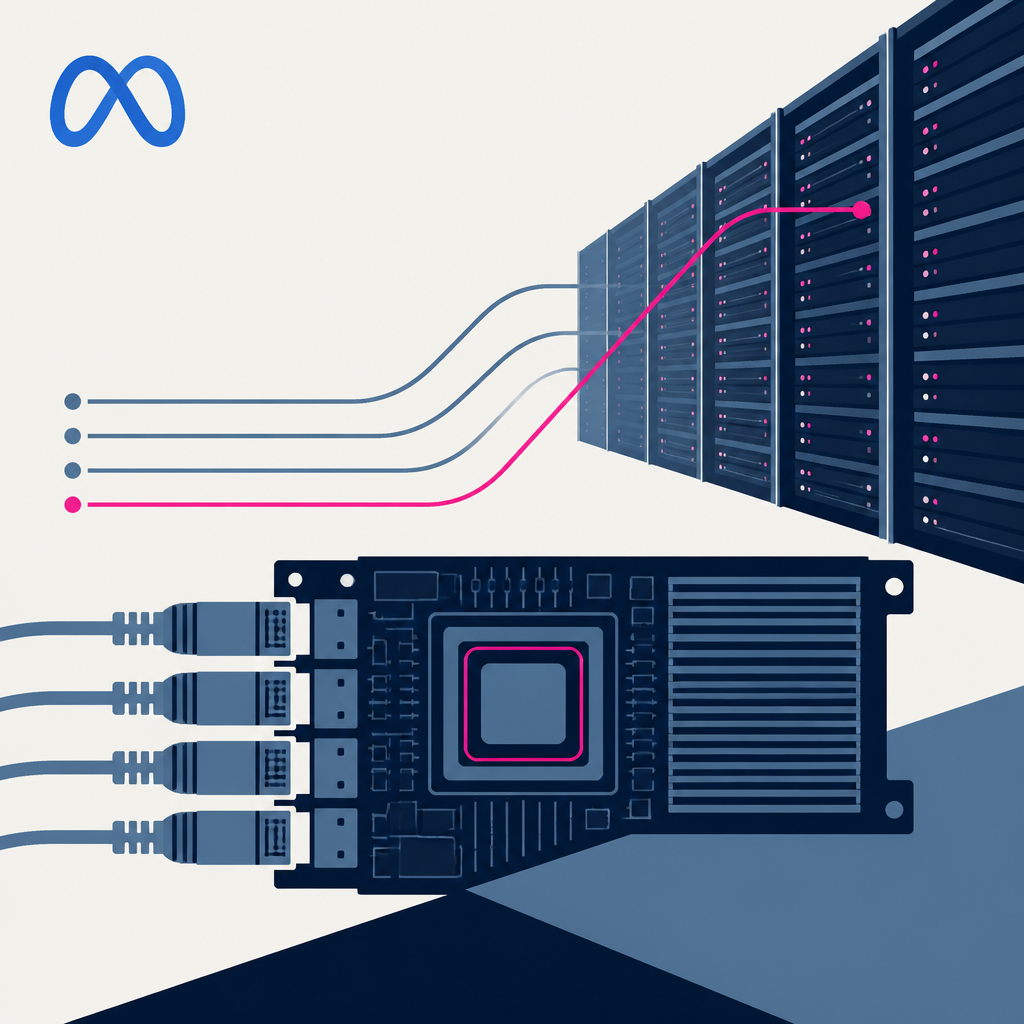
Meta introduced MetaRoCE, a clean-sheet RDMA transport protocol built for AI-scale Ethernet that shifts ordering, path selection, and recovery into the NIC instead of relying on in-order delivery and pause-frame behavior. Meta reported about 86% throughput at 1% packet loss on a 64-node AMD GPU cluster running RCCL collectives. Deployment-ready artifacts are planned for October 2026, with early hardware validation on AMD Pensando and further vendor implementations underway, making this a fabric-architecture decision rather than an immediate procurement change.
Perplexity brought its Computer agent to desktop as Portable Computer, running locally in a sandbox on supported Nvidia hardware. It requires at least 24GB of GPU VRAM, with a DGX Spark desktop costing $4,800 or an RTX 3090 priced at well over $1,500. Portable Computer now executes local file edits, shell commands, and PDF processing, but can route incomplete steps to Perplexity cloud models with user approval to keep execution controlled.
NVIDIA announced that major PC game publishers will bring titles and anti-cheat support to NVIDIA RTX Spark at Gamescom. EA, Embark, and Ubisoft are among the publishers added ahead of RTX Spark’s launch this fall, including EA SPORTS F1 25 and Apex Legends. RTX Spark will add native EA Javelin anti-cheat support and bundle RTX features like DLSS and Reflex for RTX-powered Windows PCs.
Ocean-based data center projects have expanded for AI and computing needs, despite environmental, regulation, and maintenance hurdles that keep traditional land sites attractive. The article cites a Chinese wind-powered underwater data center that launched in June 2025 and began full commercial operations in May 2026. The result is a shift toward experiments using seawater cooling and offshore power while ongoing analyses focus on how to limit marine thermal impacts and make operations maintainable and approvable.
Nvidia released the Jetson Orin Nano 2 edge robotics computer for running AI models on-device. It delivers 78 trillion operations per second of AI compute and uses 40% less power than the previous generation in a 15-watt mode. The higher compute and lower power enable real-time vision and other AI perception tasks in lightweight robots and drones, with general availability planned for the first half of 2027.
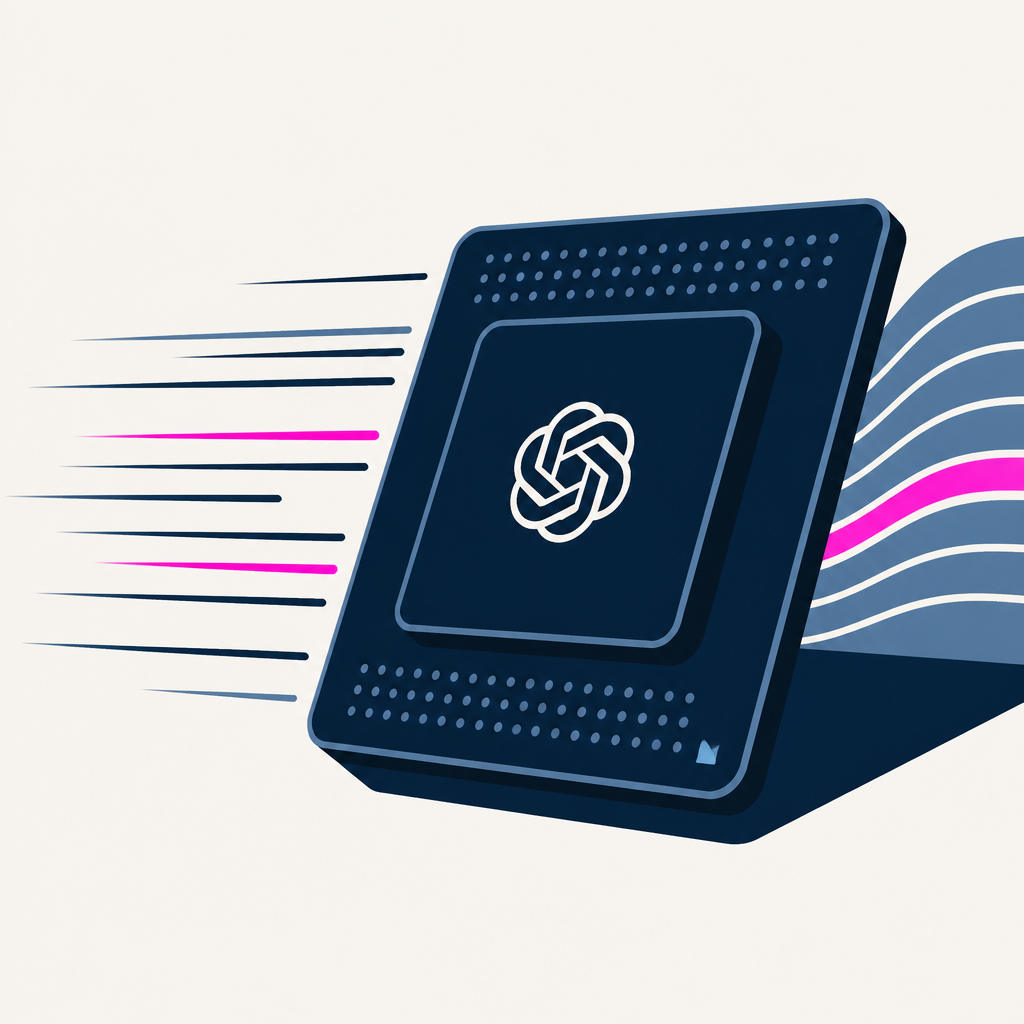
OpenAI presented benchmark results for its Jalapeño inference chip at Hot Chips, comparing it against current state-of-the-art inference processors. On Semianalysis’ InferenceX benchmark, Jalapeño delivered more tokens per user and more throughput per kilowatt than the Nvidia Blackwell system used for comparison. OpenAI says the performance and power efficiency should enable more AI inference work per unit of power with faster, lower-latency responses, with deployment planned for end of 2026 in small volumes and more in 2027.
Cisco expanded its Secure AI Factory with Nvidia to rack-scale deployments, aiming to let enterprises operate production-ready AI across their infrastructure. The update adds rack-to-fabric liquid cooling beyond 200 kilowatts per rack for reasoning, agentic AI, and trillion-parameter training. It introduces Nvidia Spectrum-X switch silicon with Cisco OS integration and adopts reference architectures plus shared management tooling, changing the offering from rack-level setup toward an end-to-end AI-factory operations stack.
OpenAI published its first performance results for Jalapeño, a custom inference chip built with Broadcom and tested across multiple large language models. Jalapeño delivered 1.5 to 1.9 times more work per watt and cut end-to-end latency by 1.7 to 3.6 times, while the chip is rated at 700 watts and did not exceed 550 watts in these tests. OpenAI says it will start using Jalapeño in its own infrastructure by the end of the year and is already working on the next two generations.
Apple introduced the M6 chip for the new Mac mini and the M5 Ultra chip for the new Mac Studio to improve on-device AI model performance. The Mac Studio with the M5 Ultra can use up to 512GB of unified memory. The lineup shifts toward running larger local AI models on consumer hardware, with Mac mini targeting mid-sized models and Mac Studio targeting several-hundred-billion-parameter models.
Cisco and Nvidia expanded Cisco Secure AI Factory from networking-based deployments to rack-scale, liquid-cooled systems for production use. The rollout uses liquid cooling systems starting with Blackwell and moving to Vera Rubin. The change shifts customers from first-token setup toward ongoing operations by adding monitoring, health, availability, upgrades, and lifecycle management around Nvidia-aligned, Cisco-validated designs.
Ropedia launched HOMIE Gen2, a head-mounted wearable that records egocentric human movement data to train robotic AI models. The device synchronizes four camera streams, spatial audio, and inertial data to within 50 microseconds. HOMIE Gen2 enables faster and cheaper deployment than the previous generation, with deployment said to be 10 times faster and costing about one-12th the price of a full lab capture.
Nvidia’s GeForce Now will add official support for Valve’s Steam Controller and Steam Machine later this year. The update is due “later this year,” with Steam Deck/Steam Machine support and “later” availability on Windows and macOS. As a result, more GeForce Now users can use the Steam gamepad, and GeForce Now will also gain new DLSS 4.5 controls for DLSS Super Resolution, Dynamic Frame Generation, and Ray Reconstruction.
OpenAI says its Jalapeño AI chip finishes inference tasks more efficiently and returns faster responses than competing AI systems. The blog post and reporter briefing were published on Tuesday. Jalapeño, an ASIC co-developed with Broadcom, is positioned to reduce latency while increasing throughput for AI inference.
SpaceXAI is deploying NVIDIA’s new Vera CPU to power the next generation of its AI agents, including running an optimized Vera hardware setup on its first AI satellite, Starmind. The deployment is tied to Vera Rubin and the next-gen Vera CPU being sent “into orbit,” with the article describing Vera as delivering up to 1.8x faster agentic task completion than traditional x86 chips. This shifts more AI agent workload from GPUs toward a dedicated CPU role (coordinating tools and running code), and it signals that AI infrastructure could expand to space-based compute.
Apple launched new Mac Studio models using the existing M5 Max and a new M5 Ultra chip inside the same small chassis as earlier generations. The updated M5 Max Mac Studio includes 36GB of unified memory. As a result, the Mac Studio line is brought back under a single chip generation after a prior split between different Studio chip families.
Apple announced an M6 chip for Macs alongside an M5 Ultra aimed at compute-heavy workloads like 3D rendering and running frontier AI models. The M6 is Apple's first 2nm chip and adds a Dual 16-core Neural Engine for on-device AI. With the updated 12-core CPU (including two super cores and a mixed performance/efficiency core layout), Macs can run more AI workloads locally with improved performance and power efficiency.
Sarah Friar described how progress across chips, compute, models, and products adds up to deliver more useful intelligence at larger scale and lower cost.
She frames the improvement as lowering cost while increasing scale.
No specific product, benchmark, or date is given, so the main change is a conceptual explanation rather than a concrete new development.
Jalapeño, a custom OpenAI inference chip, reported faster, more power-efficient AI inference for modern models. No specific benchmark numbers were disclosed in the article. The stated result is higher throughput and lower latency compared with prior inference approaches.
Taiwan’s Taiwan Innotech Expo (TIE) is scheduled for September 17–19 at Taipei World Trade Center as a government-backed venue for moving AI, chip, quantum, and sovereign communications research into commercial use. Last year drew 50,000+ visitors from 65 countries with 422 exhibitors and about 1,100 technologies, and this year organizers target roughly 440 exhibitors from 19 countries and about 1,100 technologies. The show’s content is organized around three AI-forward pavilions and includes proof-of-concept and licensing tracks plus invention awards, conferences, and matchmaking sessions.
Embedd secured $2.7 million in pre-seed funding led by Seedcamp to automate how software integrates with multiple semiconductor chips. The round was also backed by Microchip Technology, with Embedd enabling Zephyr support. The company will use the funding to keep developing its platform and expand partnerships so chip developers can deliver software integration faster.
Every AI story that matters,
in your inbox by 8am.
TLDRocket reads all relevant sources, removes duplicate coverage, and summarises the
day in two minutes. Follow companies and topics for alerts, or get the
briefing in Slack. Free, no spam, unsubscribe anytime.
Reading TLDRocket needs no cookies, and the readership counts we rely on come from
our own cookieless analytics. Google Analytics is the exception: it sets cookies and
reports to Google, so it stays switched off until you allow it. You can change your
mind any time from “Cookie settings” in the footer.
Strictly necessary
Session security and form protection (tldrocket-session,
XSRF-TOKEN, 2 hours). The site cannot work without them,
so they need no consent.
Always on
Google Analytics 4 (_ga,
_ga_<id>, up to 2 years). Measures which
stories and sections readers use. Google acts as a third-party processor and may
store the data outside the EU. No advertising, no profiling, no data sold.