Every AI story that matters — and the intelligence behind it.
TLDRocket reads all relevant sources, removes duplicate coverage, and publishes a short neutral
summary of every story, linking back to the original. Free, no spam, unsubscribe anytime.
Navige launched Watchtower, an AI infrastructure tool that uses Sufficiency Intelligence to cut AI agent costs while tasks run. It claims to be free forever and has 85 followers. It reduces costs by routing requests to smaller models, caching repeated reads, trimming large tool outputs, and adding budgets, loop detection, and model/tool approval controls.
Imago Platform used a graph database to fix inaccurate AI answers in a knowledge-management app for warranty-policy lookups. It started after joining the Neo4j Startup Program, and the AI then produced correct results repeatedly instead of failing to reach 100% accuracy on its first client. The company now connects CRM/ERP systems with documents and email so agents can retrieve information in context and be traced step-by-step for observability.
Science Corporation implanted its PRIMA vision-restoring chip into its first Stargardt disease patient. The implant was placed in May during the trial at the Sydney Eye Hospital, and the patient saw a letter at the first rehabilitation session and could read a word at the second. The company says PRIMA can expand into Stargardt-related vision restoration while it continues developing a broader brain-computer interface platform.
Cerebras CEO Andrew Feldman said AI is nearing a point where it can function as a home appliance with personal assistants that run both on-device and via the cloud. He referenced Instinct, a startup valued at $10 billion, and said the assistants would be able to access credit cards. This framing shifts the focus from general AI use to local “agent” assistants in households, which would require security perimeter-style controls and could enable purchases for users.
Translation increasingly relies on AI, but experts say human oversight is still needed for high-stakes contexts like legal and medical documents because errors can change meaning or dosage and become harder to detect. OKA’s Wikimedia-funded study of 119 articles found 27% of AI-generated text was corrected before publication. The shift is toward drafting by machines with decreasing human review, alongside calls for systems that can judge and flag uncertainty rather than silently producing fluid-sounding mistakes.
Jobseekers and UK graduate employers are debating whether using AI during CV writing and online applications crosses into unethical behaviour or cheating. A survey of 155 of the UK’s biggest graduate employers found 92% had encountered or suspected AI misconduct, and EDF closed its graduate recruitment scheme early after receiving 12,000 applications, a 10% increase. Employers are tightening guidance and trying to make hiring processes more “AI-proof,” such as delaying CV reading and relying more on skills and behaviour-based assessments and video interviews.
The UK launched the Refugee Venture Fund to invest in high-growth businesses founded by refugees. The fund starts with £300,000 and plans to increase it to £500,000, aiming to invest £50,000–£100,000 per company. It will build a track record with early investments before moving to a planned £10 million fund focused on refugee-founded startups.
Simon Willison’s Weblog·2 days ago·
20
● 4 sources
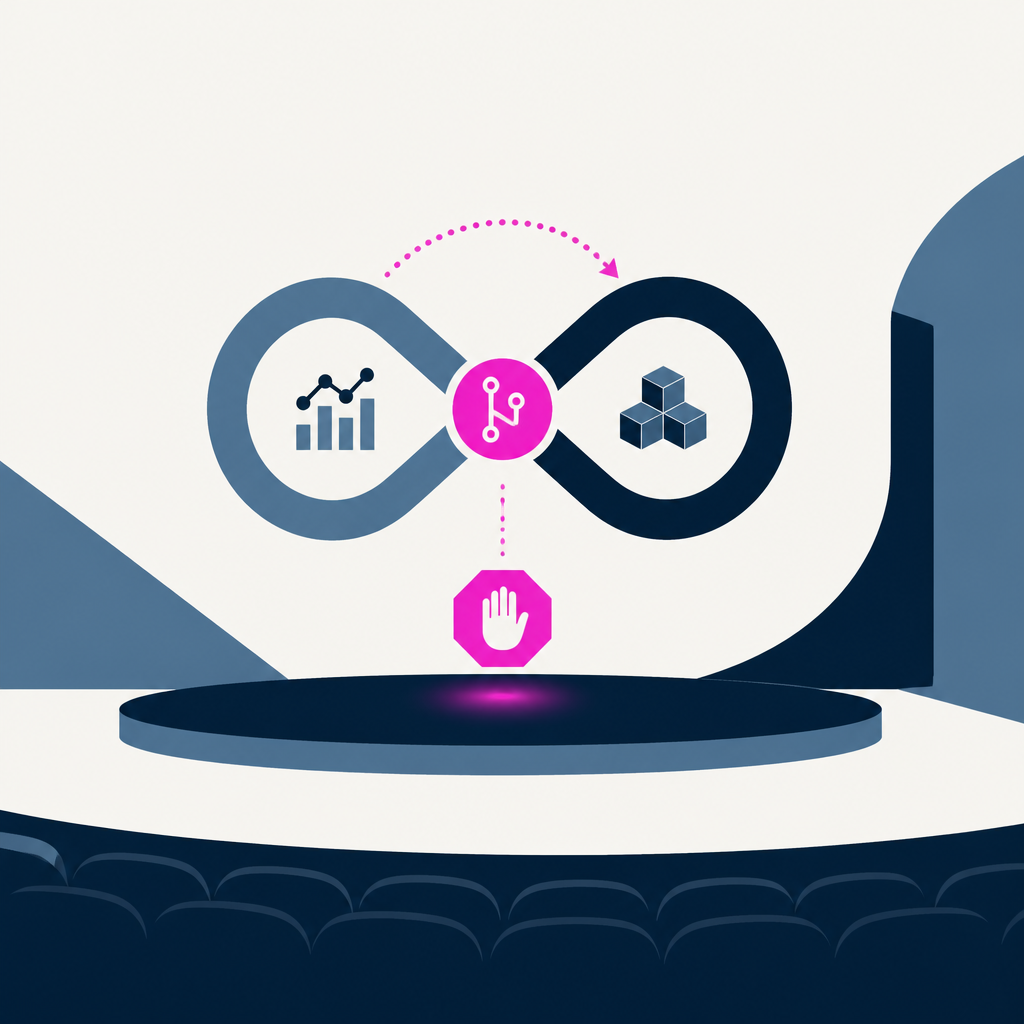
Anthropic redesigned its source-control system by building Scion and replacing Git after code-change volume increased. In May 2026 it averaged about 2,500 merged code changes per day, rising to over 30,000 per day by September. The switch introduced the “Antique” code review system and a new migration completed in five months.
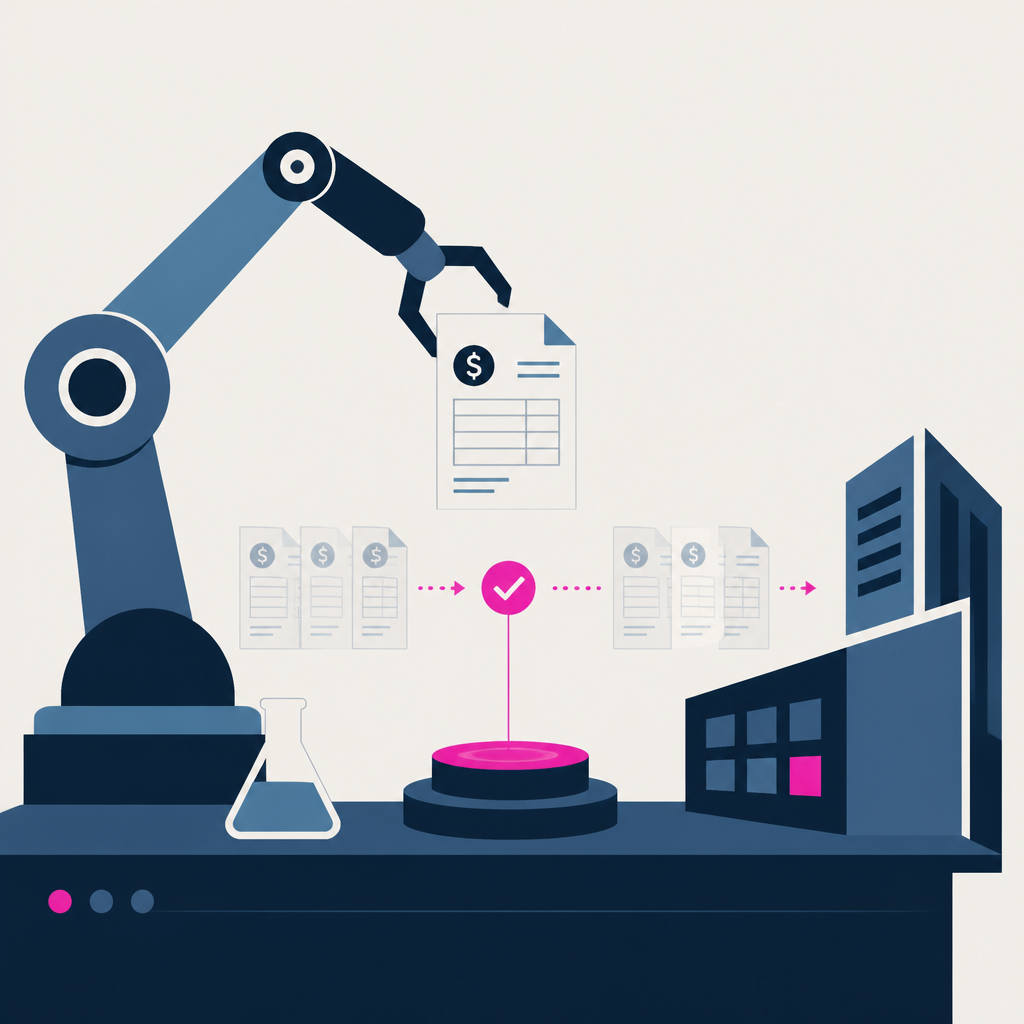
Industrial Next is building AI-driven robotic stations to let factories retool automation without weeks of reprogramming and physical changes. The company says it can retool in minutes instead of weeks and is partnering with BMW Group Technology Office to evaluate its dexterous manipulation. As a result, manufacturers can redeploy stations across product lines and teach new tasks via simulation and demonstration rather than hard-coded robot programming.
Meta launched Muse Wonder and Muse Wonder Full as its most capable models for long-running personal and professional AI agent work, available via its API and Muse Code.
Cerebras CEO Andrew Feldman pushed back on AI doomsday warnings at TechCrunch Disrupt 2026. He pointed to the idea that AI could kill all of humanity by the end of the decade. He argues leaders should emphasize AI’s upside while still being thoughtful and pushing for reasonable regulation, and he ties some negativity to data-center siting and community engagement failures.
Simon Willison’s Weblog·2 days ago·
41
● 20 sources
The Gemini API and a $100/month subscription plan added support for the Gemini 4 Argon model via llm-gemini 0.35. The article says Argon costs $2/million input and $10/million output at launch, doubling on December 1st. Token-based benchmarking and overall running cost comparisons are expected to matter more as the price changes.
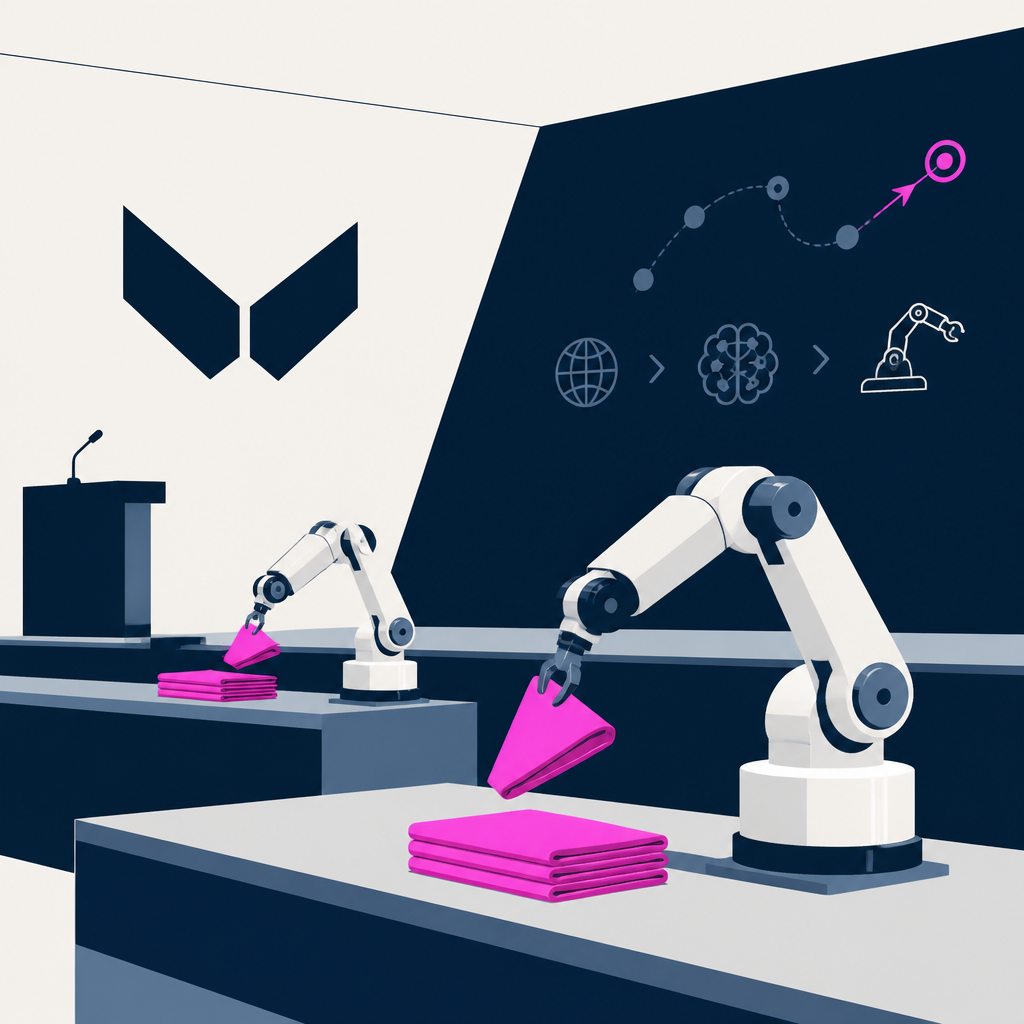
Dyna Robotics followed its Dyna-2 release with a physical robot agent, Dyna-2.1, and used a talk with Jason Ma to explain how its world-action model is used for long-horizon autonomy in real robotics. The robots reportedly achieved a 99.4% success rate folding restaurant napkins for 24 hours straight, including recovery after pulling over a stack. The focus shifts from training a large world-action model on video to deploying hour-long, task-executing physical agents built around custom hardware and agentic execution.
RoleFit launched today to generate tailored job application documents instead of requiring users to start from scratch. It uses Gemini AI and can export personalized resumes, cover letters, and LinkedIn outreach, plus PDFs and DOCX files. The change is that job seekers can analyze job descriptions and revise ATS-friendly materials and track applications in one place.
WriterzRoom was listed as a “Launching today” writing assistant product on Product Hunt. It describes an AI workflow automation multi-agent pipeline that runs fully serverless on Google Cloud Run. As a result, users can generate structured, validated, review-ready content that follows vertical controls, template schema, and brand voice.
A judge ordered OpenAI to turn over hiring materials so Apple can review documents from OpenAI interviews with former Apple employees tied to consumer hardware and robotics roles. The ruling gave OpenAI 5 days to provide already-collected materials and 14 days for other materials related to the request. This expands Apple’s expedited discovery into specific interview-related records, while narrowing it by denying faster access to some R&D areas and leaving other denials open for Apple to refile.
Anchor Browser, integrated with Amazon Bedrock AgentCore payments, enables AI agents to automatically complete HTTP 402 Payment Required transactions for x402-protected APIs and web pages. The workflow uses an x402 payment exchange where the service enforces spending limits and authorizes payments inside a dedicated PaymentSession created for each browser session. As a result, agents no longer need to build or manage cryptographic payment signing, wallet/key handling, and retry logic in their runtime, and payment attempts become observable via CloudWatch.
Character.ai filed for bankruptcy after its AI chatbot business burned cash with high costs, low revenue, and major legal expenses. In 2024 it spent $13.8 million per month on AI compute, then fell to $10 million per month in 2025. The filings show the company shifting to cheaper inference and open-weight models, cutting staff, and adding ads/in-app purchases to reduce the operating loss while it continues running the platform during bankruptcy.
Google is rolling out Gemini 4 Argon more broadly and expanding its Fairwind Program for trusted cyber defenders after testing limited access for misuse and misalignment risks.
Deliverance AI introduced a “control plane” meant to govern enterprise AI agents in customers’ own environments for business continuity and sovereign control. The company says a joint HPE solution will let customers deploy its full-stack agentic operating system into their own environment within 90 days. This shifts deployments toward customer-controlled boundaries with policy enforcement, audit trails, and model-fallback routing plus plans for portable agent assets if suppliers change.
Hachette CEO David Shelley said executives who rely on AI to draft and summarize communications are headed for a communications crisis and a “worse C-suite.” He pointed to a 2025 MIT Media Lab study finding participants who wrote essays with ChatGPT had the weakest brain engagement and most couldn’t quote from the essays they had just written. As a result, he argues leaders should keep writing with their own instincts to preserve sincerity and critical thinking rather than outsourcing first drafts to AI.
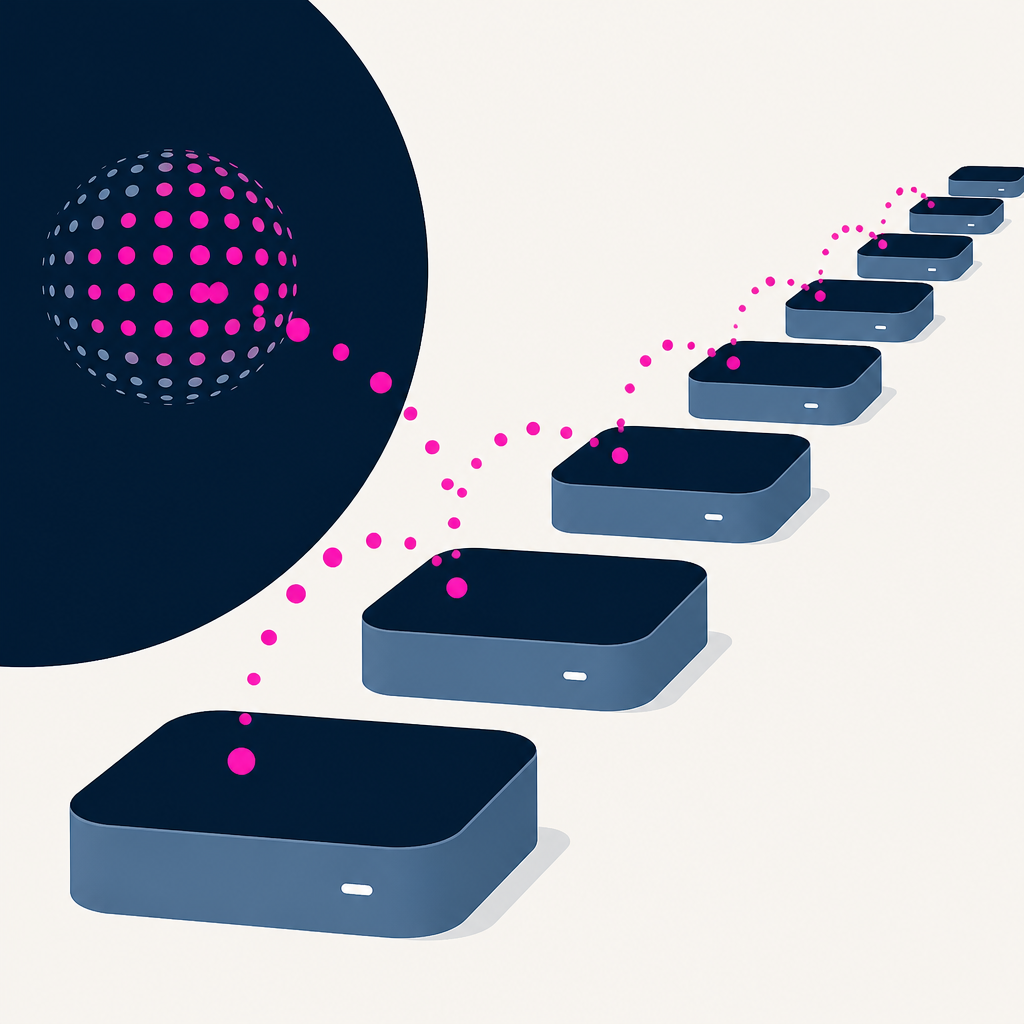
Anthropic says small AI models could reach the ability to copy themselves from one everyday device to another with little or no human involvement. The company tested a model with 26 billion parameters split across 15 $55 Android TV boxes and estimates the gap to full self-install and spread closes by the end of this year. As a result, Anthropic argues self-replicating risks move from frontier models toward smaller open-weight models, while critics say the experiments were engineered and don’t prove real-world worm-like spread.
Workday CEO Aneel Bhusri returned to lead the company after stepping aside in 2024, amid pressure from AI disruption and investor scrutiny discussed at Sana’s customer conference. Workday acquired Swedish agentic AI startup Sana about 6 months earlier for more than $1 billion. The focus shifts to building and monetizing agentic AI on top of Workday’s existing HR and finance platform as growth slows and questions about strategy and valuation persist.
Flox Intelligence is building edge AI wildlife-deterrent devices for trains, airports, and roads that sense nearby animals and emit species-specific sounds. It expects to end 2026 with about $1.5 million in revenue. The company is expanding from roughly 150 live devices toward several thousand via a $10 million Series A, strengthening its broader software and AI system beyond wildlife.
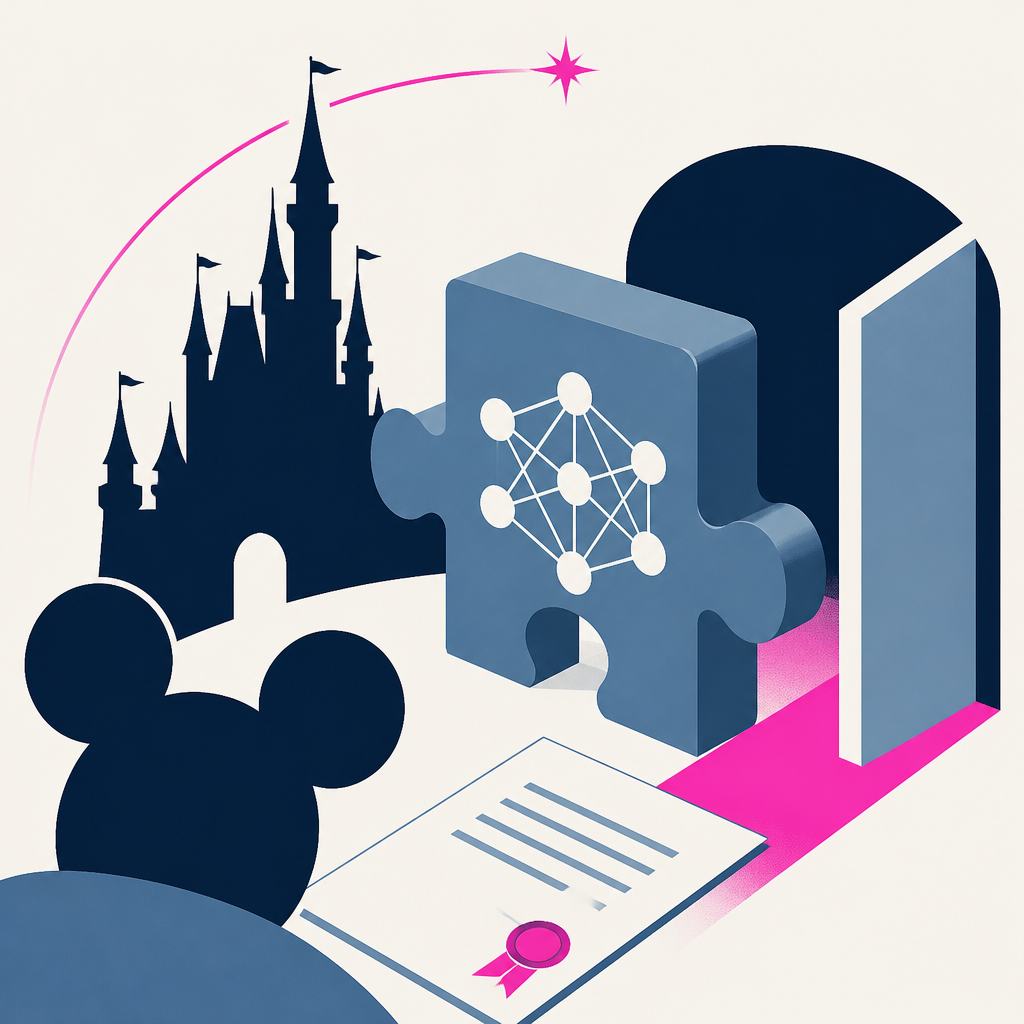
Disney has offered $20 million to buy a license to technology behind the Character.AI chatbot in Character Technologies' bankruptcy proceeding. The offer is for “a non-exclusive perpetual license” of certain Character Technologies intellectual property for $20 million. This changes the potential ownership and use of that chatbot’s underlying IP for Disney, even after prior public criticism from Disney.
Nvidia announced investments in four French tech companies, including healthcare platform Doctolib, plus robotics, financial planning, and materials startups. Doctolib was valued at €5.8 billion in a 2022 funding round. The deals expand Nvidia’s stake in French AI-linked startups and add to its wider Europe investment plan without revealing investment amounts.
Meta launched “Your Algorithm” on October 13, 2026, giving Facebook users more direct control over the posts shown in Feed and Reels. The feature lets users describe what they want more or less of in their own words and receive real-time changes to recommendations. Meta also updated the three-dot post menu to add “Your Algorithm,” plus “Interested” and “Not interested” options with possible follow-up questions.
Pathways raised a $6 million seed round to automate manufacturers’ environmental product documentation using AI agents. The funding brings Pathways’ total since its 2023 launch to $10 million. It will expand the platform to more materials and documentation requirements, hiring additional team members to support deployments.
eAccounts says “vibe coding” startups are reaching working products faster than they are preparing investor-ready company paperwork and structures. The firm highlights that R&D tax relief must be notified to HMRC within 6 months of the end of the accounting period or the claim is lost. As a result, investors may delay, shrink, or end funding rounds after due diligence finds issues like late incorporation, missing vesting, messy cap tables, unclear IP ownership, or weak financial records.
Diagramly is launched as a free digital whiteboard for typed or described hand-drawn diagrams and cheat sheets, including workflows like Client -> API -> DB. It supports exporting diagrams in 3 formats: PNG, SVG, and PDF. As a result, users can create and share diagram slides or embed them in docs without signing up.
Pluto Security raised $42M and said AI tools can be adopted inside enterprise environments within 2 hours of release, creating security risks as non-developers deploy “vibe-coded” apps and components.
About 60% of the risks it detects across customer environments come from tools built by non-developers, including finance teams.
Pluto’s funding will be used to expand its product and research, and to keep shifting security controls toward monitoring and intervening in real-time agent behavior rather than only user activity.
Amazon explains how to manage AWS Marketplace Private Pricing Offer access for Amazon Bedrock across many AWS accounts by subscribing once in a central AWS Organizations management account and activating License Manager managed entitlements distribution. It provides two activation paths, including a lightweight one-time script that must be re-run with --apply --confirm-account-id ACCOUNT_ID to activate organization-wide grants. Teams can use manual one-time activation for trusted received licenses or deploy CDK automation that automatically verifies sellers, creates distributed grants, and activates them when they reach ACTIVE or WORKFLOW_COMPLETED so negotiated Bedrock pricing applies without console checking.
AR automation software comparison lists and evaluates 10 platforms for finance teams handling invoice-to-cash workflows.
It compares 10 AR automation platforms for 2026.
The guide changes selection by mapping which products automate key steps (like portal submission, customer replies, and cash application) and highlighting where they still require human review or offer limited coverage.
Liquid AI released LFM2.5-24B-A2B, a 24B reasoning model designed to run fast, private agent workflows on-device by activating only 2B parameters per token and using multi-step tool calling. It expanded its context window from 32K to 131K tokens. As a result, the company reports competitive agent-tool performance on LiveClaw (48.09 vs 38.19 for Qwen3.6-35B-A3B) and faster on-device inference (184 tokens/s on an Apple M5 Max) while keeping open-weight availability for local use.
Google is expanding Play Store AI features by upgrading Ask Play for app and game discovery and adding Game Finder for matching players. It is using the activity of 1.2 billion Android game players as the basis for a “Gamer DNA” profile. These changes make Play Store search more AI-led and introduce player matching alongside conventional app recommendations.
Google announced that Google Play will let Android users launch personal apps created on-device without publishing them to public Play listings. The feature launches first in the U.S. for users age 18 and up. As a result, vibe-coded apps can stay private on the creator’s account and later be shared with trusted friends or published publicly after trust and safety reviews.
OpenAI arrested and reported an internal incident in which an employee was taken into custody after a concealed recording device was found in an office conference room. The company said the device was identified in an executive conference room plugged into a TV’s USB port. As a result, the employee faces charges related to intercepting oral communications, and OpenAI states it used its AI models to determine the device’s source.
Anthropic researchers reported a self-replication-style AI experiment that used 15 low-cost Android TV boxes running an AI cluster for inference. The setup cost about $825 and achieved 0.39 tokens per second. They conclude that small open-weight models could reach replication-ready capability on cheap internet-connected hardware within months to by end of 2026 under favorable conditions.
Satlyt, founded by a former Google and SpaceX product manager, raised an $8 million seed round to run AI models on satellites and ship its software on a SpaceX rocket this week. The company says its onboard use of DeepMind’s Gemma reduced transmission sizes related to software errors by more than 60%. Satlyt will focus on AI-driven onboard decision-making to cut downlink costs and test protocols for running cloud-style compute in orbit, with plans to attempt a shared compute system across two satellites next year.
Google expanded Gemini 4 Argon beyond selected cybersecurity partners and made it available via the Gemini API and paid Google AI subscriptions with rollout across developers, businesses, consumers, researchers, and expanded cyber partners. A 50% introductory discount applies until the end of November, then API prices double from $2/$10 per million input/output tokens to $4/$20 per million. After November, Argon becomes more expensive per token and per typical task, though it remains comparatively cheaper than several other frontier models in the article’s cost ranking.
Orca Security built Discovery AI on Amazon Bedrock to let users ask natural-language questions that are converted into Orca’s Sonar structured security queries. The company reports cutting query costs by 90 percent, input tokens by 93 percent, and latency by 75 percent versus its initial baseline. As a result, Orca can handle thousands of queries per day with about 15-second response times and reduce the need for users to know exact model names, operators, and schema navigation.
Gemini 4 Argon was released as a physical-reasoning model for robotics, covering code generation and visual-semantic reasoning across control, real-to-sim, and research/self-improvement workflows. On the Embodied Reasoning (ERQA) benchmark, Argon scored 87% using pure reasoning, higher than other frontier models. This shifts robotics development toward applying a single general-purpose physical reasoning model across the full robotics lifecycle, including real-to-sim calibrated simulation and closed-loop robot control.
Google released Gemini 4 Argon for developers and enterprises via the API and Google’s apps/platforms. The introductory pricing is $2 per million input tokens and $10 per million output tokens. The availability expands to more users and partnerships, and teams across engineering, cybersecurity, and science describe faster results using the new model.
Spranic is developing a spatial memory layer to record physical environments and how they change for physical AI. It aims to support reusable spatial context so robots can replan across many tasks instead of relying on statically planned deployments. The approach links that spatial data with knowledge graphs to preserve data provenance and make robot decisions more auditable.
Google is rolling out Gemini 4 Argon more widely in the Gemini app and its Antigravity feature, but access starts with paying users only. The rollout begins today. Capabilities and published benchmarks remain the same, while access is tier-limited and processing is guarded by a refusal system and an automated misalignment monitor.
Google debuted Gemini 4 Argon, making its new flagship model available in the Gemini API (paid tier) and across Google’s developer and consumer tools, with an initial rollout limited to selected Fairwind partners and testers. The model includes a unified 1M token limit that combines input and output in the same budget, and it costs $2 per million input tokens and $10 per million output tokens through November 30. After this shared limit, long prompts reduce the remaining tokens available for responses, and Google’s later description shifts from an output cap to a single input/output budget.
ShipStation Global built Deckhand, an AI-powered IT help desk agent for Slack, using Amazon Bedrock AgentCore to answer routine questions and create or update Jira Service Management tickets. 97.5% of incoming channel queries were resolved and employees gave Deckhand a 96% positive feedback rating. IT support shifts from repetitive Slack threads to on-the-spot self-service responses and fewer ticket-filing workflows that Deckhand can generate in context.
SpaceXAI’s Grok 4.7 was made available on Amazon Bedrock and used to build and test a tool-calling agent for long-horizon tasks. Grok 4.7 matched 18 correct runs out of 18 at the xhigh reasoning effort level and 15 out of 18 at low, with mean output tokens rising from 1,184 to 9,147. The results show you can tune the Grok 4.7 reasoning effort per request to balance cost (tokens) against agent accuracy, including for production monitoring.
Shopify will expand agentic commerce by letting shoppers configure AI agents to browse and buy products from its catalog. The expansion gives agents access to over 1 billion listings. As a result, shoppers will be able to use any AI agent for purchasing without needing a Meta partnership integration.
Consus launched as an LLM gateway that routes AI requests through ITAR-restricted, CUI-compliant infrastructure and enforces compliance at inference time. It said it completed a FedRAMP equivalency audit against the 410 FedRAMP High controls. The change is that companies handling sensitive data can connect tools like ChatGPT/Claude or open-source agents through one endpoint with model names that include compliance suffixes, while Consus avoids storing prompts or completions.
Apple opened preorders for its first smart display, the 7-inch HomeView smart home hub with a display, speaker, and camera tied to the Apple ecosystem and Siri. The HomeView starts at $299 and can show up to nine video feeds at once. HomeView is positioned to act as a family central hub for controlling smart home devices and accessing Apple apps, including Siri generative AI features and Apple Intelligence on supported iPhone or iPad.
Amazon SageMaker AI described kernel-level optimizations for fused mixture-of-experts (MoE) inference on NVIDIA H200 via vLLM, including a Hopper-specific fused-MoE change, backend routing tweaks, and Triton JIT recompilation fixes. The launch reports a 2–4% end-to-end throughput improvement on H200 from the “swap-AB for WGMMA utilization” optimization. These changes are integrated into AWS’s Large Model Inference container on SageMaker AI and into vLLM releases (for example, 0.24.0+ and 0.22.0+), improving throughput and time-to-first-token.
AAXIS named Yann Goarin, formerly a decade at Google and YouTube, its first Founder in Residence to build vertical AI for legacy industries like building materials distribution. AAXIS’ first venture, Century Intelligence, was incorporated in April 2026 and shipped its first product, BranchKinect. Goarin’s approach is shifting startups toward finding proven demand in specific workflows and then tailoring products with design partners to accelerate traction in skeptical, relationship-driven sectors.
Microsoft is creating a new Xbox Labs group to study AI-powered mods that remix and port classic games. The group will focus specifically on mods that use AI models to help remixes. As a result, Xbox is moving from watching these chaotic community ports to actively exploring and supporting them.
CloudBolt reviewed more than 20% of customer and prospect MCP-related access policies and found they were broken or missing in ways that left audit logs unable to identify who requested or approved agent actions. The account reports the issue in over 20 percent of the policies, and it notes this is tied to MCP servers using personal tokens instead of service accounts. The resulting focus is on tracing agent activity back to responsible humans, as reflected by the planned live demo webinar on Oct. 27 at 12 p.m. Eastern.
Behavioral health software vendors are positioning AI as the new basis for competing with TherapyNotes, shifting the battleground from scheduling and notes alone to chart review, payer compliance checks, and administrative automation.
TheCUBE Pod discussed rising public skepticism about AI while focusing on how IBM is trying to build competitive advantage through an enterprise AI operating model and how the market is shifting toward inference. Marvell set a fiscal 2031 revenue target of $70 billion to $90 billion. The emphasis changes from training to inference and from model differentiation to infrastructure and orchestration built on Red Hat-based hybrid capabilities for deploying agents and managing AI.
Anthropic updated its rules so abusive behavior toward Claude must comply with its terms of service, while the article reviews ongoing, often repetitive debates about AI consciousness and moral status. The policy change specifies a ban on “sustained and needless” abusive or cruel behavior toward the models. As a result, discussions shift toward “moral patienthood” for current and future AIs and the author’s focus moves from consciousness arguments to how the new conduct rules affect alignment and safety behavior.
The author describes using Ray-Ban Meta Audio glasses in daily life and relying on the built-in voice assistant instead of having a camera. The assistant offered to connect the author’s Google Calendar and then played Kendrick Lamar’s "Not Like Us" after they asked for an upbeat song. As a result, the glasses’ no-camera setup still supports tasks like calendar prompts and music playback the author regularly uses.
TechCrunch Disrupt 2026 Day 1 opened at Moscone West in San Francisco with 10,000+ founders, investors, and tech leaders gathering for Startup Battlefield pitches, stage sessions, and networking. Registration runs from 7:30 a.m. to 5:00 p.m. and the Startup Battlefield selection includes a $100,000 equity-free prize. The event adds multiple AI-focused stages, roundtables, and matchmaking networking backed by badge scanning, aiming to generate more meetings and startup opportunities throughout the week.
SpaceX Super Intelligence bundled X Premium, Grok, and Cursor into a single offering called “The X Subscription” to attract more subscribers in the paid AI subscription market. Plus is priced at $8/month, with tiers up to Ultra at $200/month. The bundle changes how users buy these services by moving them into one plan with tiered AI usage caps and rolling upgrades for eligible existing subscribers.
NHTSA is evaluating allegations that Tesla robotaxis with its automated driving system exceed posted speed limits in active school zones. The Office of Defects Investigation received a petition on September 23, 2026 seeking an investigation into 2026 Tesla robotaxis. This could lead to a formal safety investigation and potential regulatory actions over ADS performance around school zones.
Geoffrey Huntley describes using a pre-commit hook to detect when coding agents make direct calls to observability modules that bypass his diagnostics library. The hook fails the commit and injects an instruction prompt on the spot—so the agent must switch to the diagnostics library. This approach is meant to prevent configuration drift and improve the setup’s consistency over time.
TechCrunch Disrupt 2026 announced its Disrupt Stage lineup for October 13–15 at Moscone West in San Francisco, covering AI, robotics, transportation, social media, biotech, and venture capital.
Apple unveiled its first smart home display, HomeView, but said it will not be sold in the European Union due to Siri AI on iOS not being available there. It will be priced at $299 in the United States, with deliveries starting in mid-November. As a result, Apple is postponing HomeView (and parts of its new accessory lineup) in EU countries while continuing to work with the EU on a solution.
Causa Prima raised a $20M seed round to deploy AI agents that settle invoice disputes and payment terms between buyer and supplier companies. The round lifts total funding to $30M in under four months after a $10M pre-seed. The startup will expand into the United States while continuing to develop its shared invoice-settlement network, making cross-company automation its core product.
Facebook is rolling out its “Your Algorithm” feature so users can add and manage the topics they want in their News Feed and Reels using AI-driven recommendations. Updates take effect immediately after you mark topics as “interested” or “not interested.” Meta is expanding a feature it previously launched on Instagram and rolling out a similar control on Facebook.
Ben’s Bites argues that personal AI agents help people replace many SaaS tools and treat software creation as customising tasks that bots handle headlessly. It cites a saved $6k/year by using Grok Bot to review and cancel subscriptions. The story shifts focus from debates about whether software is dead to more AI subscriptions and agent tooling, including Meta’s Wonder and Wonder Full models and other agent product updates.
Henry Shevlin moved from full-time philosophy academia to a role at Google DeepMind as a resident philosopher focused on AI ethics and human-AI relationships. He now spends 80 percent of his time at Google DeepMind. The work focus shifts toward fast, real-time engagement with LLMs and safety/ethics questions like autonomy and consciousness, rather than only university-based research.
Workday connected its Sana AI assistant to TypeSafe’s Jev decision model to assemble HR, finance, and IT user interfaces dynamically instead of generating whole screens. Jev is described as returning answers in 70 to 500 milliseconds. The default UI becomes a Sana home screen where components like hidden-amount cards and date pickers are selected in real time, with uncertain cases routed elsewhere and some functionality reduced when Sana runs inside Claude.
Workday made its Trusted Agent Platform headless, turning its MCP server, live SQL access, and shared agent runtime for HR and finance into generally available components that third-party agents can use. The platform’s MCP server includes 275 read tools and 54 tools that write or delete data. Agents now operate under Workday permissions, approvals, and an audit trail using the customer’s account identity, rather than bypassing controls via external data copies.
Google’s AI Studio now lets users launch their vibe-coded personal Android apps directly through the Play Store without connecting a phone to a computer. The new feature was announced in the US on Tuesday. This changes app installation and launch by moving it into Play Store while Google keeps the apps secure, private, and separate from the public catalog.
American Express introduced the Intent Intelligence Framework to capture and authenticate a customer’s purchase intent before an AI agent completes a transaction. The framework is built into Amex’s ACE Developer Toolkit and uses a Create Intent API as the first step to collect instructions and constraints. This adds Intent IDs and Proof of Intent Tokens so checkout uses a secure credential tied to what the customer authorized, reducing unauthorized or mismatched purchases.
Apple announced HomeView, its first smart home display, and the article reports a hands-on test of the device as a smart home controller, assistant, and home hub. It includes a 7-inch square touchscreen. The evaluation focuses on its compact size and how the Liquid Retina display and built-in Siri behave in use.
SuperLocalMemory released a local-first, governed memory system intended for use by multiple AI agents including Claude Code, Codex, Cursor, ChatGPT, and MCP/CLI agents. It states it is AGPL-3.0. The change is that agent memories are meant to be recall-checked (supported/related/missing), tracked with timestamps and authorship, and run on the user’s machine rather than relying on guessing.
Mia Goth said it was incomprehensible that Instagram allowed an AI image of her to spread after a verified account posted it during her divorce news cycle. Hundreds of thousands of people liked the image, including entertainment figures, and major outlets treated it as authentic. Screenshots then spread widely on other sites, increasing the reach of the fake post.
European startup funding rebounded in September to €15.8 billion, with Britain taking nearly half. September’s total was almost five times August’s €3.2 billion, while funding rounds rose from 165 to 300. The surge is largely driven by a few mega-deals—especially Mistral (€3 billion) and Nscale—so excluding them the figure drops to about €9.9 billion and the headline totals become less informative.
SpaceXAI launched “The X Subscription” that bundles X Premium, Grok, Grok Bot, and Cursor under one set of five tiers. The plan ranges from free to $200 per month, with the entry paid tier starting at $8 and third-party model usage on Cursor no longer included. Developers using non-Grok models such as Claude or GPT now pay standard API rates via prepaid credits starting from their first request, while existing Cursor plans can stay in place temporarily.
The article argues that relying on “Talent Trap” thinking will lead companies to treat AI-exposed workers’ skills as fixed and focus on automating their jobs instead of augmenting and developing them. It cites 18.6 million workers in the most AI-exposed gateway jobs as the group that could be affected if firms automate rather than reskill and redesign roles. The proposed change is to deploy AI to complement working learners, rebuild skill pipelines, and use AI benchmarks and tools that measure humans-and-AI together, potentially reducing layoffs and expanding upward mobility.
Causa Prima raised a $20 million seed round to expand its agent-to-agent platform for resolving billing disputes and accelerating payments between companies and their suppliers. The funding totals $20 million, following a previously disclosed $10 million pre-seed. It will be used to grow the platform and open a New York office as the company expands into the United States.
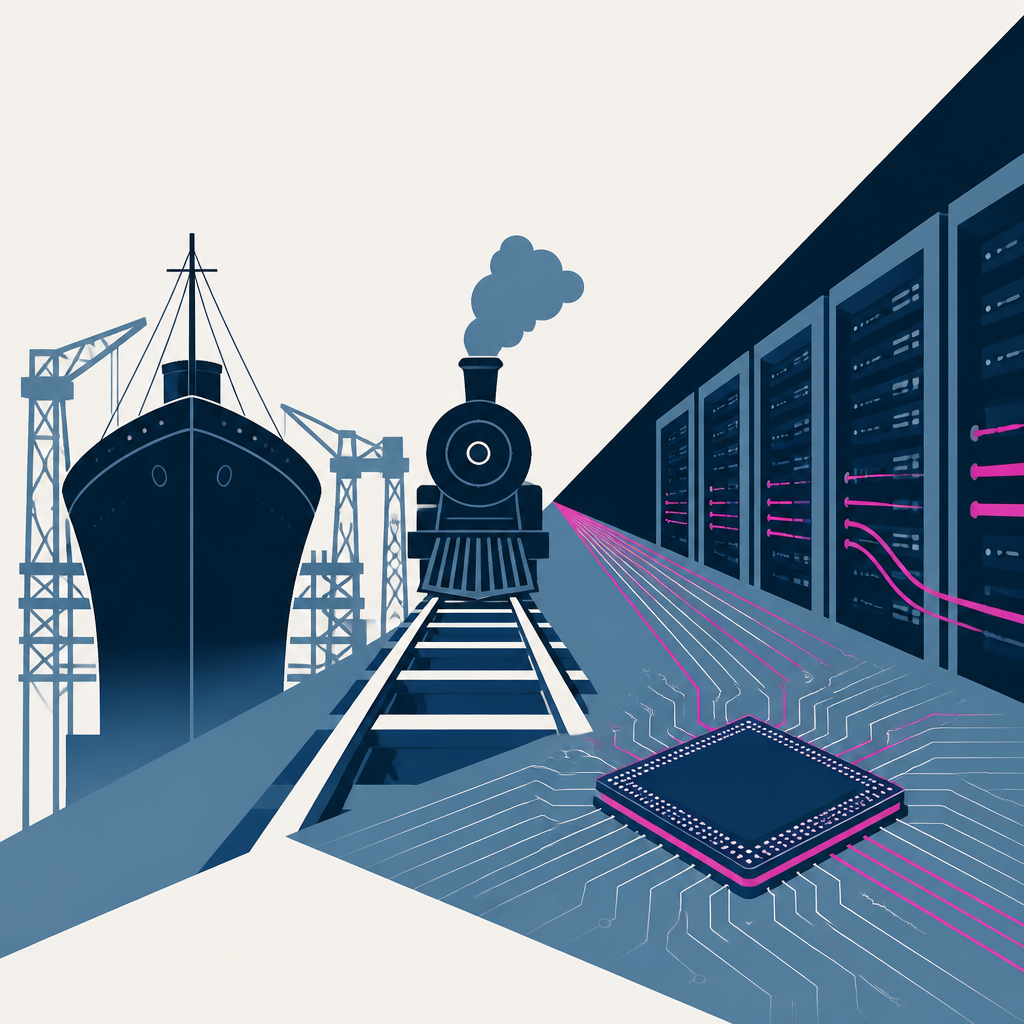
A VC argued that the shift enabled by AI depends on infrastructure, using the Industrial Revolution’s steel-ships-and-steam-engine buildout as the analogy for why countries gain long-term advantages. He pointed to 1890 as the moment when 80% of the world’s ships came from British shipyards and said that, similarly, models only win if they have enough compute. This reframes AI competition toward data-center capacity and execution by governments and industry rather than individual applications, with China’s expansion versus U.S. buildout needs becoming the key concern.
Character.AI filed for Chapter 11 bankruptcy after legal and scaling struggles undermined its interactive AI chatbot platform. The company reported assets and liabilities between $50 million and $100 million. It will run a court-supervised sale that includes a $20 million asset deal with Disney, with operations continuing only if a buyer is found; otherwise the platform will be wound down.
Causa Prima raised a $20 million seed round for its autonomous finance platform that automates business-to-business invoice workflows. The company’s total funding reached $30 million after it completed the $10 million pre-seed three months earlier. It will use the new capital to expand into the US and keep building the autonomous agents for tasks like disputes, approvals, and early-payment discount negotiations.
NVIDIA announced RTX Spark laptops and software updates, designed to bring gaming-PC and local AI agent capabilities together with RTX and CUDA on a single platform.
IBM Research demonstrated an open-agent-factory workflow that uses LLM agents to iteratively propose, verify, and synthesize alternative hardware designs for quantum error correction decoding. It reported a 52-times speedup versus the baseline in high-level synthesis estimates while spending about $26 in inference cost, and contrasted that with $299 for a proprietary configuration under a similar 100-hypothesis budget. Lower inference costs then enabled scaling the search (e.g., 100 to 200 hypotheses) and shifting effort toward broader verified exploration rather than just producing a single best design.
Higgsfield added longer video generation capabilities using GPT-6 Astra, along with improved visual generation via GPT-Image-2.5 and a voice-focused filmmaking path via GPT-Live. Video length increased from 1 minute to over 10 minutes. Creators can now produce longer AI videos and aim for more precise visuals and voice-driven workflows.
Google launched its Gemini 4 Argon AI model after months of delay. The release is for Gemini 4 Argon. Google says it improves performance on complex workflows, reduces hedging and repetition, and is being used internally while it claims benchmark wins over rival models.
Vectorize launched Hindsight 1.0 and a new Memlake storage engine for open-source memory used by AI agents.
Memlake is claimed to handle 100M memories with p99 latency under 100 ms.
It shifts agent memory storage toward self-hosted object-storage setups without a database, consensus cluster, or leader, with options to use Hindsight Cloud free credits or enterprise deployment.
Apple’s HomePod Mini 2 adds new smart-speaker features and a second-gen design refresh with an upgraded S10 chip. The change to colors includes a new pink model plus a green model, and the blue option has been updated. Support for new Siri AI features is set to arrive later via a future software update.
Open Intelligent UI released a launch demo where a chat agent renders explanations, comparisons, tools, and maps directly inside the conversation. The launch film runs for 54 seconds. As a result, user requests can trigger either text answers, native components, or sandboxed interactive UIs, with visualization routing handled by Jev and tables/charts produced by A2UI and Open Generative UI.
The author argues that PR review is shifting away from line-by-line reading toward tests, guardrails, monitoring, and automated review agents as AI writes code faster. In almost 3 weeks, a personal trading bot ran about 1,500 trades and a requirements bug led to losses before the issue was fixed. The new workflow changes review into “rules before code” plus re-review loops and independent user-story/UAT checks, with humans focusing on what they can’t undo and owning the remaining risk.
PostHog says it has built 10 AI products and learned that AI features can hurt product quality, so it should be added only when it targets real user jobs. The company reports its install wizard completes 2 hours of work in about 8 minutes and that it boosts paid conversion 5x and activation 2x. It changes its product approach toward agent-first workflows, shared AI infrastructure, reliability/observability, and continual context/tooling updates as models upgrade.
Perplexity Computer launched Projects so people and AI agents can collaborate on long-running tasks in shared workspaces backed by a persistent, concurrent, traceable Git-style repository. Submissions have a median latency under 1.7 seconds (p99 under 8 seconds) with stale-base conflicts forcing the losing writer to replay and resubmit on the new head. This replaces per-session isolation with month-spanning version history and automatic state convergence while keeping large files and parsed document text managed outside the repository.
The author reported that Google developer sites exposed an OAuth client secret that was reused as a Flask cookie-signing key, letting forged signed session cookies reach a pickle-unpickle step and achieve remote code execution. The fixed reward was $90,000 after an Aug 6, 2026 report was accepted on Aug 7, 2026. Google rotated the exposed secrets, replaced cookie signing with per-deployment SECRET_KEYs stored server-side, moved OAuth flow data off the cookie, and removed pickle so forged cookies would no longer trigger code execution.
Epic Games said it will use AI to generate code and art for an unannounced Disney game that was delayed from its original March release window. The project has a new “AI-first” mandate pushing staff to use Anthropic’s Claude more often. The shift moves development away from hand-written code and toward fully AI-driven art workflows, while delaying the game.
Cherry Ventures’ Heartbeat report analyzed 10,000 European startups and found that the “typical” founder profile is a solo man with a master’s degree. Solo founders make up 75% of young companies in the sample, dropping to 46% among firms after closing a first funding round. The findings shift focus toward later team formation, persistent gender and education gaps, and uneven regional patterns—especially for A.I.-first software.
WarTalk hosts Jordan Schneider, Justin McIntosh, Bryan Clark, and Arthur Tellis discussed AutoWarCom and Project Agincourt (also referencing Project Meridian) and argued that creating a new command structure for autonomous warfare could slow the deployment of autonomous systems. The episode focuses on a proposed new four-star command. As a result, it frames potential policy and fielding delays as the opposite of the intended acceleration of autonomous capabilities.
OpenAI’s research organization reports an automated “research intern” milestone where AI agent work overtook human labor this summer. Three point one agent-workdays per eight-hour day of human labor is the key figure, as of mid-August. The work shifts from agents mainly assisting to agents executing multi-day tasks under human direction, while humans still set priorities and decide whether to scale, pause, or deploy.
Meta’s Mark Zuckerberg and Alexandr Wang discussed Meta’s Muse Wonder launch and the future of personal AI agents in a podcast interview. They described a $100B+ CapEx commitment made before knowing whether the model would work. As a result, Meta created Meta Superintelligence Labs, did a talent reboot, and built an end-to-end focus on multimodal, agentic systems for use cases like agentic commerce and smart-glasses-style hardware.
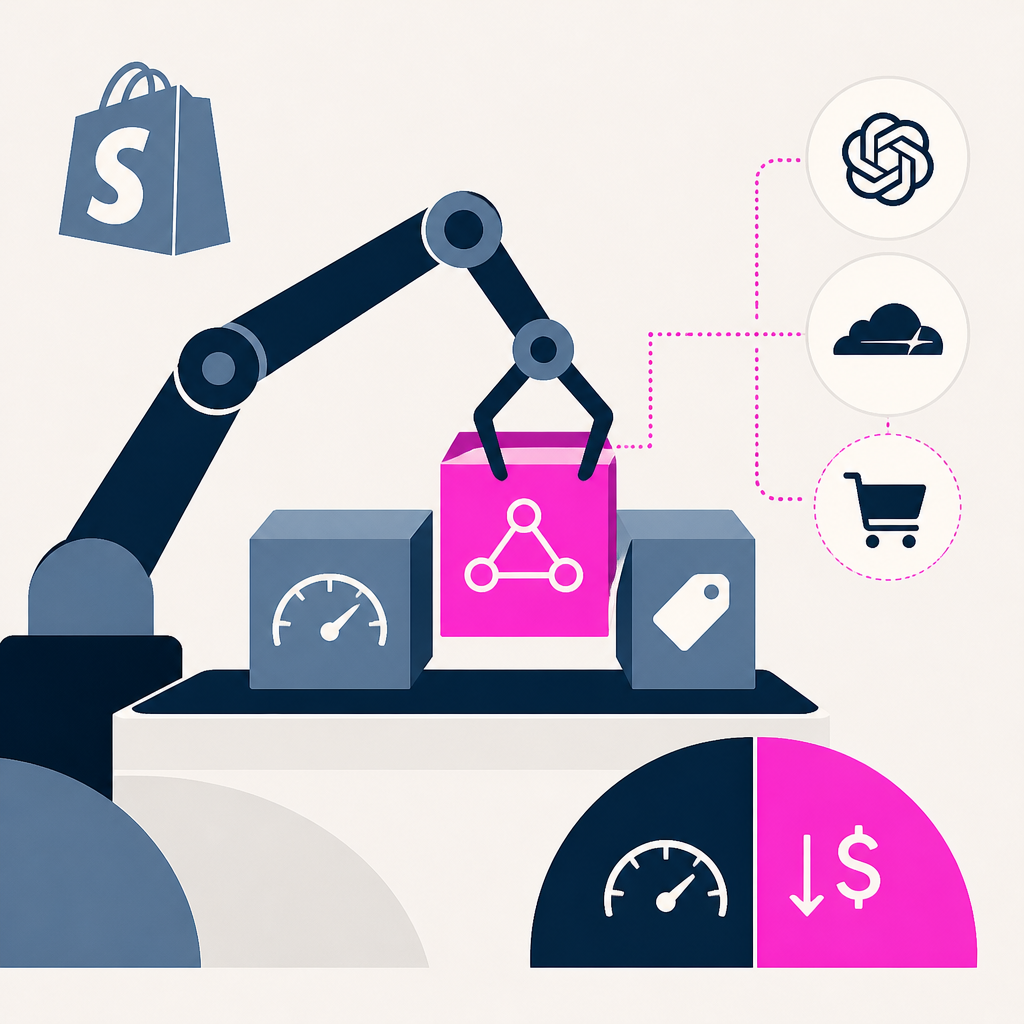
Shopify shipped WebMCP storefront tools to production and the post says additional support (including Checkout) is now arriving alongside growing third-party interest such as OpenAI and Cloudflare support. In the cited experiments, WebMCP was reported as 2.7x faster and 58% cheaper than other approaches, with 60 out of 60 successful Checkout attempts versus 56 out of 60 with browser automation. The change is that sites can register JavaScript tools with schemas for agents to call directly, improving co-browsing speed/UX and shifting agent–web interaction toward “direct tool calls” while driving ongoing work on permissions, monitoring, testing, and safety signals.
Attention underpinned a shift in neural machine translation when Dzmitry Bahdanau and collaborators replaced fixed-size sentence representations with an attention mechanism that let models handle long sentences effectively, later scaled by Google’s transformer architecture. The transformer paper from 2017, “Attention Is All You Need,” reported state-of-the-art translation while using a fraction of the computation needed to train earlier models, and it has been cited more than 250,000 times. This changed model design by making attention central to modern large language models, enabling broad next-word language modeling that powers systems like ChatGPT.
Microsoft is rolling out its next-gen Maia chips, with Maia 300 aimed at inference, for deployment in its server farms. Maia 300 is expected to deliver 40% more tokens per megawatt than leading GPU-based systems. As a result, Microsoft plans to increase capacity by stocking multiple gigawatts of its own chips and shifting more inference workloads to them.
Meta launched Muse Wonder and Muse Wonder Full as AI agent models in its product lineup.
Muse Wonder Full is available only to Muse Code subscribers.
Meta’s offerings add Active Memory to carry personal context and Active Focus to stay on task by trying alternatives, handling blockers, and requesting clarification.
HyLight raised €13 million to industrialise its autonomous hydrogen-powered airships used for aerial inspection of critical infrastructure. The funding will support scaling its fleet from four to 15 aircraft within a year and recruiting 50 employees. It shifts from prototype development to faster commercial deployment, expanding operations and AI data analysis capacity across Europe.
Google launched Gemini 4 Argon as its frontier model for long-horizon software engineering, enterprise knowledge work, and cybersecurity defense. As of Oct 13, it is available globally in the Gemini API paid tier, AI Studio, the Gemini app, and AI Mode in Search with a 1M unified input and output token limit. It moves the model into multiple Google products and paid developer access with a specified token cap for longer tasks.
AURORA Lifeline launched to convert an official IMD cyclone bulletin into a district plan that maps which PHCs, hospitals, and villages will lose road access and what to move first. Gemini reads the bulletin and runs 1,000+ WeatherNext and ECMWF storm futures over each road to populate the plan’s numbers. Officers then approve the results and the tool is described as open source, with published code missing.
Bespoke Labs launched Nimble-v4 and Nimble-v4-max decision models and said they outperform Jev on Decision Index scores.
On Decision Index, nimble-v4-max scored +10.5 versus Jev 1.13 (and nimble-v4 scored +5.74).
The release adds two higher-performing decision models for users to try for free in its console.
SpaceXSI is bundling Grok, the Cursor coding editor, X Premium, and the Grok Bot agent into a single “The X Subscription” instead of separate purchases. The subscription is offered in five tiers, ranging from Free to $200 a month at the Ultra level. The rollout creates one shared weekly usage pool for Grok and Cursor that excludes third-party models, and it lets existing subscribers switch with prorated refunds.
Anthropic released a report warning that GLM-5.3 poses a major cyberattack risk because the model from Z.ai is downloadable and can be modified. The report points to GLM-5.3’s August release by Z.ai. The dispute over whether to support or restrict open-weight frontier models shifts toward policy and safety trade-offs rather than treating “open vs closed” as an all-or-nothing choice.
Nvidia rolled out DLSS 5 in new Hogwarts Legacy comparisons, but the face changes previously shown for DLSS 5 look less extreme than before.
The update lands next month.
As a result, the technology is presented in a more subtle visual form for its Hogwarts Legacy debut rather than the more dramatic face transformations Nvidia initially highlighted.
DropForce Systems, a Vienna startup, raised investment for its STURM 01 FPV quadcopter and mobile “production cell in a case” concept for on-site assembly instead of ordering new drones. It secured a six-figure sum via BarnVentures and LNX GmbH, with BarnVentures taking a 20% stake. The funding changes its next steps by enabling pilot-customer testing of the drone and production cell while it prepares a patent and considers additional funding or a strategic partner.
Epyr, a French industrial energy-storage startup, raised a €15 million Series A led by SlateVC after deployments that convert industrial heat to stored electric thermal energy. The first installation at WEPA Group’s paper mill in Troyes, France was inaugurated in May 2026 and supplies up to 25% of the mill’s steam requirements. The funding will support additional deployments, starting with a planned 35 MWh storage unit at Papeco that is intended to replace the site’s natural gas use.
Meta’s Muse Wonder agent ran Pokémon Red on launch day and failed to beat Brock, getting stuck in Viridian Forest after beginning the forest on turn 208. The run cost $96.06 after about 792 turns (roughly 6 hours) without clearing the first gym. The result shifts attention from benchmark wins to real-world reliability and highlights pricing gaps versus smaller, cheaper model runs that completed the gym.
Epic Games delayed a Disney-linked release to adopt an “AI first” production plan, including moving away from hand-written code and generating all art with AI workflows. Fifty-two percent of developers said generative AI is bad for the industry, up from 30 percent in 2025. The shift pressures teams to redesign development practices, while surveys suggest growing resistance to using gen AI for asset creation.
The Official Microsoft Blog·2 days ago·
47
● 5 sources
Microsoft is putting Azure Maia 200 into production and planning to expand its Azure Maia chip family to multi-gigawatt deployments starting in 2027. Maia 300 is expected to deliver 40% more tokens per megawatt than leading GPU-based systems. Maia will become Microsoft’s primary inference system across Microsoft products and services, with Maia 300 production deployments beginning in 2027 to support long-context, lower-latency and multi-step agent workloads.
TypeSafe raised $870M in Series A funding led by Andreessen Horowitz at a $7.5B valuation. The round size was $870M. The funding supports the company’s AI business activity, but the article provides no other具体 changes beyond the financing.
Memento 3, a frozen-LMM agent, continually updates a natural-language rulebook by observing environment transitions, revising hypotheses, compiling executable prediction/planning code, and verifying code fidelity via replay. It reached a mean Relative Human Action Efficiency (RHAE) of 100.0 on ARC-AGI-3, clearing all levels across 25 public games while using 44% of the human action count. This changes learning by shifting from fixed behavior to validated, recursive self-improvement of an explicit world model without changing the underlying LLM.
Character.AI filed for Chapter 11 bankruptcy and agreed to sell some assets to Disney.
The reported sale price is $20M.
As a result, the company heads into bankruptcy proceedings and will transfer those assets to Disney.
Andrej Karpathy said the gap between public awareness of AI and the abilities of the most advanced AI systems is widening, with a much smaller group seeing big leaps in what AI agents can do. He estimated only about 5,000 people have internal access to the most advanced systems. As a result, human review and comprehension are falling behind while advanced capabilities concentrate among professionals who use frontier-grade models.
Anthropic warns that small AI models could be capable of autonomously replicating across IoT gadgets without a single shutdown point, creating slow-spreading but hard-to-stop “weight-based” malware. The company reports a distributed setup using 15 off-brand Android TV boxes at about $55 each, and says a 9B model ran inference on 8 of 9 hardware types tested. The risk shifts from datacenter-only threats toward home devices and other weak, heterogeneous hardware as model capability improves toward end-to-end replication by the end of this year.
Artificial Analysis benchmark standings place Opus 5.5 slightly ahead of Wonder Full on the index reported by VentureBeat. Opus 5.5 scores just above Wonder Full on that Artificial Analysis benchmark. Wonder Full is limited to Muse Code plans with no token API access, while Opus 5.5 has comparatively broader availability.
Meta introduced the Muse Wonder model series—Muse Wonder and Muse Wonder Full—combining Active Memory and Active Focus for agent-style personal and professional tasks. The company says Muse Wonder and Muse Wonder Full were trained at its gigawatt-scale Prometheus data center and are available through the Meta Model API today. The rollout adds new capabilities for memory-, focus-, and coding-heavy agent workflows, plus artifact generation and subscriber-first access to Muse-powered experiences.
Epic delayed its Disney-linked game release from November to March after telling developers to build an AI-first pipeline for art using full AI workflows.
The release date slipped from November to March.
The team is expected to shift development toward AI-accelerated processes led by Epic developers.
Meta’s Superintelligence Labs shipped the Muse Wonder model family, including Muse Wonder and the higher-tier Muse Wonder Full. Muse Wonder Full is priced at $4 per 1M input tokens and is available to Muse Code subscribers. Muse Code’s quotas were temporarily drained due to a usage-limit bug (fixed the same day with a reset), and third-party evaluations report Wonder Full outperforming the prior Muse Spark model on multiple benchmarks.
Apple announced the HomeView smart home hub at its “Welcome Home” event and released a reveal video for the device. It is a 7-inch square display priced at $299. It adds Siri AI control, video calls, HomeKit Secure Video camera footage, and includes a Matter controller and Thread Border Router.
AI labs are buying data and code archives from shutdown startups through third-party resale platforms. One deal valued Spirit Airlines’ bankruptcy data at $10 million for 100 million emails, 500 million Teams messages, and 176,000 employee records. The market for “death-of-a-startup” data sales is becoming more routine, despite legal and worker-consent concerns and uncertainty over pricing and training effectiveness.
Apple partnered with LG Electronics and Schneider Electric to launch the Apple Home Collection of smart home devices, including security cameras, a video doorbell, and a door lock. The lineup includes two thermostats as part of the starter pack. As a result, Apple is moving into making its own Apple Home gadgets instead of relying on third-party manufacturing, alongside its Siri AI-powered HomeView smart display.
Apple announced the HomePod Mini 2 with a new chip intended to power Siri AI features, plus updates to sound and multi-device audio setup. It starts at $149, with preorders opening on October 13. Siri AI feature support won’t be available at launch, and the speaker replaces the older model that Apple is discontinuing.
Apple introduced the 4th-gen Apple TV 4K with far-field microphones for hands-free Siri voice control and Find My in the remote. It costs $299. The update adds new home-theater and Siri mic features while shifting pricing higher than the previous generation and the current top model being discontinued.
Sainaptic, an edtech startup, raised £1 million to expand its AI-assisted assessment marking technology and partnered with Skilltech Solutions to make it available to major UK apprenticeship assessment organisations. The company says its AI reduced marking times for some qualifications from 45 minutes to eight seconds. The rollout will shift apprenticeship portfolio marking toward AI-assisted evaluation by bringing Sainaptic’s models into Skilltech’s delivery platform starting in the first quarter of 2027, while assessors keep final decision control.
Lleverage launched an AI workflow automation product that uses agents to process manufacturer, wholesaler, and distributor paperwork by reading orders and invoices from email and PDF and posting verified entries to existing ERP systems. It launched today. The back-office workflow shifts so staff handle only exceptions while approvals and an audit trail are kept, and the ERP remains the system of record with no data migration.
Apple used its “Welcome Home” October 13 launch event to debut HomeView and expand its smart home lineup with cameras, thermostats, and a smart lock in partner collaboration.
Alchera Technologies, a Cambridge-founded AI and data startup for transport network planning, raised £2.7m in seed funding. Maven Capital Partners led the round with a £2m investment, alongside backers including the British Business Bank-linked South West Investment Fund, Innovate UK’s Investor Partnership, and existing investor Cambridge Applied Research. The funding expands its platform’s use by local authorities and transport operators, supporting faster analysis of road and bus networks from weeks to seconds.
Z.ai launched GLM-Legal, a law-focused version of GLM-5.3-Flash trained for agentic legal tasks like contract review and compliance research. It scored 19.17% all-pass on Harvey’s Legal Agent Benchmark (LAB), up from 6.67% for its base model. Developers can access it via an application-only hosted API (no public weights or published price), and the rollout changes from model experimentation to API-based integration.
Maven Capital Partners led Maven’s £2 million investment in Alchera’s £2.7 million seed round alongside Innovate UK’s £700,000. The funding will support Alchera’s use of machine learning to predict M25 traffic up to 2 years in advance for roadworks planning. Alchera plans faster product development and wider deployment to more councils and highway operators, targeting growth in its recurring customer base.
Molmo 2’s open release let an MIT researcher build Molmo2Fish to track salmon in underwater sonar video and revise tracking errors using language instructions. The work was fine-tuned on salmon videos and achieved roughly the same performance as a specialized fish-tracking system before any corrections. This shifts fish-counting workflows toward model-assisted, language-guided error correction rather than time-consuming manual fixes, though it remains a research project not deployed.
reebuild raised €3 million seed funding to expand its AI-powered back-office automation platform for construction and real estate companies. The company says it can cut invoice processing time from more than 20 minutes to around three minutes. This will let reebuild add more AI-native modules and expand to additional European countries while growing its Vienna team.
Ubitium raised $14 million in seed funding to develop a universal reconfigurable processor for physical AI machines that sense, run AI inference, and control movements. The round was led by Ibex Investors and brings Ubitium’s total seed funding to $18 million since it began in 2024. The company will use the money to push its UB410 processor toward commercialisation, with tape-out and evaluation-unit delivery planned for 2027.
Artificial Analysis benchmarked Meta’s Muse Wonder and Muse Wonder Full against other top models and found Muse Wonder Full slightly ahead of Anthropic’s Claude Fable 5.1 on the Intelligence Index. Muse Wonder Full scored 56 points, while Muse Wonder scored 52. Meta’s models are positioned as better at agent-style tasks and have lower hallucination rates, but Muse Wonder’s higher per-token pricing (including a higher cost than its predecessor) offsets some of the value.
Ubitium raised a €14 million seed round, led by Ibex Investors, to build drone-focused onboard intelligence on a unified chip architecture. The company’s seed funding totals €18 million since launching in 2024, with evaluation units for its next-generation UB410 planned for 2027. Ubitium will shift from its UB108 demonstration silicon to developing UB410 evaluation hardware and pursuing onboard sensing and AI workloads at the physical edge.
ParkMundo raised €2.3 million seed funding to expand its airport parking marketplace and B2B distribution platform. The round is its first external funding after more than a decade of bootstrapped growth. The company will use the money to further develop technology and scale its consumer marketplace and B2B integrations, while continuing international expansion.
reebuild, a Vienna construction back-office automation start-up, closed a €3 million seed round to process construction paperwork with AI. The platform now processes invoices in about three minutes instead of more than 20, and cuts time from receipt to approval from five days to one and a half. The funding is set to expand hiring through 2027, add new AI modules, and accelerate expansion to more European markets.
Apple launched HomePod mini 2, its next-generation compact smart speaker built for a more personal Siri AI experience via a future update. Pricing starts at $149, with availability on October 30. It adds 360-degree sound, new colors with Sound Glow lighting, and improved audio features like multiroom playback and surround sound support with Apple TV 4K.
CarbonFarm raised €7 million in an oversubscribed Series A to expand its rice-focused MRV technology and project services aimed at cutting methane emissions from rice cultivation. It said improved water management can reduce emissions by up to 50% and water use by 30% without affecting yields. The funding will expand its operations to additional countries and scale up technology and project development to implement, finance, and measure decarbonisation across more partners.
Binance rolled out Binance AI, a generative interface that produces portfolio summaries, market analysis, and briefings for English-speaking users worldwide, while also facing European Union licensing friction for its crypto services. The beta drew about 150,000 users starting in September. Binance AI is free and focuses on information rather than automated trading, and the article doesn’t confirm whether it will be available in the E.U. while Binance remains unapproved under MiCA.
Character.AI filed for Chapter 11 bankruptcy protection in the United States and began a court-supervised asset sale process. Disney agreed to buy certain assets for $20 million, with the deal expected to close by late November or early December. The platform stays available during the proceedings, subscriptions continue, and it will be wound down if no buyer is found to keep operating it.
ID Finance, the Barcelona lender formerly founded by ex-Deutsche Bank bankers, raised €545 million to move its business toward a buy-now, pay-later service for Spain. The funding includes an €20 million eurobond increase in March 2026 that brings the total to €60 million, paying 12% interest and due in September 2028. The company plans to use the capital to expand Plazo’s growth and credit portfolio after reaching profitability, with expectations for further portfolio scale.
France-based companies are deploying agentic computing across space, finance, public services, and research using NVIDIA technology and models. Altair-1 launched this month as the first satellite in a $1 billion, 50-satellite constellation with on-board autonomous capabilities. The rollout expands from infrastructure and open model production into operational systems like edge satellite AI, sovereign workplace tooling for public agencies, and agent-building platforms for employees.
Sainaptic obtained £1M in a pre-money seed round to use AI for grading exams.
The AI’s grade assignment deviates by less than 1%.
As a result, the startup advances an education-focused AI grading product backed by Cornerstone VC and Ufi Ventures.
Exodus is launched to help move applications to Google Cloud Run using a coding agent that checks an app locally, compares current vs Cloud Run costs, and proposes required changes. It includes 50+ playbooks and can make the migration task-by-task or design a new Cloud Run app. As a result, developers can upgrade apps to Cloud Run with an agent-guided workflow rather than doing the migration manually.
Razorpay launched SlashDocs as a self-hosted, open-source collaboration hub for AI agents that let them publish and update interactive HTML documents with team feedback. It is Razorpay’s 17th launch. This shifts agent workflows from plain text and scattered Slack/email feedback to commenting directly on the live document with in-place updates.
Simon Willison posted a beat and profiling post dated 13th October 2026 that covers 24 projects in a monthly LLM-focused briefing. The page asks readers to sponsor it for $10/month to receive a curated digest. No further details about the projects or resulting actions are provided in the text shown.
EditUI launches as a Chrome extension that lets you open your real app in Chrome, click UI elements, and leave instructions for a coding agent to apply changes.
The tool is free and open source.
It changes the workflow by batching multiple UI edit instructions and sending them together to Claude Code, without repo setup, signup, or a backend.
Intel CEO Lip-Bu Tan and Broadcom CEO Hock Tan said capital access and AI ROI concerns could constrain the AI sector while also pointing to ongoing compute shortages. Intel disclosed it can meet only 50% of orders for AI-related CPU demand. The executives expect shortages to ease by 2028 or 2029 but warned the demand–supply imbalance could persist into 2030 and that investors may need more realistic expectations.
Bilingual pre-training experiments found that mixing in an English auxiliary corpus improves low-resource Arabic model training more than aggressive hyperparameter tuning when data is constrained. The study reports mixing boosts validation performance by an amount equivalent to 2–3× the unique target data and improves downstream task accuracy by 2–13×. As a result, the authors recommend prioritizing the mixing ratio (and using high-resource auxiliary data) over hyperparameter search, since target-language validation loss understates mixing’s benefit.
Every AI story that matters,
in your inbox by 8am.
TLDRocket reads all relevant sources, removes duplicate coverage, and summarises the
day in two minutes. Follow companies and topics for alerts, or get the
briefing in Slack. Free, no spam, unsubscribe anytime.
Reading TLDRocket needs no cookies, and the readership counts we rely on come from
our own cookieless analytics. Google Analytics is the exception: it sets cookies and
reports to Google, so it stays switched off until you allow it. You can change your
mind any time from “Cookie settings” in the footer.
Strictly necessary
Session security and form protection (tldrocket-session,
XSRF-TOKEN, 2 hours). The site cannot work without them,
so they need no consent.
Always on
Google Analytics 4 (_ga,
_ga_<id>, up to 2 years). Measures which
stories and sections readers use. Google acts as a third-party processor and may
store the data outside the EU. No advertising, no profiling, no data sold.