
Volantis raises $88M to to build photonic memory layer for next-gen AI
Tech Funding News Abhinaya Prabhu
Volantis raised $88 million to build a photonic memory layer for AI chips. It wants models past 20 trillion parameters to run faster, cheaper, and without the usual memory tradeoff.
Based on reporting by Tech Funding News, Abhinaya Prabhu — read the original for the full story.
Summary, retelling and take written by AI under human oversight; images are AI-generated illustrations. How we work · Report an error
Volantis has pulled in $88 million in Series A funding to push a photonic architecture for AI inference. The round was co-led by Lachy Groom and Abstract Ventures, with backing from John Doerr, VXI Capital, Triatomic, Susa Ventures, and angels including Dwarkesh Patel, Naveen Rao, and Sholto Douglas.
The San Francisco startup is building A-1, its inference system for large AI models. Volantis says the target is ambitious: systems that can handle models exceeding 20 trillion parameters and serve up to 10,000 tokens per second per user, while cutting inference costs. Those are product goals, not deployed performance numbers, and the first integrated inference engines are slated for customer delivery in 2027.
The pitch is really about memory. Big models need huge capacity for weights and context, plus enough bandwidth to keep feeding compute. Today, that usually means choosing between fast-but-small on-chip SRAM and larger memory setups that still run into bandwidth, cost, and energy limits. Volantis argues even newer approaches such as 3D DRAM still sit on the same tradeoff curve.
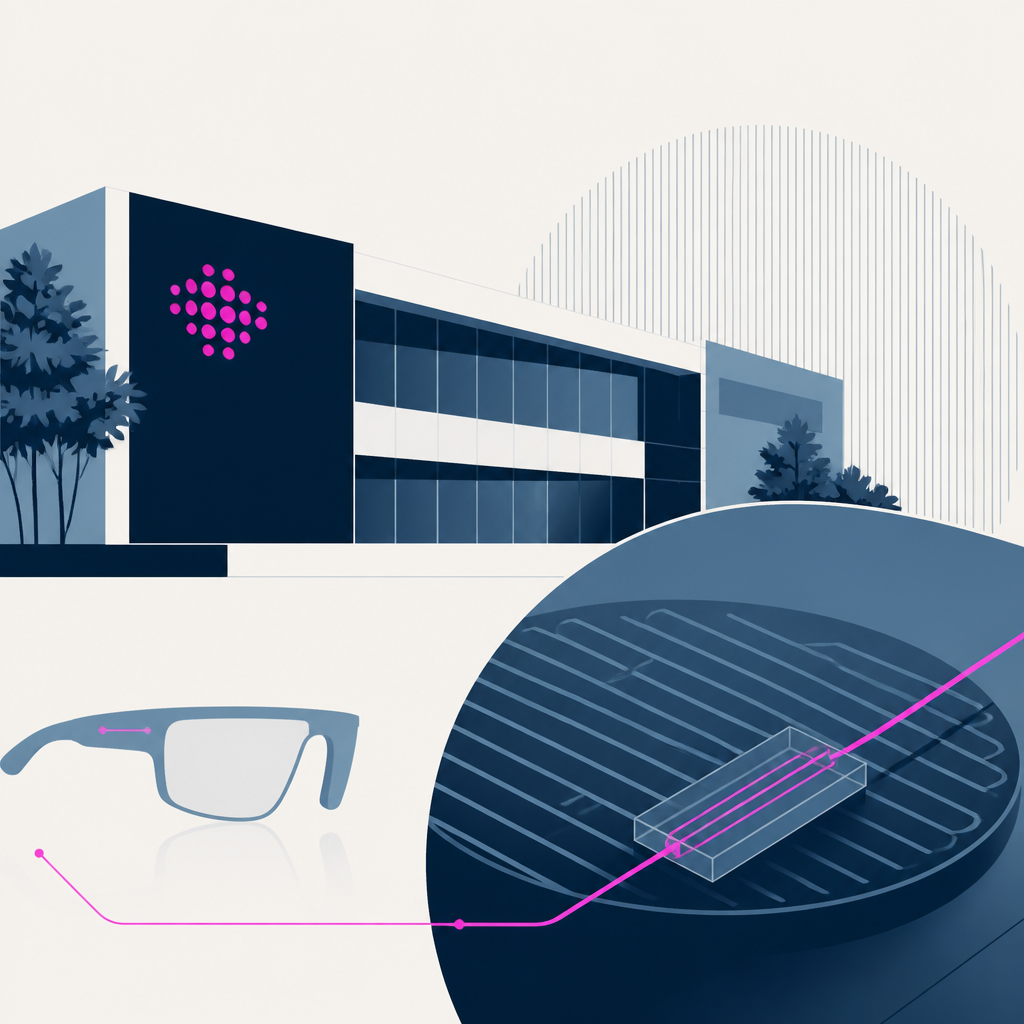
Its answer is a photonic interconnect that links compute chips to memory and forms a shared memory pool, with bandwidth rising as memory is added. The company says the architecture uses custom micro-VCSELs rather than external lasers, leaning on the gallium arsenide VCSEL supply chain and avoiding some indium phosphide constraints. It is also aiming for end-to-end optical links under one picojoule per bit.
Volantis was founded by Tapa Ghosh and Roy Meade. Ghosh is a Thiel Fellow and former Y Combinator founder with four patents, while Meade previously led Micron’s HBM programme and was a vice president at Ayar Labs. The new money is set to go into developing and commercialising A-1, expanding the engineering team, and moving toward customer deployments.
My take — AI-written commentary, not fact-checked reporting
This is a sensible bet, and also a very Silicon Valley one: if AI keeps asking for more memory, someone will eventually try to sell the memory company wrapped in lasers. The real question isn’t whether photonics sounds cool; it’s whether customers will pay for a new architecture before the rest of the stack catches up. Usually they only do when the old bottleneck gets embarrassing enough.
Read more about this at: Tech Funding News
Related stories
 Morphotonics closes €40M+ Series B to tackle AI devices’ hidden manufacturing bottleneck
Tech.eu · 1 week ago ·
8
Morphotonics closes €40M+ Series B to tackle AI devices’ hidden manufacturing bottleneck
Tech.eu · 1 week ago ·
8