US is head over heels for AI agents, while Europe remains dubious
SiliconANGLE Devony Hof ● Covered by 123 sources
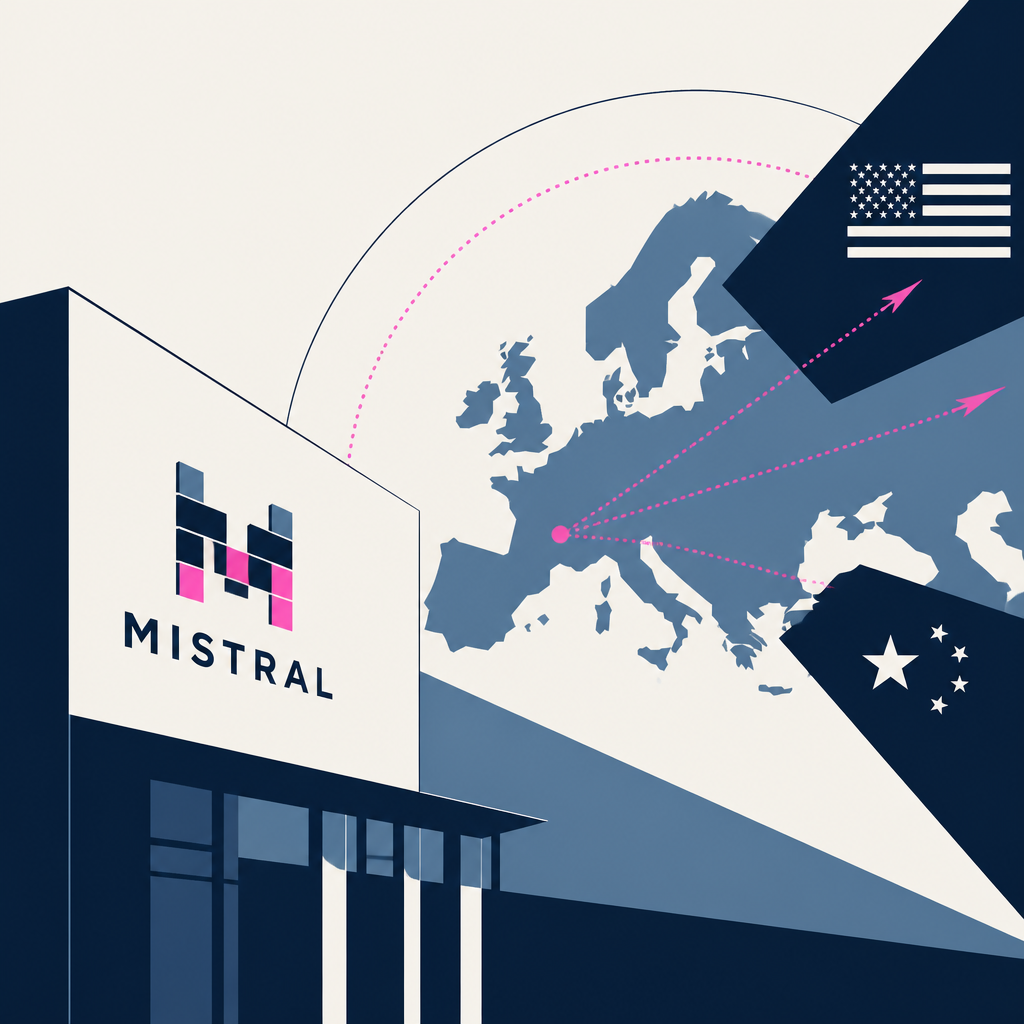
The US is racing into AI agents; Europe is still wary. That caution may leave European companies softer targets for AI-powered attacks.
Based on reporting by SiliconANGLE, Devony Hof — read the original for the full story.
Summary, retelling and take written by AI under human oversight; images are AI-generated illustrations. How we work · Report an error
American companies are moving faster on AI agents, while Europe is still dragging its feet. That was Holger Mueller’s read of the split, and he thinks the gap matters now more than ever because AI-driven attacks are already in the wild.
Mueller, vice president and principal analyst at Constellation Research, argued that humans simply cannot keep up with AI-based threats. He said Europe has a habit of treating U.S. innovation with suspicion, and that the continent’s caution around AI has turned into waiting. Sovereign cloud, he added, has become both a major topic and a convenient excuse.
His message was blunt: if European companies are doing business globally, they cannot sit around waiting for some future cloud posture before they adopt AI. He also said Europe needs to work through the technical debt built up over the last 20 years, because AI makes that debt expensive fast. Even companies that skipped heavy on-premises setups still have to adapt to the fact that much of AI is consumed as an elastic service.
The conversation came during Oracle’s event on escalating AI cyberattacks, where Mueller spoke with theCUBE Research’s Dave Vellante and Krista Case. He pointed to a recent Hugging Face security incident as an example of how defenders may need AI to fight AI: an autonomous agent ran an intrusion, and later an open-weight model helped analyze the attack after commercial frontier models blocked the forensic material.
Mueller also said Constellation has been tracking what it calls “agentic AI washing,” meaning vendors claiming more agentic features than they really deliver. He said Oracle’s AI database portfolio met Constellation’s criteria without falling into that trap. Looking ahead, he expects the first wave of agentic AI to be about building the data source and data plane, this year to be a fight over frameworks, and next year to be about scaling backend systems. His security advice was equally unsentimental: pick your models carefully, test them with a small group of CISOs, and if state actors might be watching, go quantum safe.
My take — AI-written commentary, not fact-checked reporting
Europe’s favorite AI strategy seems to be “let’s wait and see,” which is a charming posture right up until the attack logs arrive. The bigger problem isn’t skepticism; it’s using sovereignty talk as a pause button. In cyber, hesitation is a feature for the other side.
Read more about this at: SiliconANGLE