
US company’s AI lets Ukraine’s cheap kamikaze drones track targets on their own
Ars Technica Jeremy Hsu
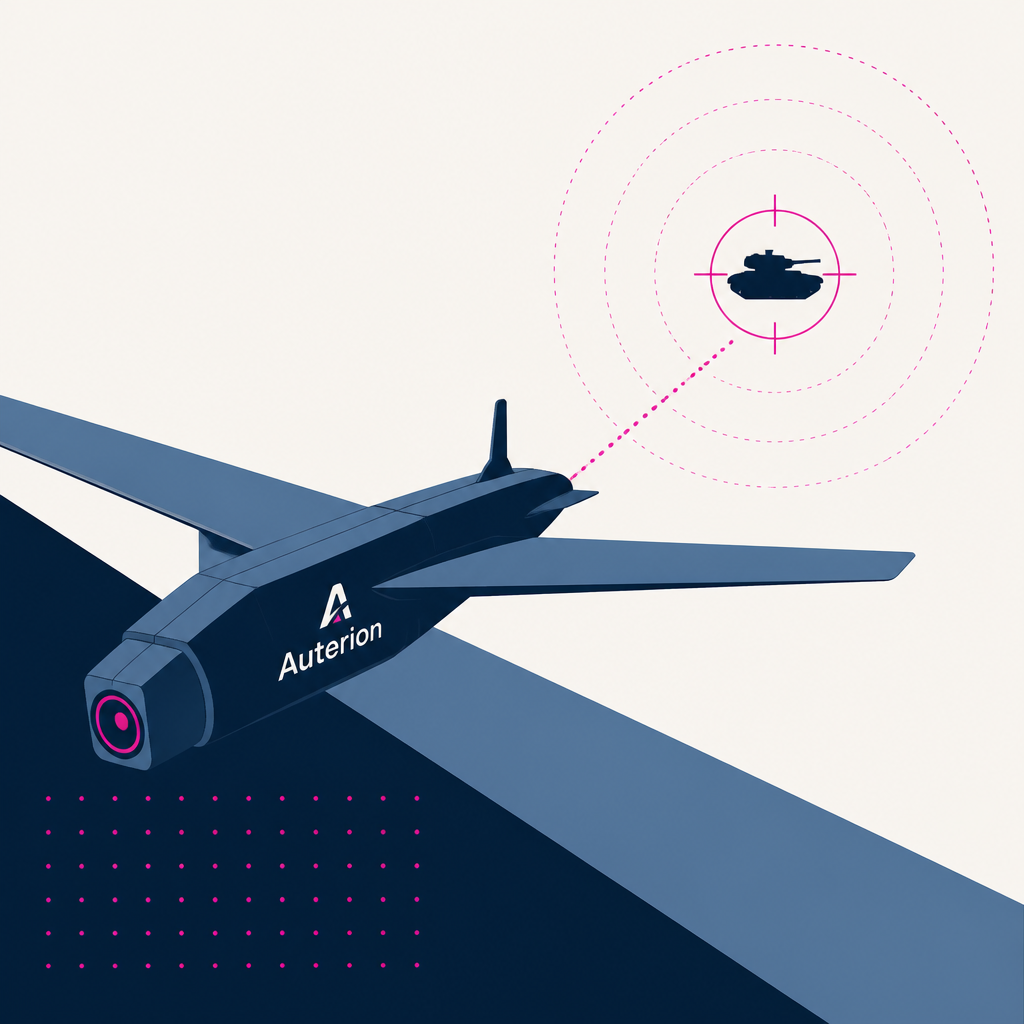
Ukraine is fitting 50,000 cheap kamikaze drones with US-made AI that tracks targets without GPS or a pilot's link. That means even jammed or disconnected drones can still fly themselves into moving targets.
Based on reporting by Ars Technica, Jeremy Hsu — read the original for the full story.
Summary, retelling and take written by AI under human oversight; images are AI-generated illustrations. How we work · Report an error
There's a particular kind of arms-race logic playing out on Ukrainian battlefields right now, and it involves a $2,000 drone that can think for itself once the connection drops. Auterion, a US company, has struck a $100 million deal to equip 50,000 of SkyFall's Shrike FPV drones with autonomy hardware called Skynode S. The Ukrainian military started receiving the upgraded drones in mid-July, and the order is being fulfilled out of Auterion's Munich team, funded by what Reuters reports is Germany.
The pitch is simple but consequential. An operator flies a Shrike manually, points it at a target up to half a mile out, then flips a switch into what Auterion CEO Lorenz Meier calls fire-and-forget terminal guidance. From there the drone uses only its onboard camera to finish the job, no GPS required. That matters enormously on a battlefield where both sides jam GPS signals and radio links routinely, because it means a Shrike can keep chasing a moving tank or artillery piece even if buildings, terrain, or enemy jamming cut off the pilot entirely.
What makes this notable isn't just the autonomy itself but the price tag attached to it. Auterion built the system to run on an $18 Arm chip, pushing the cost of an autonomous Shrike to roughly $2,000, against $400 for a purely manual version. Meier draws a pointed contrast with how Western militaries typically buy precision weapons: six or seven figures per shot, in batches of dozens, on timelines measured in years. Shrikes have already knocked out tanks, artillery, electronic warfare systems, and reportedly two Russian Mi-28 helicopters worth as much as $19 million apiece, according to the Kyiv Independent. Cheap, mass-produced autonomy aimed at that kind of return is the bet Auterion is making.
The company isn't stopping at single-drone guidance either. It's already demonstrated swarm capability at a US test range, where one pilot directed three autonomous drones against three separate targets, letting the group reprioritize on its own so multiple drones don't pile onto the same target. Meier says operators, including totally inexperienced ones, can learn to fly a single drone or a swarm in about 60 seconds — you just steer roughly toward the objective and pick a target once you're close. He insists Auterion still wants a human making the final call, though he's candid that adversaries might not extend the same restraint forever.
Meier, who has made eight trips to Ukraine to work with local manufacturers, frames the country's drone program as a case study in fast iteration: companies show up with something merely better than nothing and refine it under real combat feedback rather than waiting for a finished product. He contrasts that with the Pentagon's more rigid Drone Dominance selection process, which doesn't easily let a company return with an improved pitch weeks later. Whether the US adopts that same tolerance for early failure, or simply borrows the lessons secondhand through vendors like Auterion, looks like the more interesting fight developing behind the one already underway in Ukraine's skies.
My take — AI-written commentary, not fact-checked reporting
The real story here isn't autonomy for autonomy's sake, it's the price collapse — an $18 chip turning a disposable $400 drone into a $2,000 GPS-independent hunter while Western militaries still write six-figure checks per munition. Ukraine's tolerance for messy, iterative failure is clearly outproducing procurement systems built for perfection on a five-year schedule. Everyone insisting a human stays in the loop should notice Meier's own caveat: that lasts only until the other side decides it won't.
Read more about this at: Ars Technica
Related stories
 Small AI models let drones autonomously identify and attack battlefield targets
Ars Technica · 6 days ago ·
15
Small AI models let drones autonomously identify and attack battlefield targets
Ars Technica · 6 days ago ·
15
 Data from drones in Ukraine is fueling a new Wild West marketplace
MIT Technology Review · 2 weeks ago ·
27
Britain Taps Ukraine’s Combat Data to Train Military AI
Trending Topics · 1 month ago ·
8
Data from drones in Ukraine is fueling a new Wild West marketplace
MIT Technology Review · 2 weeks ago ·
27
Britain Taps Ukraine’s Combat Data to Train Military AI
Trending Topics · 1 month ago ·
8