The future of practice: Enabling teachers to create learning interactives with generative UI
Google Research
Google showed AI-made teaching sims that let teachers build practice tools for class. It’s meant to make digital learning active, not just something students watch.
Based on reporting by Google Research — read the original for the full story.
Summary, retelling and take written by AI under human oversight; images are AI-generated illustrations. How we work · Report an error
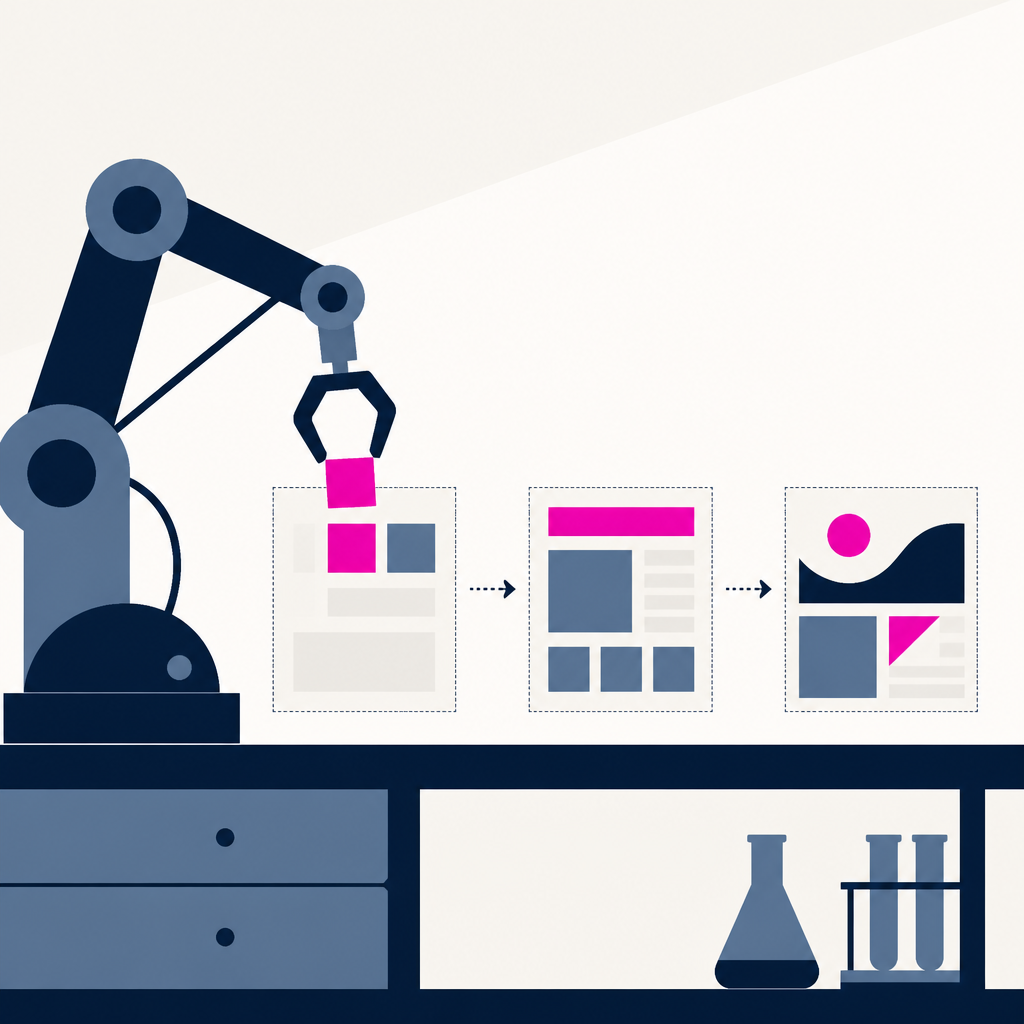
Google Research is testing a new way to make classroom practice less passive. Instead of handing teachers yet another fixed simulation, the company says its system can generate custom interactive exercises tied to a teacher’s curriculum and learning goals. The first public batch is a sample library of more than 30 English-language interactives for STEM subjects, including physics, chemistry, biology and math, aimed at middle and high school students.
The pitch is simple: digital learning has made information easier to access, but not necessarily easier to wrestle with. Google frames its work around active learning, the idea that students learn better when they are doing, not just reading or watching. The company points to learning science ideas such as the ICAP framework and to earlier work including LearnLM, Google’s education-focused generative AI models released in 2024, plus a 2025 experiment called Learn Your Way.
What makes this project different is the use of generative UI, where the interface itself is created by AI rather than built ahead of time. Google says it added guardrails so the resulting simulations stay aligned with the curriculum, break topics into levels, and provide scaffolding through hints, formulas, feedback and worked solutions. The company also says the system includes self-correcting loops that test whether the simulation works, whether the levels are solvable, and whether the design has distracting clutter.
Google says all of the interactives in the library were generated by AI and then reviewed by teachers. It also says a collection of interactives evaluated by STEM teachers in the UK was rated good or excellent overall, with physics and chemistry proving the easiest to simulate. In a separate study with 12 teachers in the US, each teacher asked for three custom interactives, and the average quality rating was 8 out of 10.
The company is now opening a pilot through Google for Education. Schools using Google Workspace for Education can sign up, request custom STEM simulations, and review what gets generated before anything is added to the public library. That teacher sign-off is the real story here: Google is not trying to replace lesson planning, just automate the part teachers rarely have time to build from scratch.
My take — AI-written commentary, not fact-checked reporting
This is the right move: keep the teacher in charge and make the machine do the busywork. The education AI race has plenty of shiny demos; far fewer systems survive contact with a real curriculum, a real classroom, and a teacher who will not tolerate nonsense. That approval gate is doing a lot of heavy lifting here, which is exactly why it matters.
Read more about this at: Google Research