
Suno hopes to go legit with watermarks for AI-generated music
Ars Technica Ryan Whitwam ● Covered by 3 sources
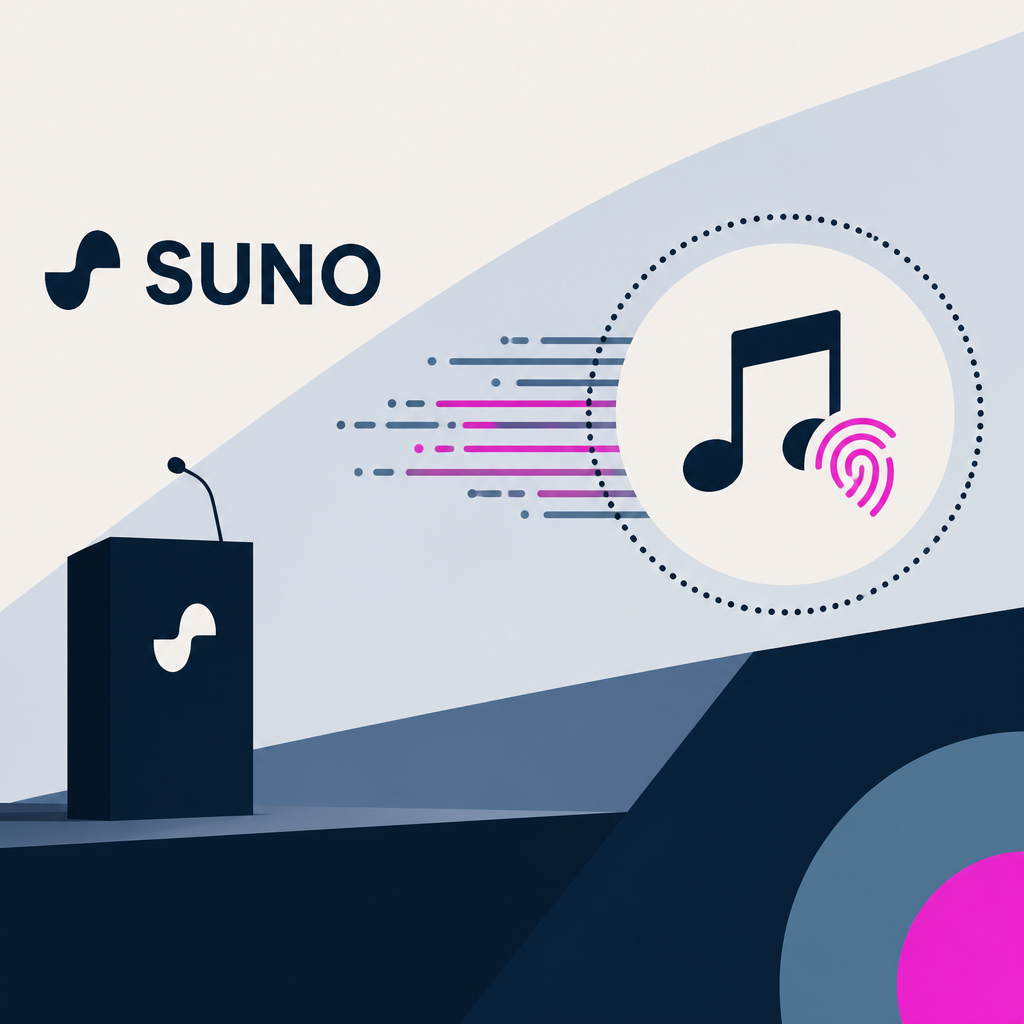
Suno is adding watermarks to its AI-generated songs and tightening its rules on copying real artists. It's facing lawsuits from Universal, Sony, and a data-breach case, so it's scrambling to look responsible.
Based on reporting by Ars Technica, Ryan Whitwam — read the original for the full story.
Summary, retelling and take written by AI under human oversight; images are AI-generated illustrations. How we work · Report an error
Suno wants everyone to know it's a musician's tool, not a slop machine. That framing is doing a lot of work right now, because the company is buried in legal trouble. Universal and Sony are suing Suno for copyright infringement in the US, a German court already ruled the company broke that country's music licensing laws, and a Massachusetts lawsuit is targeting Suno over a late-2025 hack the company never disclosed, one that reportedly exposed scraped content from YouTube and Deezer along with private user data.
Against that backdrop, Suno's blog post from Shulman reads less like a product update and more like damage control. He argues that AI "can't replace the human experiences, emotions, and imperfections that make music meaningful," which is a fairly humble thing for a generative music company to say about its own output. The practical changes back up the messaging, at least on paper: Suno already blocks prompts that name specific artists or songs, and it works with Musixmatch to stop people uploading copyrighted material as a base for new tracks. The company just updated its usage policy to close more of those gaps.
The bigger shift is watermarking, paired with download limits Suno agreed to as part of a settlement with Warner Music Group last year. Shulman says the download restrictions are still being worked out and most users shouldn't notice a difference. But combined with watermarks, the stated goal is to choke off what Suno calls large-scale abuse, presumably the flood of AI tracks getting dumped onto Spotify and elsewhere without much human involvement.
None of this erases the lawsuits already in motion, and Suno knows it. Watermarks and prompt restrictions are the kind of thing a company rolls out when it wants regulators and juries to see effort, not necessarily when it expects to win outright. Whether any of it actually moves the needle on the Universal and Sony cases, or the German ruling, or the Massachusetts suit over the hack, is a separate question entirely.
My take — AI-written commentary, not fact-checked reporting
Watermarks and download caps are the corporate equivalent of tidying up right before the landlord shows up unannounced. It's hard to take the sudden reverence for human artistry seriously from a company accused of quietly scraping YouTube and Deezer and sitting on a data breach instead of telling users. If Suno wanted to be seen as a good-faith tool for musicians, that reputation needed building before the lawsuits, not after.
Read more about this at: Ars Technica
Related stories
 Google's SynthID watermark is hard to break, but it doesn't solve AI misinformation
Ars Technica · 1 month ago ·
42
Suno replaces its AI models with a new one trained on licensed music as copyright suits pile up
TechCrunch · 2 weeks ago ·
23
Anthropic shares more details about how Claude’s new watermarks will work
TechCrunch · 1 month ago ·
19
Google's SynthID watermark is hard to break, but it doesn't solve AI misinformation
Ars Technica · 1 month ago ·
42
Suno replaces its AI models with a new one trained on licensed music as copyright suits pile up
TechCrunch · 2 weeks ago ·
23
Anthropic shares more details about how Claude’s new watermarks will work
TechCrunch · 1 month ago ·
19