Spaces: A CLI Built for Humans and Agents
Mistral AI
Mistral says its Spaces CLI now speaks to both humans and coding agents. The trick: every prompt gets a flag, so the tool stops tripping bots.
Based on reporting by Mistral AI — read the original for the full story.
Summary, retelling and take written by AI under human oversight; images are AI-generated illustrations. How we work · Report an error
Mistral AI built Spaces the usual way: a script turned into a CLI, then into something bigger. It scaffolds projects, spins up dev environments, generates config, and deploys to staging. Then the user base changed. What started as a tool for human developers also had to work for coding agents, and that forced the team to rethink some familiar habits.
For people, the goal is still decent developer experience. Spaces chooses directory layouts, creates config files, and wires services together so an API and frontend can talk immediately instead of after an evening lost to YAML. A typical flow is still just spaces init my-project, cd into it, then spaces dev. That gets you a multi-service project with hot reload, a database, and generated Dockerfiles.
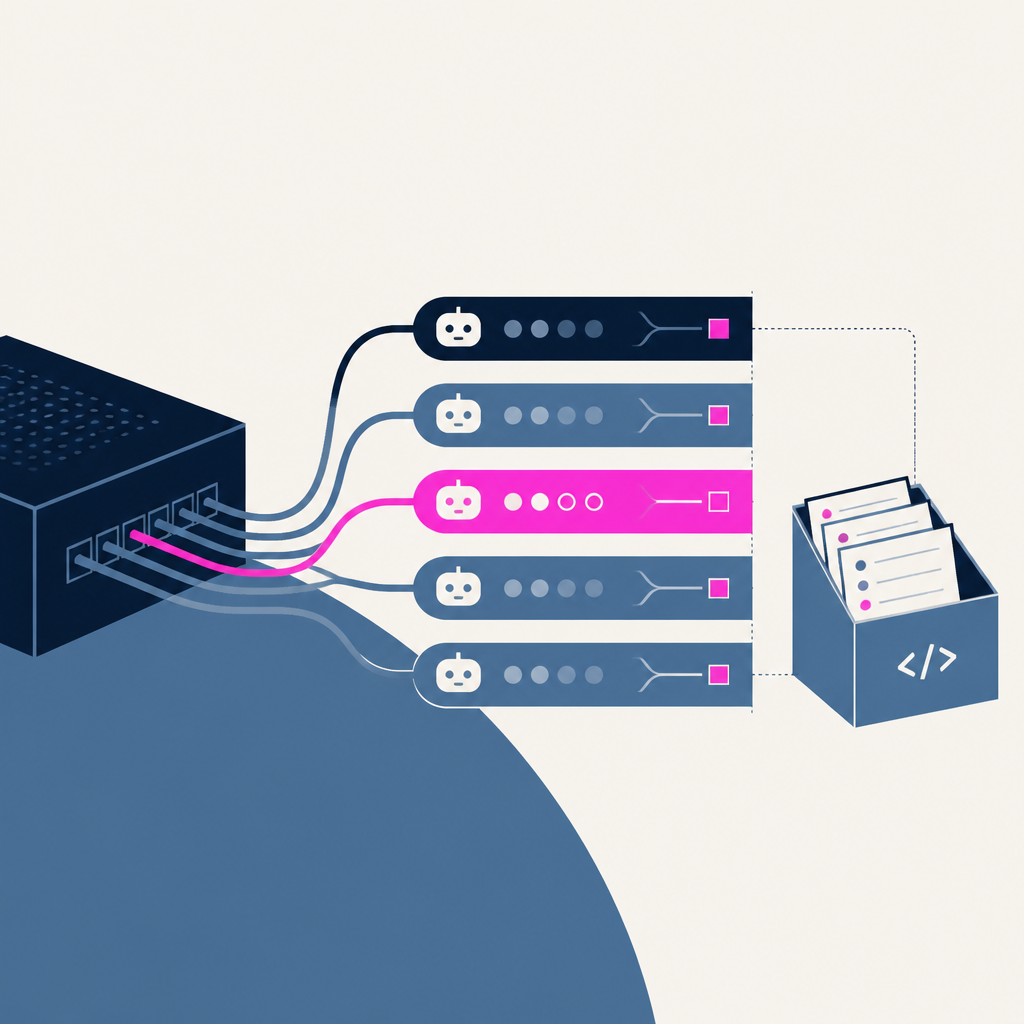
The agent problems showed up fast. A module picker built as a TUI looked fine to humans, but an agent hit raw ANSI escape codes and couldn't handle the arrows or toggles. The fix was not a bigger prompt system. It was a simpler rule: every interactive question should have a flag equivalent. If the CLI needs information, that information should be available through a flag, a config file, or a default, not only through a pretty screen.
That idea runs through the rest of the design. The command logic takes three paths for input, but only one path for execution, so the business logic gets tested once. The -y flag is treated as a promise that everything needed will come from the command line or a default, and if not, the command should fail loudly instead of hanging. In one example, an agent read --help, generated config.yaml, connected Dockerfile and registry settings, and set up GitHub Actions CI on its own. Mistral says that path from prompt to live deployment took under 10 minutes.
The deeper change was moving from code-shaped commands to data-shaped projects. Spaces now uses plugins that declare their own properties, which makes them introspectable and easier to list, serialize, or diff. A human gets the TUI picker. An agent gets JSON from the registry. On init, the tool also writes context.json and AGENTS.md so models have a structured snapshot of the project and a set of explicit instructions. And the same discipline cleaned up hidden state like current-working-directory assumptions. The result is a CLI that still looks friendly, but is much harder to confuse.
My take — AI-written commentary, not fact-checked reporting
This is the right lesson, and it’s not really about agents at all. CLIs keep breaking because they hide state and worship clever prompts; agents just make the mess impossible to ignore. EU regulators can keep worrying about the grand future of AI, but the real infrastructure work is still embarrassingly basic: be explicit, or expect chaos.
Read more about this at: Mistral AI