Scientists develop new method for deciphering ancient scrolls
Ars Technica Jennifer Ouellette
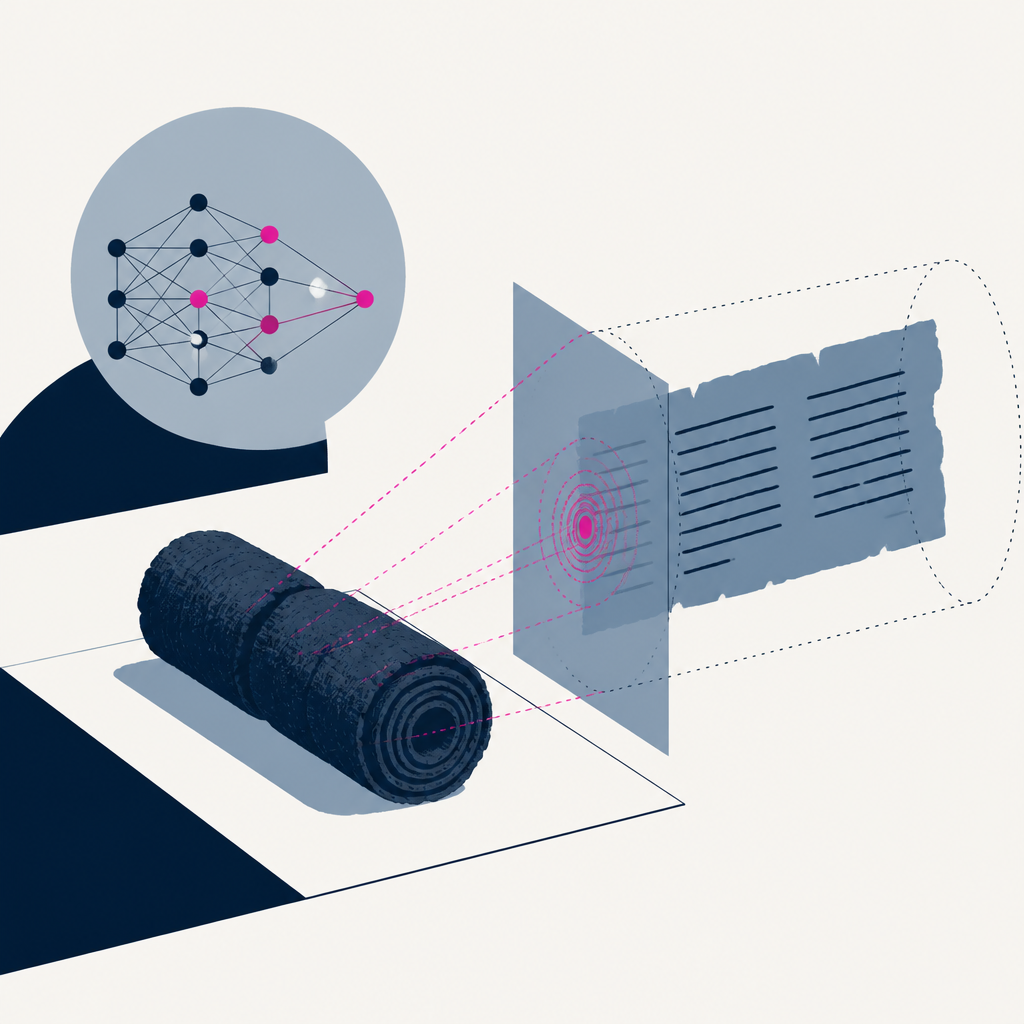
Researchers made fake burnt scrolls to test a way to spot ones written with lead ink. That could narrow the hunt for the Herculaneum scrolls most likely to be readable.
Based on reporting by Ars Technica, Jennifer Ouellette — read the original for the full story.
Summary, retelling and take written by AI under human oversight; images are AI-generated illustrations. How we work · Report an error
The Vesuvius Challenge keeps inching forward, and now it has a new filter. Researchers built modern papyrus scrolls, charred them to mimic the Herculaneum originals, and used them to test a screening method for finding ancient scrolls written with lead-based ink. Those are the ones the team wants to prioritize next, because they may be the best candidates for digital analysis. The work appears in PLoS ONE.
That matters because the Herculaneum scrolls are not just old. They are badly burned, sealed inside layers of volcanic destruction from the 79 AD eruption of Mount Vesuvius, and far too fragile to unroll by hand. The Vesuvius Challenge has been trying to read them with digital unwrapping and crowdsourced machine learning, but any way to sort the promising scrolls from the hopeless ones is a serious advantage.
The scrolls come from a palatial house in Herculaneum, likely once owned by a man named Piso, and were found in the 1700s in what archaeologists think was the private library of the Epicurean philosopher Philodemus. Some fragments have already given scholars Greek philosophical texts, including works by Epicurus and Philodemus, plus a few Latin texts. The rolled-up scrolls were another story. For a long time, the assumption was simple: touch them and they fall apart.
So the new paper is less about a dramatic reveal than about better triage. If the lead-ink screening holds up, it gives researchers a way to spend their time on the scrolls most likely to yield text instead of burning effort on the wrong ones. In a project like this, that sort of boring precision is the real breakthrough.
My take — AI-written commentary, not fact-checked reporting
This is the kind of progress ancient-text rescue needs: less theatrical unrolling, more ruthless sorting. The hype always wants a miracle, but the real win is a method that saves time and avoids wrecking the evidence. Old papyrus is not impressed by optimism.
Read more about this at: Ars Technica