
Ryan Carson Teaches Advanced AI Agent Management Techniques
YouTube ● Covered by 2 sources
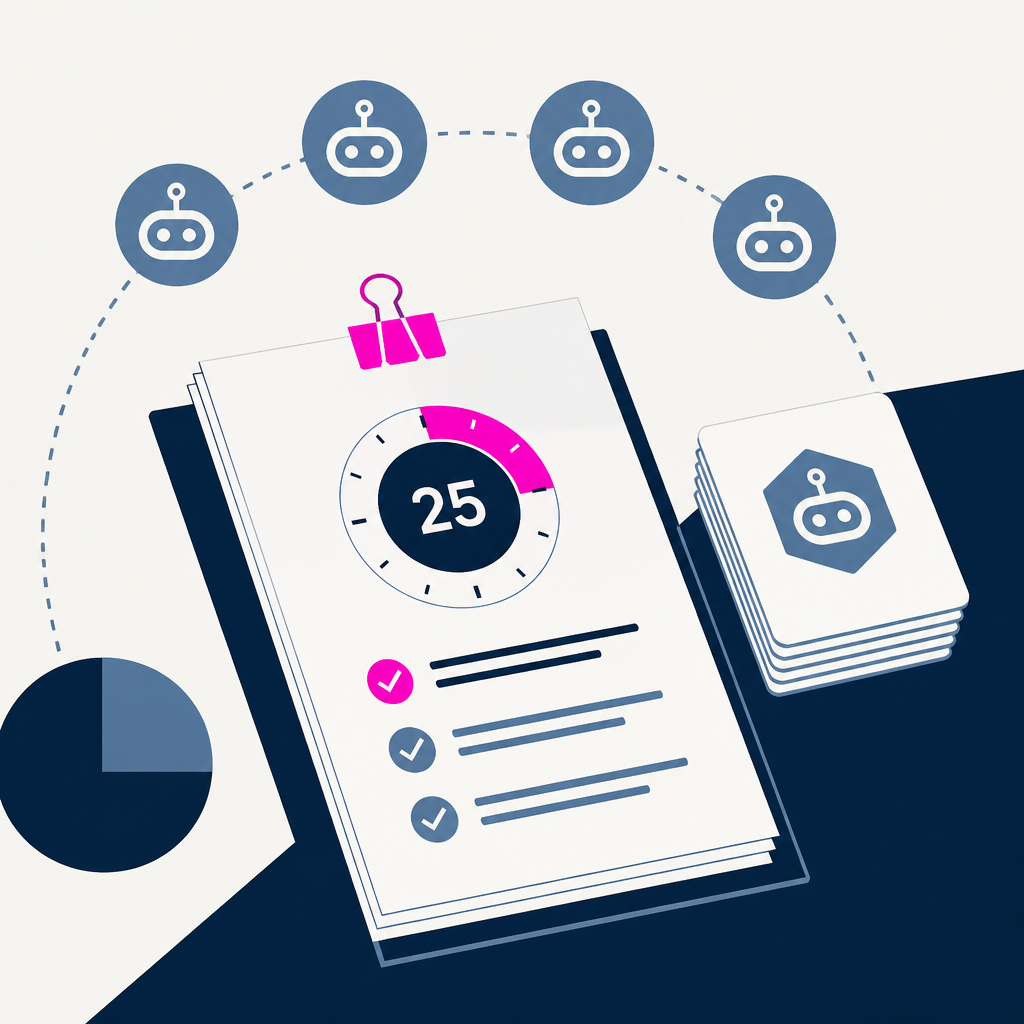
Ryan Carson's trick: check in on your AI agents every 25 minutes instead of babysitting them nonstop. It keeps your brain free while the bots keep grinding on their own.
Based on reporting by YouTube — read the original for the full story.
Summary, retelling and take written by AI under human oversight; images are AI-generated illustrations. How we work · Report an error
Ryan Carson has a problem a lot of us are quietly running into: once you're juggling more than one AI agent at a time, your brain becomes the bottleneck, not the model. His fix isn't a new tool or a smarter prompt. It's a clock.
The system is simple on paper. Set each agent loose on a clearly defined task, then check back in roughly every 25 minutes. Not constantly, not whenever a notification pings you, but on a fixed cadence that Carson treats almost like a Pomodoro for supervision instead of focus work. The agents keep chugging along independently in the gaps, and you only spend mental energy at the review points, where you actually have something concrete to evaluate.
What makes this worth talking about is the emphasis on outcomes over babysitting. Carson's approach only works if the task handed to each agent is specific enough that a 25-minute silence doesn't turn into a 25-minute detour in the wrong direction. Vague instructions plus long unsupervised stretches is how you end up with an agent that's confidently built the wrong thing. So the real discipline isn't the timer, it's writing the brief tight enough that the timer can exist at all.
There's also a quieter point buried in here about cognitive load, a phrase Carson uses deliberately. Managing three or four AI agents at once isn't actually that different from managing three or four junior engineers, except the agents don't get tired and don't push back when the instructions are unclear. That makes it easy to overload yourself checking in too often, second-guessing every step, and burning the exact attention you were trying to free up by delegating in the first place.
None of this is revolutionary in a technical sense. It's a workflow habit, not a model breakthrough. But as more people move from using a single chatbot to running fleets of semi-autonomous agents, these kinds of pacing tricks are probably going to matter more than whatever benchmark score the next model release brags about.
My take — AI-written commentary, not fact-checked reporting
This is the unglamorous stuff nobody writes papers about, and it's exactly why it works. Everyone's obsessed with which model is smartest while the actual bottleneck has quietly become human attention span, and a 25-minute timer fixes more real workflows than another point of MMLU ever will.
Read more about this at: YouTube