
OpenAI's New Device Will Be Hockey Puck-Sized and Cost Over $300
Bloomberg ● Covered by 5 sources
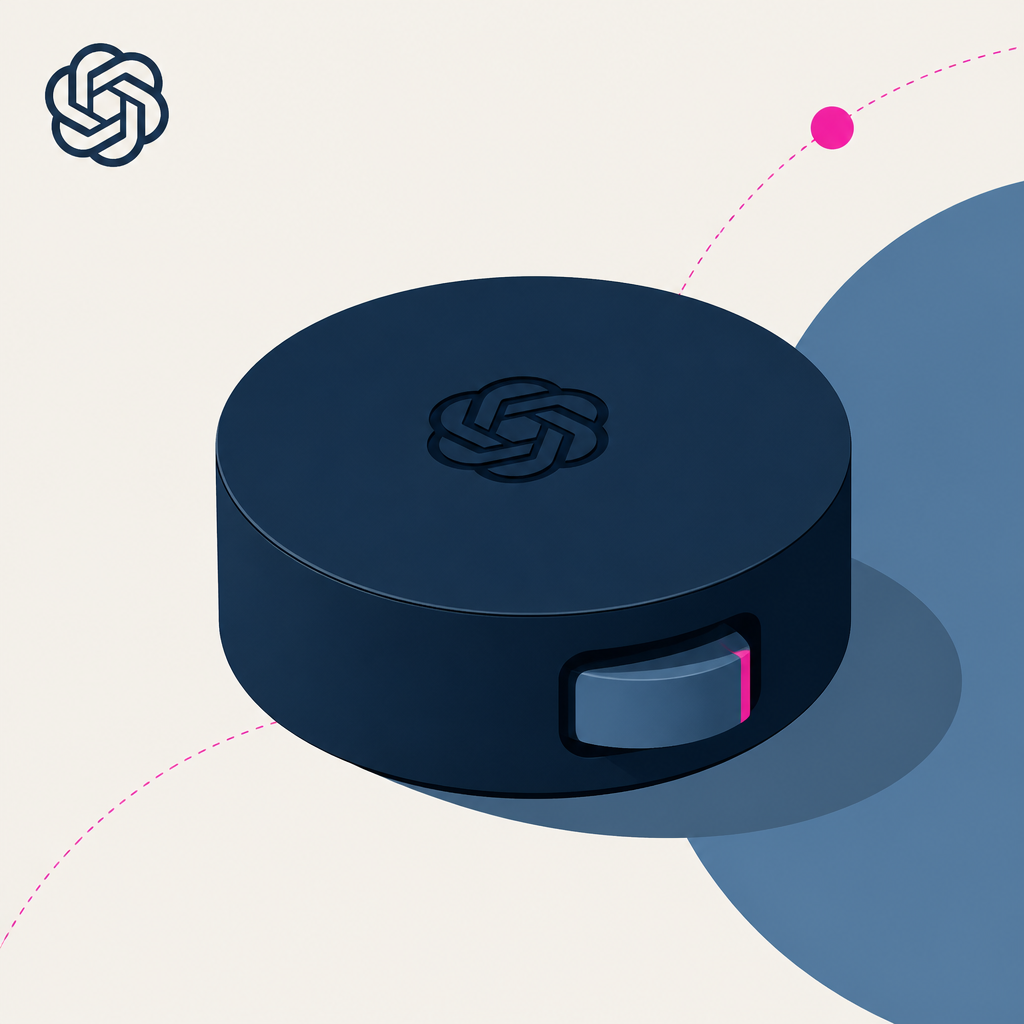
OpenAI's first gadget leaked: a hockey-puck-sized speaker with no screen, coming in 2027 for over $300. It's got moving parts meant to give it 'personality' — think less iPhone, more R2-D2's weird cousin.
Based on reporting by Bloomberg — read the original for the full story.
Summary, retelling and take written by AI under human oversight; images are AI-generated illustrations. How we work · Report an error
Sam Altman's hardware ambitions are finally taking shape, and the shape is apparently a hockey puck. Reports pointing to OpenAI's long-rumored device describe something closer to a smart speaker than a phone or wearable: no screen, no camera-first design, just a compact object meant to sit on a desk or shelf and talk to you.
What sets it apart from the Echo dots and HomePods already cluttering everyone's kitchen counter is the promise of moving parts. Not buttons or dials in the traditional sense, but components designed specifically to give the device a sense of physical personality — a nod, a tilt, some kind of mechanical expressiveness meant to make an AI assistant feel less like a black box and more like a presence in the room. It's an odd design choice, but a deliberate one: OpenAI has clearly decided that voice alone isn't enough to make people feel like they're talking to something alive.
The timeline is the real headline here. 2027 is a long runway for a company that ships software updates on a near-weekly cadence, and it suggests real hardware engineering challenges rather than a quick skin-job on existing speaker tech. Pricing above $300 puts it well past impulse-buy territory and into the same bracket as premium smart-home gear or entry-level tablets, which raises the obvious question of who exactly this is for.
OpenAI has never shipped a physical product before, and consumer hardware is littered with the corpses of software companies that assumed brand loyalty would translate into gadget sales. Amazon, Google and Apple have spent over a decade refining supply chains, retail distribution and the boring mechanics of building things people can hold. OpenAI is starting from zero on all of that, with a two-year lead time to figure it out before anyone even gets to test whether a puck with a personality is something people actually want on their desk.
My take — AI-written commentary, not fact-checked reporting
A talking puck with mechanical charm sounds charming in a pitch meeting and awkward in a living room, and two years is plenty of time for competitors to ship something similar with an actual screen. OpenAI keeps betting that novelty and brand hype can substitute for hardware experience, and consumer electronics has a long, expensive history of punishing exactly that assumption.
Read more about this at: Bloomberg