
Microsoft's move in the AI school debate: controls over how student data gets used
Fortune Catherina Gioino ● Covered by 2 sources
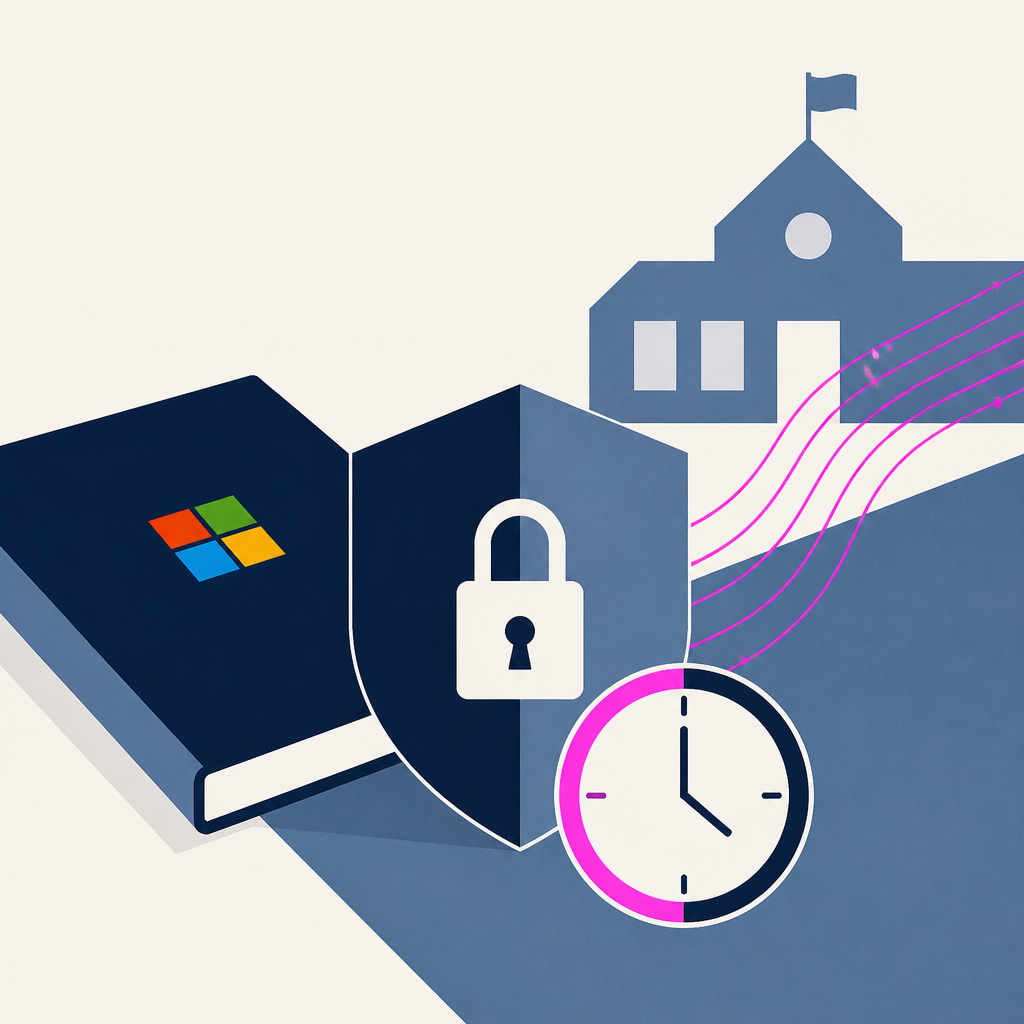
Microsoft says school districts can now lock student-data rules into AI contracts. It’s a direct answer to the school AI backlash, and the unions want OpenAI and Anthropic in next.
Based on reporting by Fortune, Catherina Gioino — read the original for the full story.
Summary, retelling and take written by AI under human oversight; images are AI-generated illustrations. How we work · Report an error
Microsoft is trying to turn the school AI fight into a contract fight. A week after New York City объявished a one-year moratorium on AI in public schools, the company said every school district in the country can now set its own privacy and safety rules inside Microsoft agreements.
The new “National AI Safety & Privacy Standard” is not a ban on AI in classrooms. It gives districts enforceable control over how AI tools handle student data, and the protections become legally binding once they’re written into a district’s Microsoft contract. Among the limits: companies can’t use student data to train models, can’t track students, and can’t let AI make decisions without human review.
The deal also gives districts teeth. If a company breaks the rules, a district can cancel the contract and seek damages. Microsoft said the protections will apply to every school district it works with starting November 1, whether or not a district takes any extra action to adopt them.
The standard lists 10 enforceable protections, including bans on selling student data, using it for advertising, and deploying AI companion chatbots for students. It also requires breach reporting within 72 hours, annual certification, audit rights, and fixes for security issues within a set deadline. Brad Smith summed up Microsoft’s pitch as “privacy, safety, and transparency,” while also calling for “sunshine transparency.”
The announcement landed beside a familiar chorus of school skepticism. Randi Weingarten of the American Federation of Teachers said the agreement fills a gap that federal and state governments have left open, and Michael Mulgrew of the United Federation of Teachers argued it gives districts leverage they didn’t have before. OpenAI and Anthropic, both partners with Microsoft in the unions’ National Academy for AI Instruction, were invited to sign on next, but neither responded to Fortune’s request for comment. The unions had already been pushing for tighter limits, including bans for younger grades and for student-facing chatbots.
My take — AI-written commentary, not fact-checked reporting
This is the new American workaround: when law stalls, write the rules into the contract and make the vendor live with them. It’s practical, which is usually what happens when nobody trusts the grown-ups in government to move first. The real tell is that school systems now need legal muscle just to ask where student data goes.
Read more about this at: Fortune