
Meta FAIR Introduces AI Research Preference Models (RPMs): Ranking ML Experiments Before Spending GPU Hours
MarkTechPost Asif Razzaq
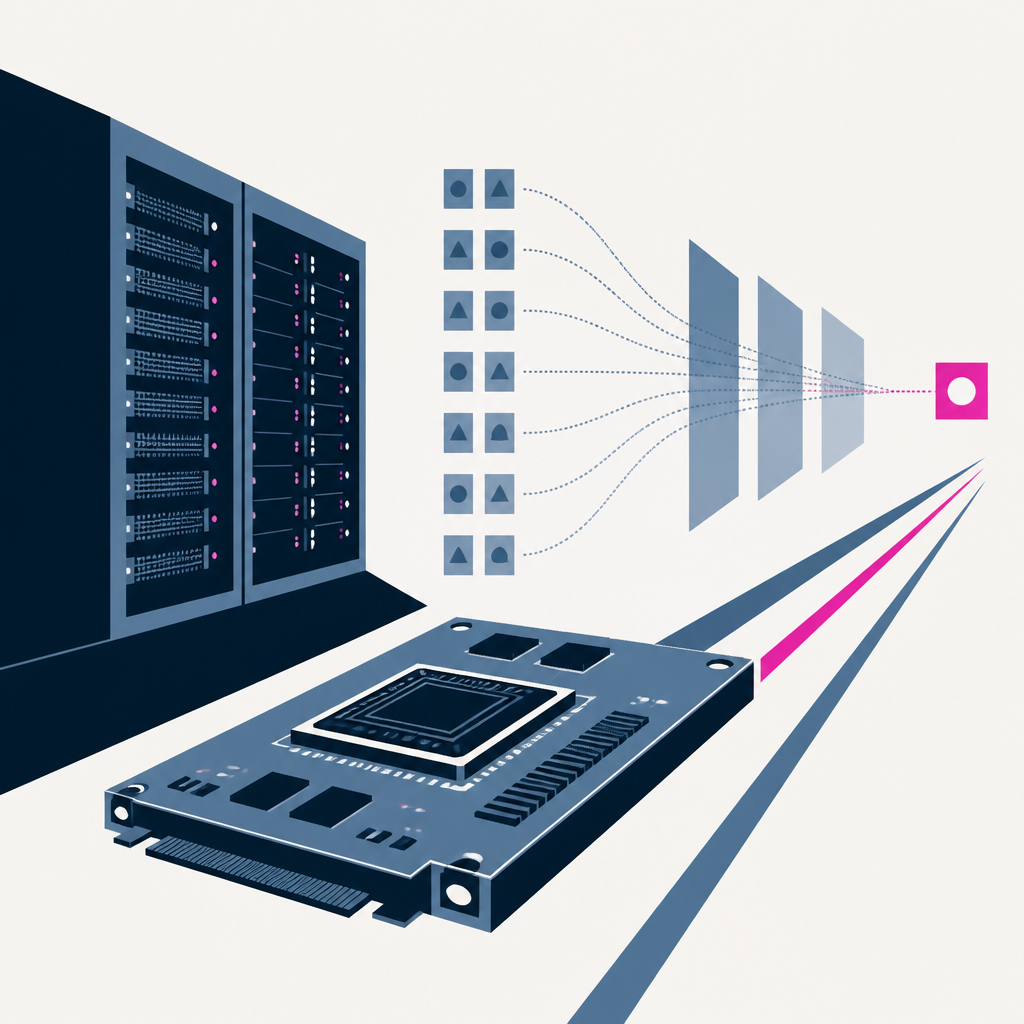
Meta FAIR and researchers built RPMs to rank AI experiments before they run. That can save GPU time, which is the real bottleneck.
Based on reporting by MarkTechPost, Asif Razzaq — read the original for the full story.
Summary, retelling and take written by AI under human oversight; images are AI-generated illustrations. How we work · Report an error
AI research agents are getting good at dreaming up experiments, writing them, and even grading them. The catch is simple: running them costs real GPU time, and that is where progress gets expensive. A team from FAIR at Meta, the University of Oxford, and University College London says the smarter move is not predicting the final score at all, but ranking the unexecuted ideas before a single run starts.
They call that layer Research Preference Models, or RPMs. In the setup they describe, the agent first generates 15 candidate children in parallel, then an RPM pits them against each other in a knockout tournament and only the winner gets executed. The comparison is fed by context from a breadth-first walk of the explored tree, with validation scores attached to the nodes. The team says language models were not reliable enough to predict metrics or execution outcomes directly, so RPMs stay away from absolute score forecasting.
There are two versions. The inference-only RPM is just an LLM-as-judge over the candidate plans, code, and search history, with its prompt tuned by MIPROv2 from DSPy. The agentic RPM uses the same judge but also a sandbox that clones the agent environment, including a single H200. It runs small pilot experiments, then either suggests the most informative next step or stops. To keep the agent from quitting too early, the remaining budget is intentionally overstated: 2,700 seconds shown against a real 300 seconds. Pilots are capped at 30, and the 60-second threshold means the selector only runs on Draft and Improve steps; Debug falls back to random.
On AIRS-Bench, which covers 20 public text and tabular tasks, the backbone is Qwen3.6-27B for both the operators and the RPM. That keeps the comparison focused on the selection layer. The no-RPM baseline scores 0.684, the inference-only RPM reaches 0.711, and the agentic RPM gets to 0.729. Both also hit the baseline’s final score much sooner: 14.88 hours for inference-only and 15.50 hours for agentic, versus 24 hours in the baseline setup. The paper also reports two new SOTA results, with 94.1% on WinoGrande and 95.7% on SVAMP.
My take — AI-written commentary, not fact-checked reporting
This is the right kind of AI research idea: less grand prophecy, more ruthless triage. If a model can’t reliably predict outcomes, stop asking it to be a fortune teller and use it as a sorter instead. The industry has spent plenty of time worshipping bigger models; sometimes the useful trick is just wasting fewer GPU hours.
Read more about this at: MarkTechPost