LoRA training scripts of the world, unite!
Hugging Face
Hugging Face dropped a community-built recipe for training SDXL LoRA models that actually works well. It mixes tricks from Replicate and Kohya's trainers, so hobbyists can get pro-level fine-tunes without a GPU farm.
Based on reporting by Hugging Face — read the original for the full story.
Summary, retelling and take written by AI under human oversight; images are AI-generated illustrations. How we work · Report an error
Dreambooth LoRA training has always been a bit of a dark art. You feed a handful of photos into Stable Diffusion XL, cross your fingers, and hope the resulting model doesn't turn your dog into a blurry mess or your face into someone else's. Hugging Face just published a guide that pulls together the best tricks scattered across different corners of the community and bakes them into a single diffusers training script, and it's a genuinely useful cleanup of a messy landscape of tribal knowledge.
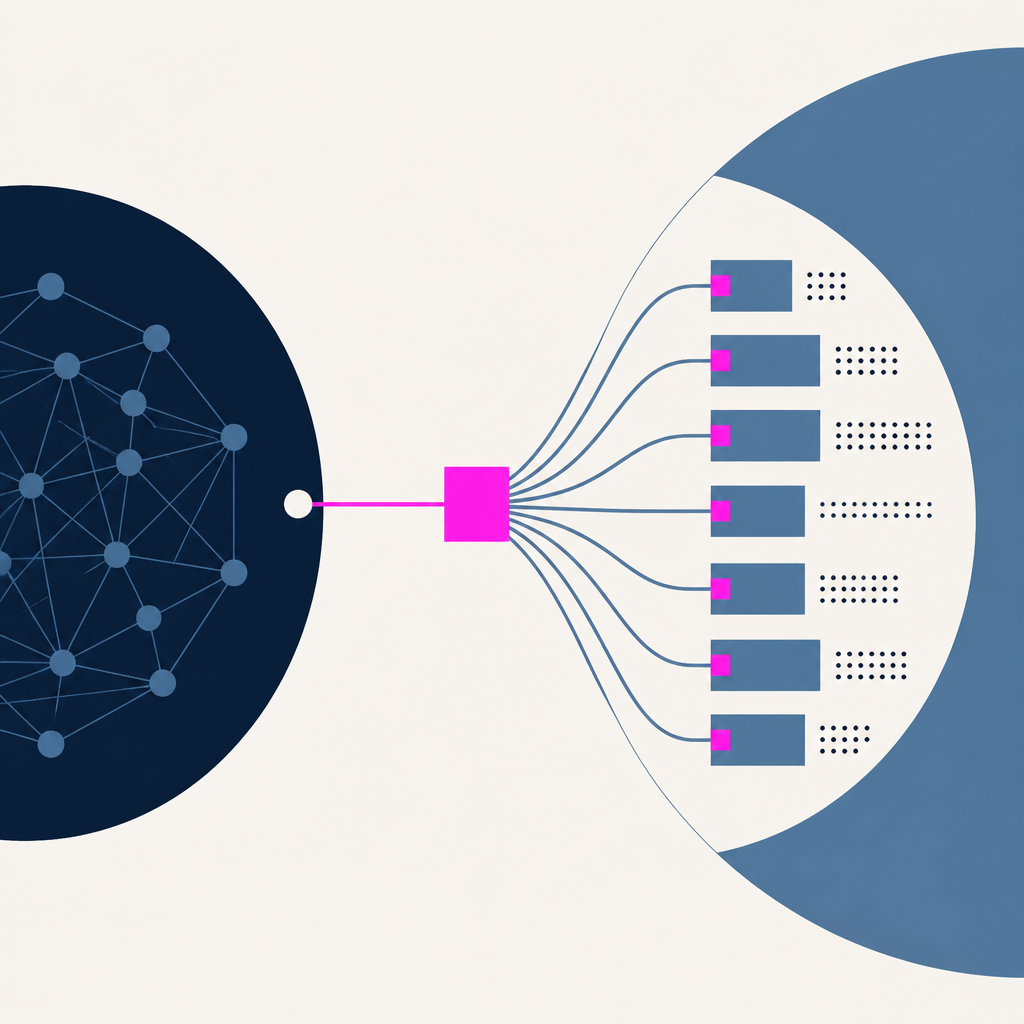
The headline move is combining Pivotal Tuning, the technique Replicate uses in its Cog trainer, with the Prodigy optimizer, a favorite in Kohya's popular sd-scripts setup. Pivotal Tuning solves an odd problem: when you pick a trigger word like "sks" to represent your new concept, that token often already means something else to the model. Turns out "sks" is tied to a weapons brand. Instead of hijacking existing tokens, the new script inserts fresh ones into the text encoder and trains their embeddings first, then switches to full LoRA training on the UNet. Splitting training halfway between the two phases is the default, though the team encourages tinkering with that ratio.
Prodigy earns its own spotlight because it removes a huge chunk of the guesswork around learning rates. Adam and AdamW, the usual suspects, force you to hand-pick a learning rate and hope it holds up for the whole run. Prodigy adjusts per-parameter learning rates on the fly based on gradient history, which the Hugging Face team found particularly well-suited to Dreambooth LoRA. They recommend pairing it with a flat learning rate of 1.0 and specific beta and weight decay settings that differ from Prodigy's defaults.
Beyond the headline techniques, the guide is full of smaller, practical levers: separate learning rates for the text encoder and UNet (since the text encoder tends to overfit faster), custom per-image captions pulled from a dataset instead of one repeated prompt, Min-SNR gamma weighting to smooth out conflicting loss signals across timesteps, and an image-repeat setting that lets you pad a thin dataset without messing with epoch counts. There's also a long, sensible section on curating your actual training photos — vary the poses, skip blurry or far-away shots, and for faces, keep other people out of frame entirely.
None of this is flashy new research. It's closer to a field guide assembled from what practitioners like Simo Ryu, Kohya, and The Last Ben have already been doing in scattered repos and forum posts. But having it consolidated into one diffusers script, with a Colab notebook and a no-code Hugging Face Spaces UI on top, lowers the bar considerably for anyone who wants a solid LoRA without spending a weekend reverse-engineering someone else's training config.
My take — AI-written commentary, not fact-checked reporting
This is exactly the kind of unglamorous work that keeps open image models competitive with closed ones — nobody's writing headlines about optimizer beta values, but this stuff is why a hobbyist with one GPU can now match results that used to require a lab. I'd rather see Hugging Face keep shipping practical training guides like this than another benchmark chart nobody can reproduce.
Read more about this at: Hugging Face