
Launch HN: Minicor (YC P26) – Windows desktop automations at scale
minicor.com fchishtie
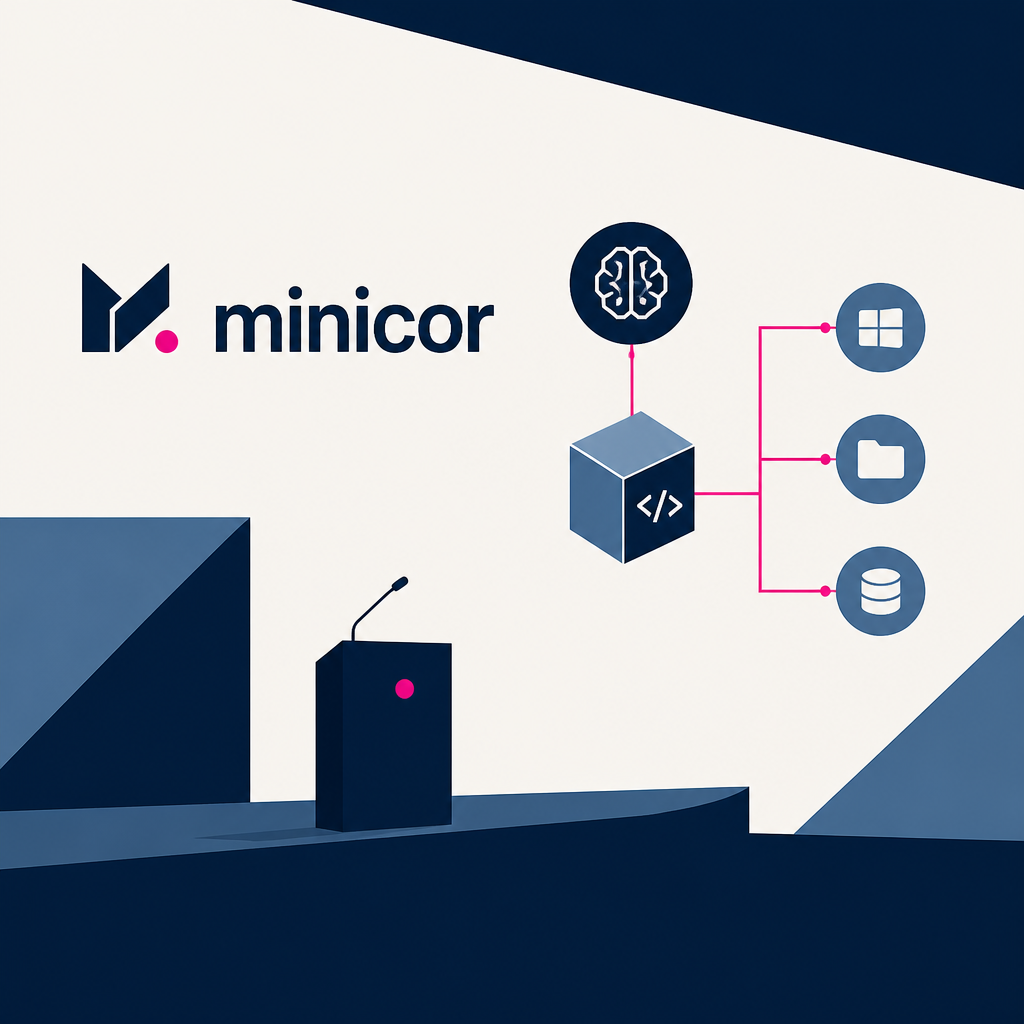
Minicor, a YC P26 startup, launched a tool that uses Claude as an MCP to automate Windows desktop tasks at scale by generating Python-based RPA workflows that can be triggered via API. The founders built this after a customer needed medical records integration in 2 days and found that conventional desktop automation typically fails 30% of the time due to scripting complexity, orchestration challenges, and debugging difficulties. The platform reduces failures by using AI-generated code, version control, video replay logging, and integrated human-in-the-loop options, addressing a market pain point where failed automations at scale generate thousands of support tickets monthly.
Why it matters
Hey we’re Faiz and Saheed and we built Minicor so AI companies who need to integrate to desktop systems with no API can quickly build scalable desktop RPAs. Demo: https://www.youtube.com/watch?v=MD0GHZIJ1cwEdit: RPA is an acronym for Robotic Process Automation - things like triggering mouse clicks and key strokes to perform tasks programmatically. Sorry if this wasn't clear!We were working on non-RPA integrations when a customer promised to sign a deal in 2 days if we could unblock a sale of theirs that involved integrating with a clinic’s Windows based medical record system. We didn’t know it at the time but it turns out that building desktop RPAs at scale is extremely difficult because scripting is hard (learning the system, defining the automation, UIs changing constantly), orchestration is hard (is the VM up? queuing, parallelizing) and debugging is hard (zero observability, false positives, cascading failures). 30%+ failure rates are not uncommon. At scale we’ve seen cases of fail
Related stories
 Launch HN: Coasty (YC S26) – An API for computer-use agents
coasty.ai · 2 months ago ·
30
Launch HN: Coasty (YC S26) – An API for computer-use agents
coasty.ai · 2 months ago ·
30
 Launch HN: Intuned (YC S22) – Build and run reliable browser automations as code
intunedhq.com · 3 months ago ·
32
Launch HN: Intuned (YC S22) – Build and run reliable browser automations as code
intunedhq.com · 3 months ago ·
32
 Launch HN: Hyper (YC P26) – Company brain to power agentic development
Hacker News · 3 months ago ·
50
Launch HN: Hyper (YC P26) – Company brain to power agentic development
Hacker News · 3 months ago ·
50