
How AI is expanding what people do at work
OpenAI ● Covered by 11 sources
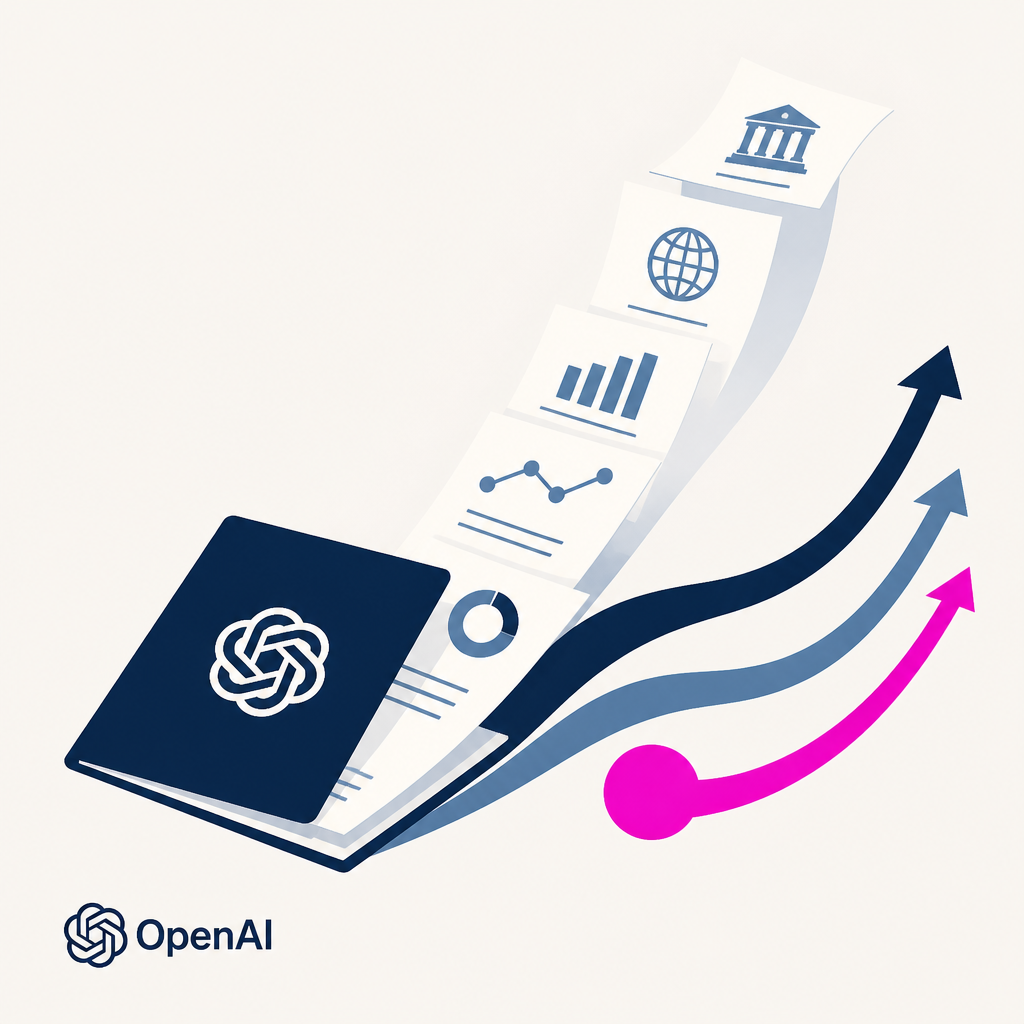
OpenAI says ChatGPT is quietly widening job descriptions, not just automating tasks. Workers are picking up skills outside their usual lane, blurring old role boundaries.
Based on reporting by OpenAI — read the original for the full story.
Summary, retelling and take written by AI under human oversight; images are AI-generated illustrations. How we work · Report an error
OpenAI has put out new research arguing that its chatbot isn't just handling grunt work inside existing jobs, it's nudging people into tasks that used to belong to someone else's title entirely. The framing is subtle but important: this isn't the usual automation story about robots taking jobs, it's about individual workers taking on more.
Think of a marketer who now drafts basic code, or a support rep who writes polished copy for a campaign. According to OpenAI's findings, ChatGPT users are stretching across roles like that, borrowing capabilities that once required a specialist down the hall. The tool becomes a kind of cheat sheet for adjacent skills, letting people dabble competently in areas outside their formal training.
That has real implications for how companies structure teams. Job boundaries have always been somewhat arbitrary, shaped as much by org charts and hiring history as by what tasks actually require. If a single employee with ChatGPT can now cover ground that used to need two or three people with different specialties, the traditional division of labor starts to look outdated. OpenAI's research suggests this reshuffling is already underway, not some hypothetical future scenario.
And this matters beyond individual productivity. When job boundaries move, so does the leverage in hiring, promotion, and pay. Companies may start valuing generalists who can operate across domains with AI assistance over narrow specialists. That's a structural shift, not just a productivity bump, and it's the kind of thing that doesn't show up in quarterly earnings calls but quietly changes how organizations are built over the next several years.
My take — AI-written commentary, not fact-checked reporting
This is OpenAI's own research about OpenAI's own product, so treat the rosy framing with a grain of salt, but the underlying trend rings true to me: AI is dissolving job categories faster than HR departments can rewrite them. The real story isn't automation eliminating roles, it's individual workers quietly becoming more versatile, and companies that still hire and promote around rigid specialties are going to look slow in five years.
Read more about this at: OpenAI