
Google quietly discontinues its Earth AI feature a day after its rollout after users made no-no images
Fortune Joshua Hong
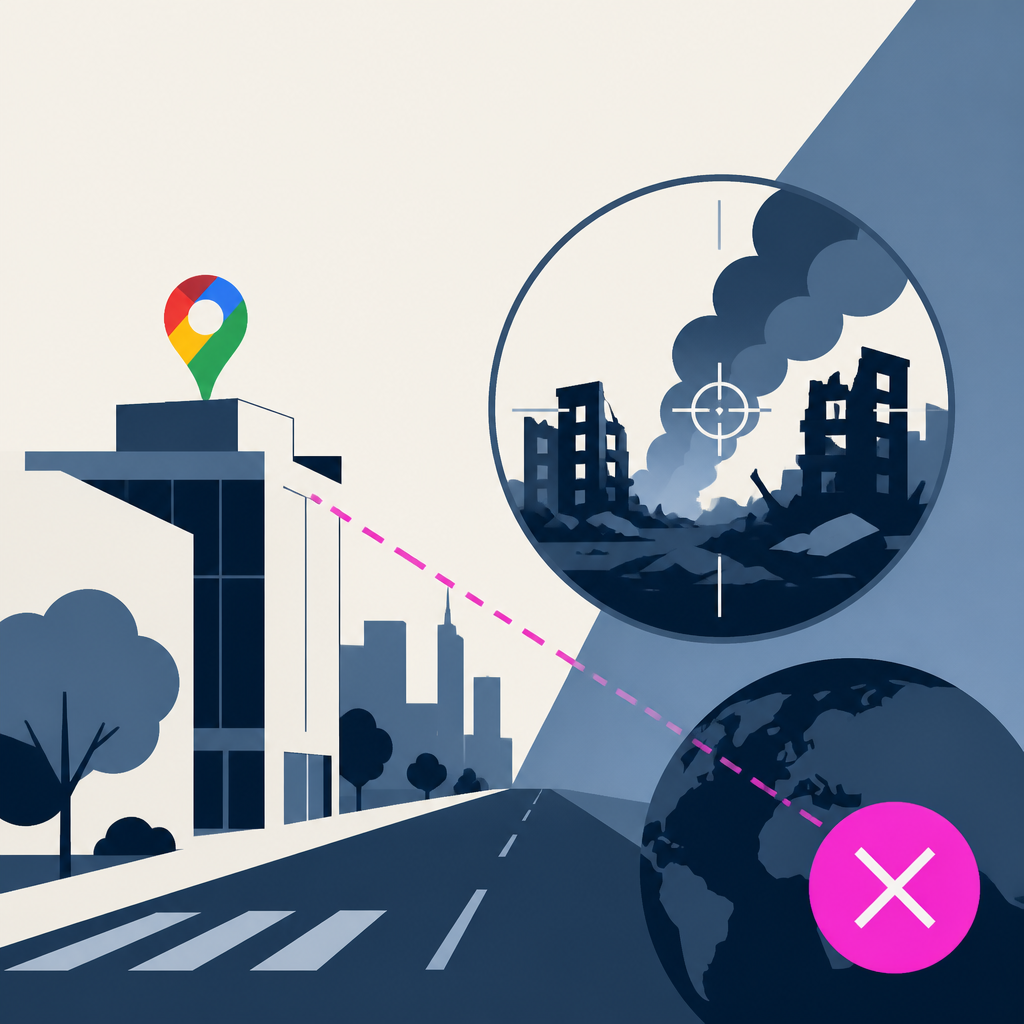
Google yanked its new AI-image tool from Google Earth less than a day after launch. Users were faking nuclear plants and border scenes, so a trusted map suddenly needed a lie detector.
Based on reporting by Fortune, Joshua Hong — read the original for the full story.
Summary, retelling and take written by AI under human oversight; images are AI-generated illustrations. How we work · Report an error
Google Earth has spent nearly two decades being the one place online people didn't second-guess. Point the app at a coastline or a city block and you got, more or less, reality. That changed for about a day this week when Google folded its Nano Banana image-editing tech into Earth, letting users overlay AI-generated scenes onto real satellite and 3D imagery. The pitch was harmless enough on paper — visualize a planning concept, reconstruct a historical scene. The reality was users almost immediately started producing fabricated disasters, invented military installations, and fake conflict imagery tied to actual coordinates, including scenes involving a nuclear plant in Iran and refugees near the Mexico-US border.
Google pulled the feature before it had even settled in, saying it's now working on stronger guardrails and that the manipulated images appeared to violate its own policies. A spokesperson pointed out that the AI images never showed up in the main Earth experience for other users and came watermarked as AI-generated, including Google's SynthID cryptographic watermark. All true, and also somewhat beside the point, according to NYU's Emily Black, who told Fortune that a detection system existing after the fact doesn't do much if the disinformation has already spread as a screenshot with none of that metadata attached.
That's the real problem here, and it's bigger than one feature getting yanked. SynthID is invisible to the naked eye — it's built for machines to verify, not for a person scrolling past a fake image of a border crisis to notice anything off. Nano Banana only embedded that kind of digital watermark, meaning nothing visibly flagged the content as synthetic once it left Google's platform. Screenshot it, repost it, and the fabrication travels with none of its origin story intact.
Google's compliance move ties back to the EU AI Act, which requires providers to make synthetic media detectable — and embedding SynthID technically checks that box. But Black's own research on AI hallucinations suggests disclosure alone barely moves the needle on trust. Even blunt disclaimers warning that AI can be wrong don't stop people from acting on bad information once they've seen it, she found. Slap a watermark on a fake nuclear plant image and plenty of people will still believe what their eyes tell them.
The deeper irony, as researcher Henk Van Ess put it, is that the mere existence of a tool like this hands bad actors a new excuse: a genuine photo of a genuine atrocity can now be waved away as AI-generated, no editing required. Google hasn't said if or when the Earth feature comes back. Given how fast it fell apart, whatever guardrails come next will need to do more than tag the fakes — they'll need to stop people from ever needing to ask which version of Earth they're looking at.
My take — AI-written commentary, not fact-checked reporting
Bolting a Photoshop-grade AI editor onto the one Google product people treat as ground truth was always going to end badly, and it took less than a day to prove it. Invisible watermarks and disclaimers are a compliance checkbox, not a defense, and the EU AI Act crowd should take note that ticking the transparency box doesn't mean anyone actually gets protected. The bigger cost isn't the fake images that got made — it's that real satellite photos of real disasters now carry a permanent asterisk, because everyone knows the tool exists even after it's gone.
Read more about this at: Fortune