
Google Earth’s AI experiment lasted 24 hours. The damage to trust will linger
Rest of World Mahsa Alimardani
Google put AI image generation inside Google Earth, then killed it a day later. It let people fake war-zone satellite scenes right inside a trusted tool.
Based on reporting by Rest of World, Mahsa Alimardani — read the original for the full story.
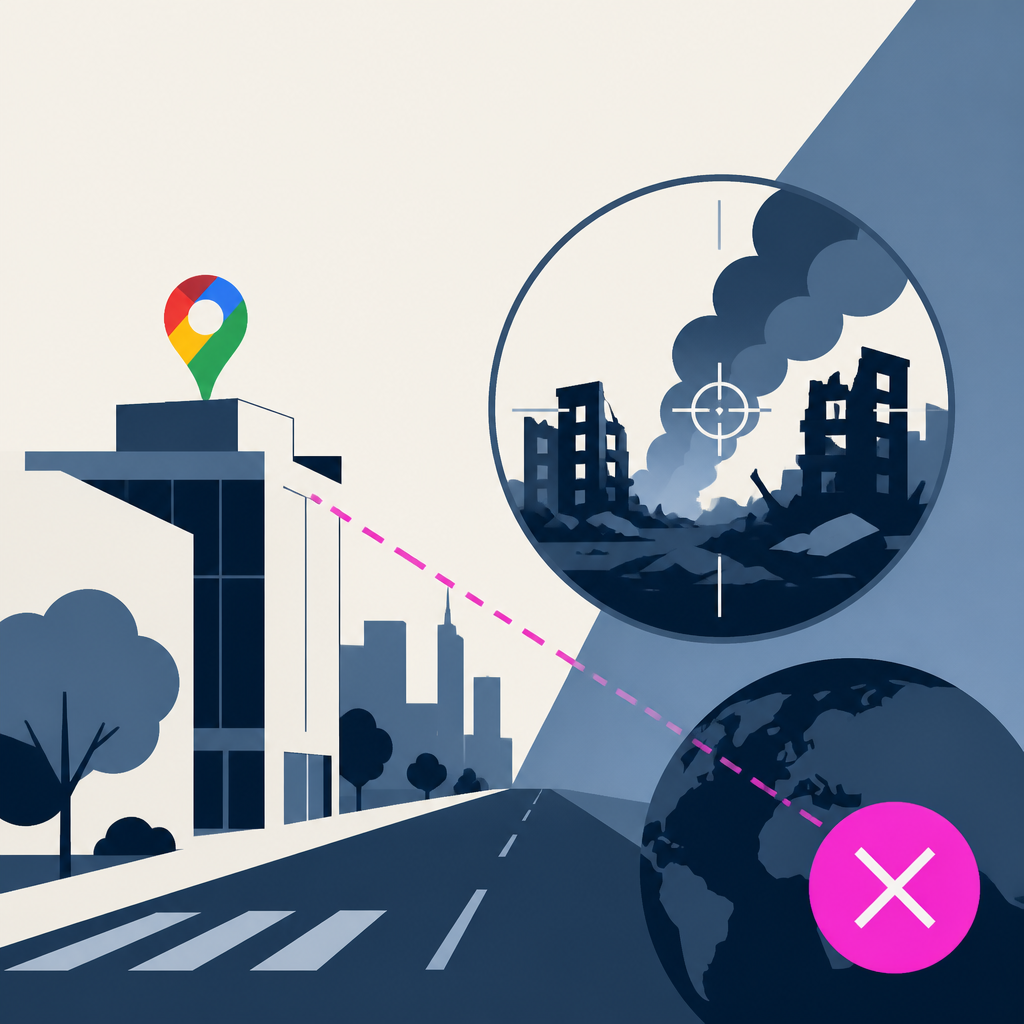
Summary, retelling and take written by AI under human oversight; images are AI-generated illustrations. How we work · Report an error
For years, Google Earth was the thing investigators reached for when they needed something close to ground truth. That mattered in Syria, Yemen and Sudan, where open-source researchers are trained on it and where real imagery can be hard to get. Then on July 30, Google wired image generation into the product, and the same tool people used to check claims could suddenly make up photorealistic scenes at real coordinates.
The backlash came fast, because the use case was obvious and terrible. Within hours, users were generating a nuclear plant in Iran, a bomb crater beside a Gaza hospital and floods around the U.S. Capitol. Google pulled the feature within a day and promised stronger guardrails later. But by then the damage was done: the company had put fabrication inside a verification tool, and done it at the exact moment the region was already drowning in AI-assisted propaganda.
That timing is what makes the episode sting. Since Israel and the U.S. launched strikes against Iran in February, commercial satellite imagery has been one of the few reliable ways to sort fact from fiction. At the same time, the U.S. government told satellite companies to limit journalists’ access to imagery in the region, which only narrows the supply of real evidence while the fakes spread faster. Google Earth was supposed to help people check reality, not make more of it.
And this was not some isolated mistake. Google’s Veo 3 video generator had already been turned loose in May 2025, and within days of the first strikes, AI-made videos of missile barrages on Tel Aviv were circulating with the watermark still visible. That watermark did not help much once users started cropping it out. The Evin prison video showed the other problem: some fakes arrive without a watermark at all, are shared by major outlets, and are only later tied by forensic work to an influence operation.
The broader pattern is ugly and familiar. Products ship, harm follows, the company says it will add safeguards, and everyone else is left cleaning up the confusion. The EU AI Act and California’s transparency law exist, but the source says implementation is shaky and the detection tools are often easy to fool. In conflict zones, that is not a paperwork problem. It is a trust problem, and trust does not come back on a product team’s schedule.
My take — AI-written commentary, not fact-checked reporting
Google keeps treating trust like a feature request, which is a very Silicon Valley move. If a tool is used for verification, stuffing generative image tricks into it is not “innovation”; it is sabotage with a polished launch note. The industry’s favorite reflex is to apologize after the lie has already travelled farther than the truth.
Read more about this at: Rest of World
Related stories
 Google quietly discontinues its Earth AI feature a day after its rollout after users made no-no images
Fortune ·
5
Google Earth’s AI deepfake tool only lasted one day
The Verge · 1 month ago ·
15
Google Earth’s New AI Lets Anyone Fabricate Completely Bullshit Satellite Images
404 Media · 1 month ago ·
50
Google quietly discontinues its Earth AI feature a day after its rollout after users made no-no images
Fortune ·
5
Google Earth’s AI deepfake tool only lasted one day
The Verge · 1 month ago ·
15
Google Earth’s New AI Lets Anyone Fabricate Completely Bullshit Satellite Images
404 Media · 1 month ago ·
50