
Google debuts SynthID Detector tool for flagging AI-generated content, but it’s far from perfect
SiliconANGLE Mike Wheatley ● Covered by 4 sources
Google opened up a tool to spot AI-made images, audio and video. Useful, but it’ll miss plenty of AI stuff that wasn’t watermarked by Google’s partners.
Based on reporting by SiliconANGLE, Mike Wheatley — read the original for the full story.
Summary, retelling and take written by AI under human oversight; images are AI-generated illustrations. How we work · Report an error
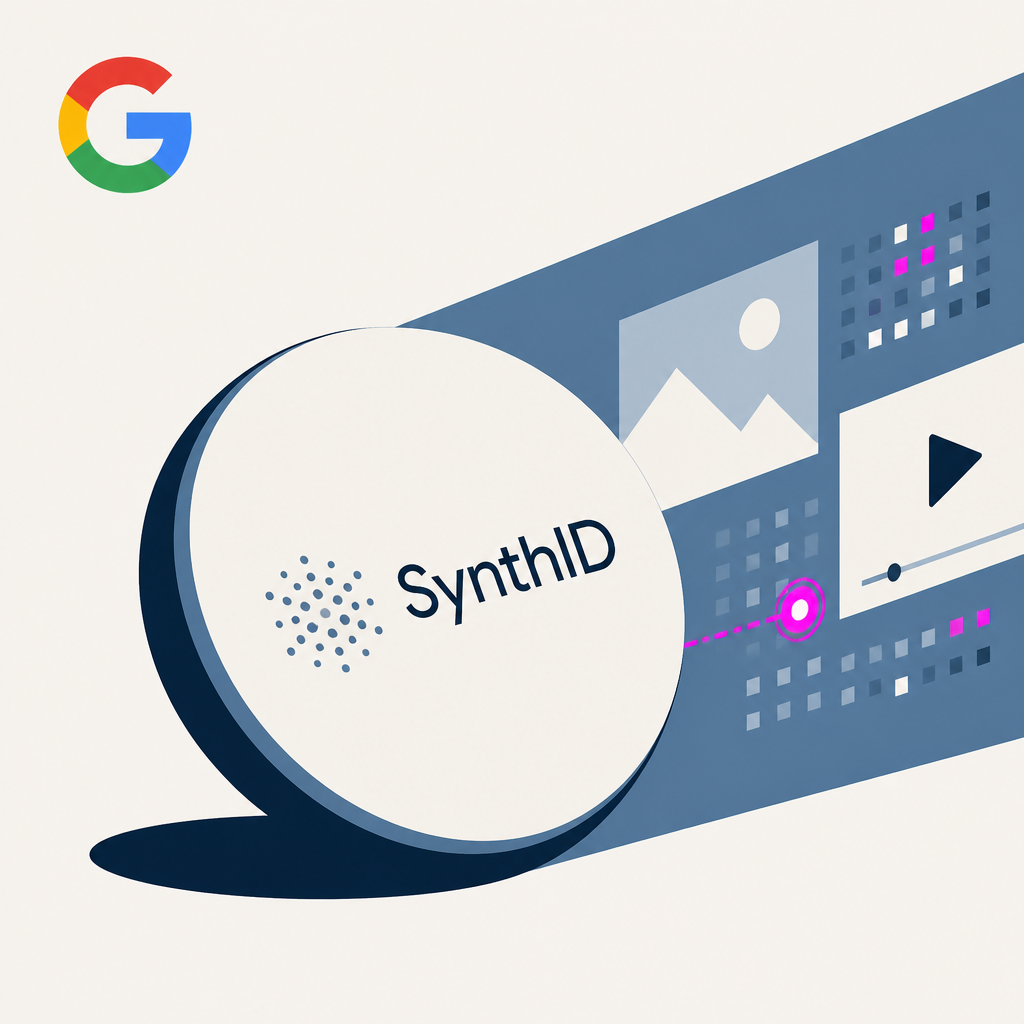
Google has pushed its SynthID detector out into the open. The new web tool is meant to flag images, video and audio made with AI models from Google, OpenAI, Nvidia and Kakao, and it asks users to sign in with a Google, OpenAI or Apple account before they can use it.
That sounds broader than it is. SynthID is a hidden watermark Google introduced in 2023, and the detector only works when that watermark is present. So the tool can catch content from the model makers already tied into Google’s system, but it won’t help much with AI material that never carried SynthID in the first place.
And there’s a lot of that. Anthropic’s Claude doesn’t use SynthID, xAI’s Grok doesn’t either, and none of the open-weights Chinese models use it. That means the detector will miss a big chunk of the AI-generated content people are actually trying to check.
It also can’t separate fully synthetic images, video or audio from material that was simply edited with AI. In other words, it won’t tell you which part of a clip is real and which part was changed. Google says it is working on more partnerships and wants a layered system where watermarking, metadata and verification tools all work together, but for now this is a partial answer to a problem that keeps getting bigger.
Google does have a strong shot at setting a common standard, simply because it already has heavyweight partners on board. But the industry’s habit of launching private little verification islands is exactly why AI detection keeps wobbling around like a cheap folding chair.
My take — AI-written commentary, not fact-checked reporting
This is the usual AI industry move: build a standard, then ship six incompatible versions of it and call that progress. Google is at least admitting the real problem, which is more than can be said for the vendors pretending watermarking will magically work across every model on Earth. Open systems win the internet; closed little detection clubs mostly win press releases.
Read more about this at: SiliconANGLE
Related stories
 Google's SynthID watermark is hard to break, but it doesn't solve AI misinformation
Ars Technica · 2 months ago ·
46
Making it easier to understand how content was created and edited
Google DeepMind · 4 months ago ·
43
Meta made its own AI detection system. It should have just used Google’s
The Verge · 2 months ago ·
56
Google's SynthID watermark is hard to break, but it doesn't solve AI misinformation
Ars Technica · 2 months ago ·
46
Making it easier to understand how content was created and edited
Google DeepMind · 4 months ago ·
43
Meta made its own AI detection system. It should have just used Google’s
The Verge · 2 months ago ·
56