Deceptive Employment Scheme: IT worker activity
OpenAI ● Covered by 2 sources
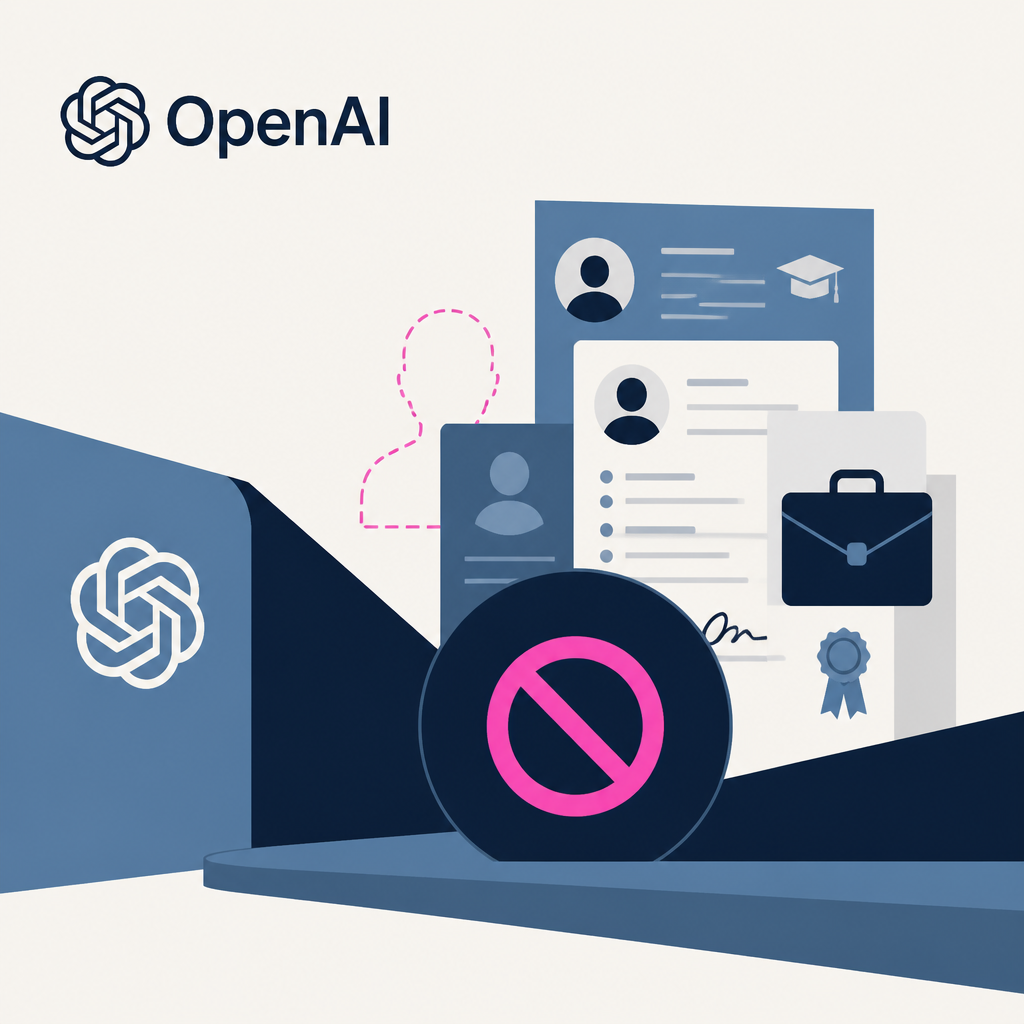
OpenAI shut down accounts tied to a scheme using AI to fake remote-job applications. It shows fraudsters are already weaponizing chatbots to fool hiring managers.
Based on reporting by OpenAI — read the original for the full story.
Summary, retelling and take written by AI under human oversight; images are AI-generated illustrations. How we work · Report an error
OpenAI dropped a quiet but telling disclosure this week: it has banned a cluster of accounts linked to what it calls a deceptive employment campaign. The people behind these accounts weren't just chatting with ChatGPT for fun—they were reportedly using it to churn out polished resumes, cover letters, and other application materials designed to get fake or fraudulent workers into real remote jobs.
This isn't the first time AI companies have had to police this kind of misuse, and it won't be the last. Remote work exploded after 2020, and with it came a cottage industry of scams built around impersonating legitimate job seekers—sometimes to collect a paycheck under false pretenses, sometimes for something darker like gaining insider access to a company's systems. What's new here is the tooling. Instead of hand-crafting a convincing cover letter or fumbling through English-language job postings, bad actors can now lean on a language model to produce native-sounding, professional-grade documents in seconds.
OpenAI's response was blunt: ban the accounts. The company didn't release granular details about how many accounts were involved or which industries were targeted, but the framing suggests this was a coordinated campaign rather than a handful of opportunists. That distinction matters. A lone scammer using ChatGPT to write a better resume is a nuisance. An organized operation using AI to mass-produce fraudulent job applications is a structural problem for hiring pipelines that were already struggling with fake candidates before generative AI showed up.
What this really underscores is how thin the line has become between AI as a productivity tool and AI as a fraud accelerator. The same qualities that make ChatGPT useful for legitimate job seekers—fast, articulate, tailored writing—are exactly what make it useful for people trying to slip past HR screening with a fabricated identity. OpenAI enforcing its usage policies here is the right move, but it's also a reminder that content moderation for AI platforms is turning into an ongoing game of whack-a-mole against increasingly sophisticated abuse.
My take — AI-written commentary, not fact-checked reporting
This is the unglamorous side of the AI story that gets buried under all the AGI hype: the tools are already good enough to power real-world fraud at scale, and enforcement is always going to be reactive. I don't fault OpenAI for banning these accounts, but let's not pretend platform bans solve the underlying problem—hiring systems built on trust and self-reported credentials were vulnerable long before ChatGPT existed, and AI just made the exploit cheaper and faster.
Read more about this at: OpenAI