
America Is Behind on Memory Chips—and Tariffs Threaten to Make Things Harder
CSET Georgetown Jason Ly
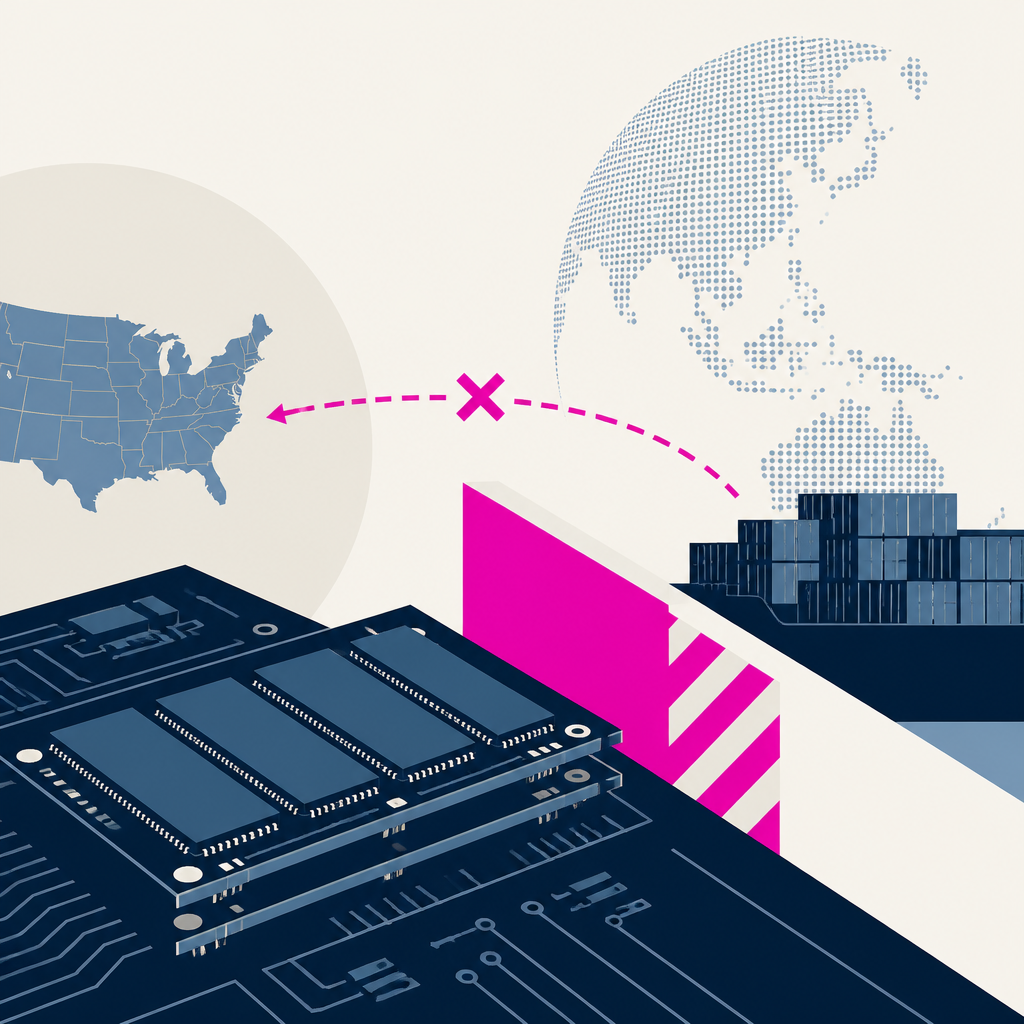
The U.S. leans on foreign memory chips, and tariffs could make a fix harder. That leaves AI supply, businesses and even defense more exposed to disruptions.
Based on reporting by CSET Georgetown, Jason Ly — read the original for the full story.
Summary, retelling and take written by AI under human oversight; images are AI-generated illustrations. How we work · Report an error
A new CSET piece in The Wall Street Journal says the U.S. is still heavily dependent on memory chips made overseas, even as demand tied to AI keeps pushing prices up. That mix is awkward: the country wants more domestic semiconductor production, but proposed tariffs could make that effort harder instead of easier.
CSET’s Hanna Dohmen says the risk is not abstract. Heavy reliance on foreign-produced memory chips leaves the U.S. open to supply disruptions that could hit businesses, national defense and the country’s position in a technology that matters for AI.
Memory chips are not the flashy part of the semiconductor story. They don’t get the same attention as processors, but they are central to how modern systems store and move data. If those chips are mostly coming from abroad, any disruption lands far beyond a single factory floor.
The tension here is simple and uncomfortable. Policymakers want more chips made at home, but tariffs can raise costs just as the market is already getting pricier because of AI demand. That is not a clean path to resilience; it is a reminder that supply chains do not become sturdier just because the politics sound tougher.
My take — AI-written commentary, not fact-checked reporting
This is the usual Washington trick: say you want more domestic manufacturing, then reach for tariffs and act surprised when the math gets uglier. Memory chips are exactly the sort of boring, essential tech that gets ignored until it becomes a national-security talking point. CSET is right to keep the focus on supply risk, because slogans do not keep fabs running.
Read more about this at: CSET Georgetown
Related stories
 AI industry says Trump plans to tax chips in the “single dumbest way imaginable”
Ars Technica · 1 month ago ·
23
Taiwan leans on chip diplomacy as the US pushes for more factories on American soil
finance.yahoo.com · 4 weeks ago ·
8
AI industry says Trump plans to tax chips in the “single dumbest way imaginable”
Ars Technica · 1 month ago ·
23
Taiwan leans on chip diplomacy as the US pushes for more factories on American soil
finance.yahoo.com · 4 weeks ago ·
8
 Protected: Tracking AI Chips: What Does It Cost?
CSET Georgetown · 1 month ago ·
16
Protected: Tracking AI Chips: What Does It Cost?
CSET Georgetown · 1 month ago ·
16