Saturday, 18 July 2026
31 stories · summarised & linked to the source
AI AgentsSakana AIFundingAI Algorithms
AI news — Saturday, 18 July 2026
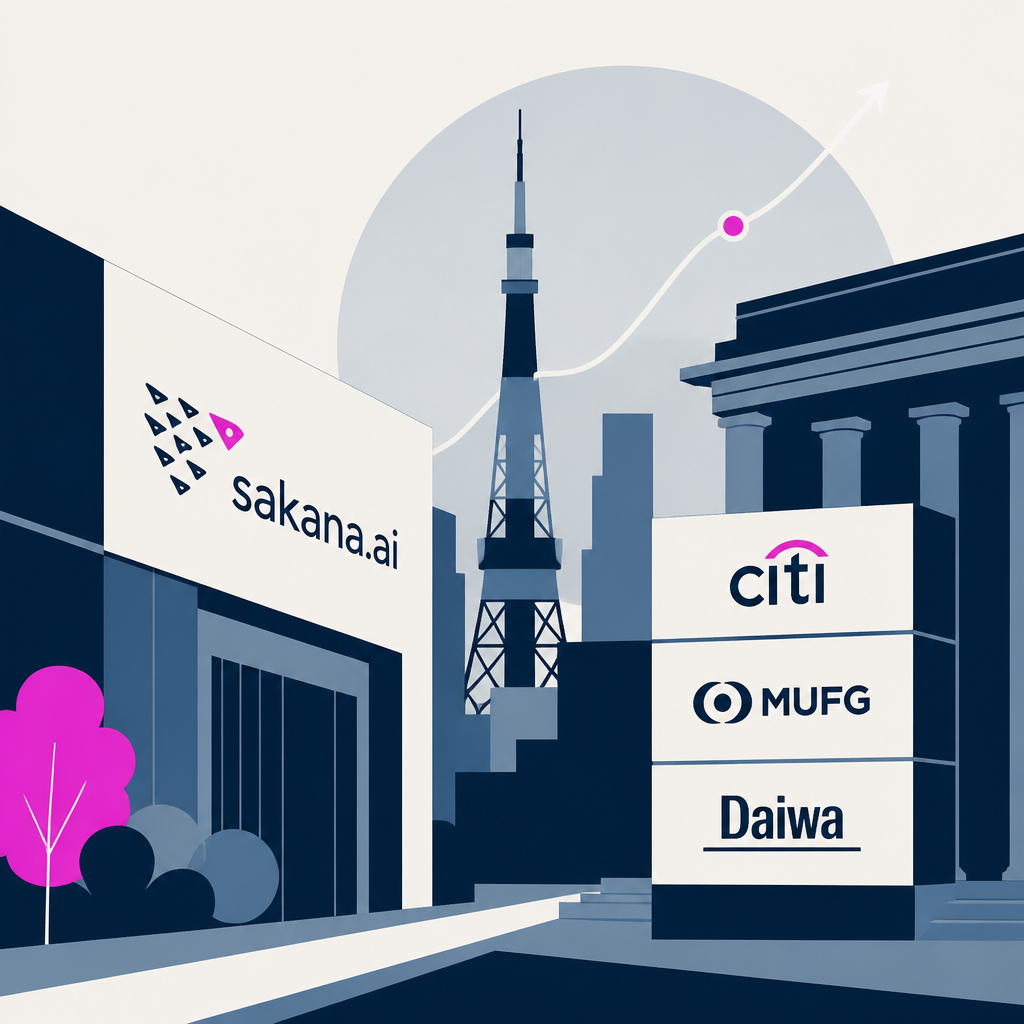
Sakana AI's ambitious expansion dominated the week, raising $200 million at a $2.7 billion valuation to pursue efficient AI for Japanese enterprises rather than compete in the large-model arms race. The Tokyo-based company announced partnerships with Google, Citigroup, and Datadog while simultaneously scoring wins that proved AI agents can match human experts—its ALE-Agent defeated 804 competitors in AtCoder's programming contest by discovering novel algorithms, and a proof-of-concept with Mitsubishi UFJ Bank demonstrated AI could streamline loan decisions across multiple workflow stages. These aren't incremental improvements; they're blueprints for how AI moves from research labs into operational systems that actually work.
Meanwhile, the infrastructure challenges underlying agent deployment became clearer. The bottleneck isn't model capability anymore—it's context management, tool retrieval, and execution guardrails. Companies building reliable agents need compiled context layers that structure organizational knowledge, hypothetical-invocation matching for tool selection, and execution isolation layers that validate every action. Platform engineering teams face a parallel crisis: AI coding agents like GitHub Copilot generate hundreds of concurrent environment requests daily, orders of magnitude more than humans, requiring platform teams to shift from isolated environments to shared infrastructure that serves agents as API calls.
Elsewhere, NVIDIA's DeepStream 9.1 toolkit added 13 agentic skills for video analytics, letting developers describe intent in natural language rather than manually configuring camera systems. But the week's sharpest collision came from Kimi K3, Moonshot AI's open-source Chinese model matching Claude and GPT-4 performance, which triggered a 1 percent Nasdaq drop as investors reassessed chip stocks and policy makers debated open-source restrictions. The market is finally pricing in what research has shown for months: frontier capabilities are distributing faster than expected, and the differentiation game has shifted from model training to operational execution.
The Algorithmic Bridge·1 month ago·
10
● 74 sources
Moonshot released Kimi K3, a Chinese open-source AI model that performs at the level of top American frontier models like Anthropic's latest and OpenAI's GPT-5.6 across multiple benchmarks. The 2.8 trillion parameter model achieves this through architectural innovations including sparse mixture-of-experts design (900 experts with only 16 active at a time) and custom efficiency improvements that make it roughly 2.5 times more efficient than its predecessor. The emergence of a Chinese model matching American frontier capabilities eliminates the previously assumed technological gap and will likely intensify geopolitical discourse around AI regulation and development.
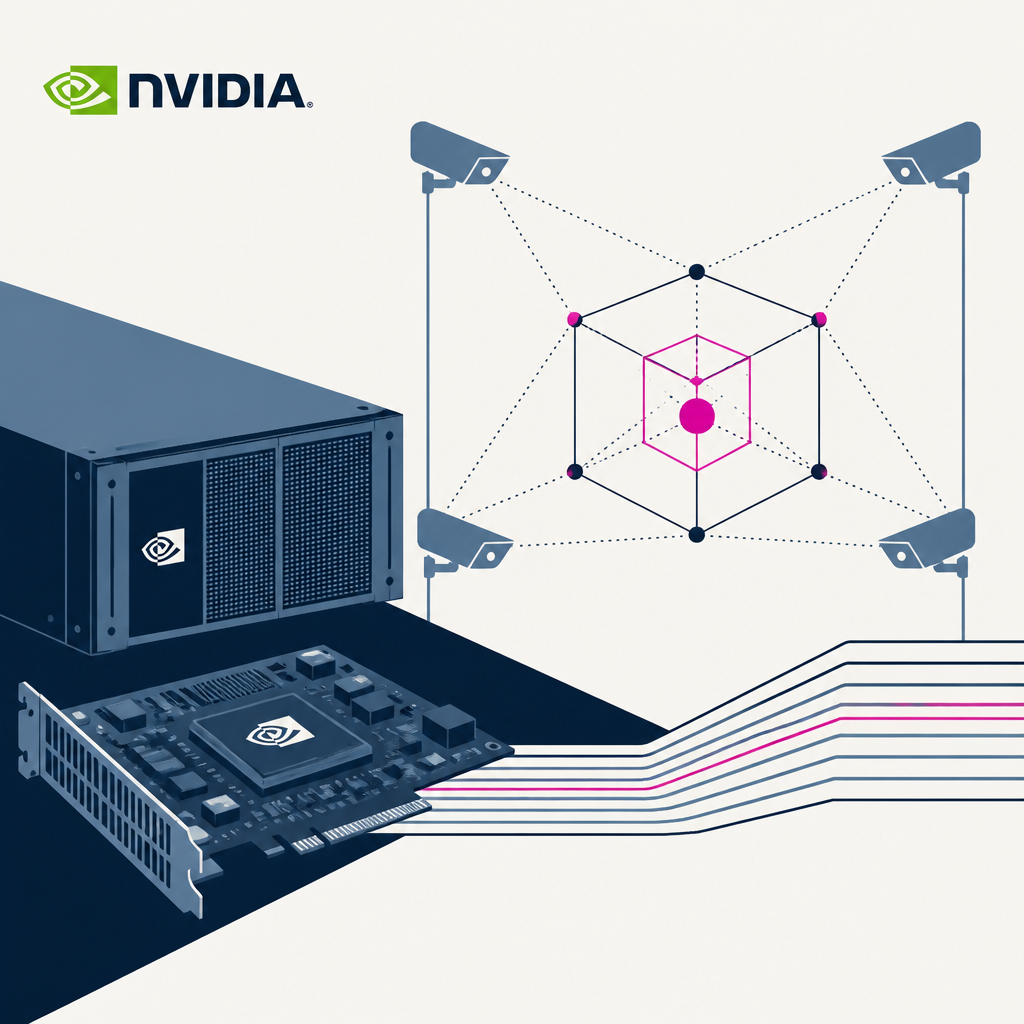
NVIDIA released DeepStream 9.1, a video analytics toolkit update that adds Multi-View 3D Tracking (MV3DT) and AutoMagicCalib (AMC) to track objects across multiple cameras without manual calibration. The update includes 13 agentic skills that allow developers to build tracking pipelines using natural language prompts instead of manual configuration. Developers can now deploy multi-camera vision systems faster by describing intent to coding agents, which automatically handle camera calibration, model downloading, and pipeline setup.
Moonshot AI released Kimi K3, a Chinese open source model that demonstrated competitive performance with frontier models like Claude and GPT, triggering market concerns and policy discussions. The release coincided with Xi Jinping's speech at the World AI Conference and caused Nasdaq to drop approximately 1% as investors sold chip company stocks. Industry debate has intensified around open source model restrictions, concerns about model distillation, and potential U.S. regulatory responses to Chinese AI capabilities.
Author Dave Eggers spoke to approximately 200 OpenAI staff members and criticized ChatGPT for harming educators and silencing student writers. Eggers, who has founded schools and nonprofits supporting writers, called the effect on educators' lives catastrophic. The criticism highlights concerns about AI language models' impact on writing education and student development.
Webflow integrated AI into its security detection and response workflows to enhance a small engineering team's capabilities rather than replace human analysts. The company reported saving 504 hours over a single quarter through AI-assisted triage that enriches alerts before human review, and used large language models to help investigate complex incidents and automate post-incident analysis. AI enabled the team to handle significantly more security work without expanding headcount, but only because foundational elements like clean data pipelines, reliable detections, and documented playbooks were already in place.
Sakana AI raised 200 million US dollars in Series B funding to develop efficient AI technology tailored to Japan's needs rather than competing in large-scale model training. The company achieved a post-money valuation of 2.7 billion US dollars and plans to focus on post-training optimization and domain-specific applications in finance, defense, and manufacturing sectors. This funding enables Sakana AI to scale sustainable AI research and business deployment across Japanese enterprises and government sectors.
Sakana AI launched an Applied Team in 2025 to implement generative AI technology, with software engineers working on financial and defense sector solutions using AI agents. The company is currently hiring project managers and applied research engineers, focusing on automating enterprise processes like banking core operations through AI agents while managing data security and uptime requirements. Engineers at Sakana AI anticipate their role evolving toward AI agent management and system optimization rather than manual coding, with the company positioned to apply self-evolving AI techniques to real-world business problems that competitors have not yet solved.
Sakana AI's ALE-Agent won AtCoder Heuristic Contest 058 on December 14, 2025, defeating 804 human participants in a 4-hour optimization programming competition. The AI agent used parallel LLM calls with iterative refinement and discovered solution approaches beyond what the problem creators anticipated, demonstrating that AI systems with scaled inference can match top human experts on multi-hour tasks. This result indicates AI agents can now compete at expert level in complex optimization problems, though Sakana AI notes this was the agent's first outright victory and emphasizes positioning AI as a partner extending human problem-solving rather than replacing humans.
Sakana AI's ALE-Agent won first place in AtCoder Heuristic Contest 058, outperforming 804 human participants in a 4-hour optimization programming competition. The agent achieved this victory at a cost of approximately $1,300 by using parallel code generation with multiple frontier models and discovering a novel algorithm combining greedy methods with sophisticated simulated annealing that exceeded the problem setters' anticipated solution. This result demonstrates that AI agents with appropriate inference-scaling mechanisms can match or exceed top human expert performance on complex reasoning tasks requiring extended problem-solving.
Sakana AI introduced DroPE, a method that extends the context length of pretrained large language models by removing positional embeddings after training, eliminating the need for expensive fine-tuning. The approach requires less than 1% of the original pretraining compute budget while outperforming established methods on benchmarks like LongBench and RULER. This allows models to handle longer sequences in real-world applications such as reviewing code diffs or analyzing legal documents without additional computational overhead.
Sakana AI introduced RePo, a method that allows language models to dynamically reorganize their input context based on content relevance rather than processing information in a fixed linear sequence. The approach outperforms standard encodings on noisy contexts, structured data, and long-range dependencies while maintaining competitive general performance. This enables models to actively reshape their attention patterns to match problem structure rather than treating physical proximity as semantic relevance.
Sakana AI published an unofficial guide to its research candidate interview process, written by Stefania Druga, Luke Darlow, and Llion Jones based on patterns observed from dozens of interviews. The guide emphasizes that understanding design choices and limitations matters more than implementation ability, with candidates evaluated on their ability to question assumptions and communicate precisely. The company positions critical evaluation and clear explanation of reasoning as fundamental to advancing AI research.
Sakana AI announced a strategic partnership with Google that includes financial investment following the company's Series B funding round. The partnership aims to combine Google's infrastructure and products with Sakana AI's research capabilities to advance AI adoption in Japan, with focus on product quality improvement and reliable AI implementation in critical industries. The collaboration is expected to accelerate Japan's AI ecosystem development and expand trustworthy AI solutions across major industrial sectors.
Sakana AI relocated its headquarters to Azabudai Hills Mori JP Tower in Tokyo to support business expansion and organizational growth. The move enables the company to expand its team and better integrate its research and business implementation functions. The relocation aims to strengthen Sakana AI's ability to develop and deploy AI solutions focused on Japan's needs.
Salesforce Ventures invested in Sakana AI, a company focused on AI capabilities for Japanese enterprises in finance and defense sectors. The investment amount was not disclosed, but Salesforce stated it values Sakana AI's research capabilities and enterprise understanding. Salesforce will explore integrating Sakana AI's technology into its global platform offerings.
Sakana AI, a Japanese AI company, received a strategic investment from Citigroup following its Series B funding round. The company has announced partnerships with Mitsubishi UFJ Financial Group and Daiwa Securities in 2025 to develop custom AI models for specialized financial domains, and secured participation from Spain's Santander Group via Mouro Capital during its Series B round. This investment enables Sakana AI to accelerate international expansion and deliver AI innovations in global financial services from Japan.
Sakana AI announced a strategic partnership with Datadog to collaborate on research initiatives, open-source contributions, and go-to-market efforts focused on efficient AI models for enterprise applications. The partnership will include joint work on building, deploying, and operating advanced AI systems at scale for large enterprises. The collaboration aims to accelerate Sakana AI's engagement with enterprise customers through Datadog's observability platform.
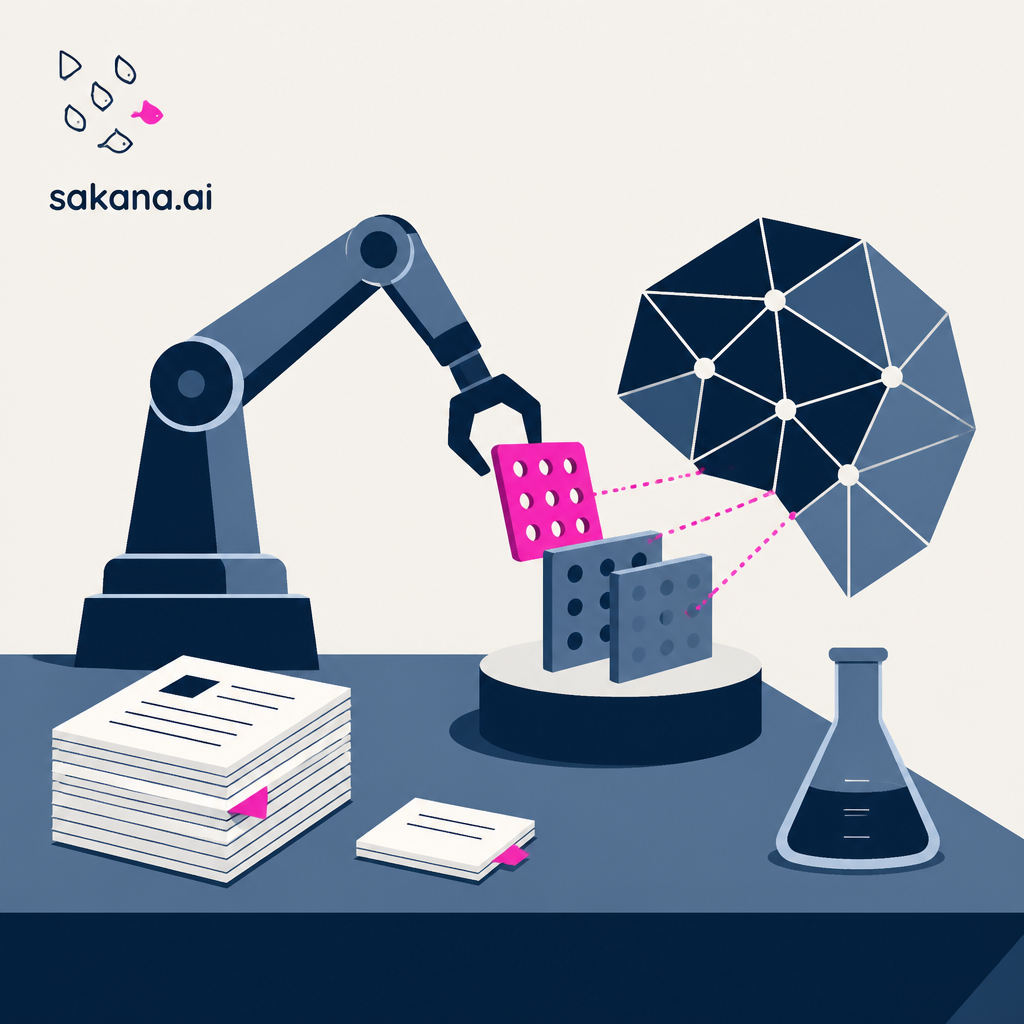
Sakana AI introduced Doc-to-LoRA and Text-to-LoRA, methods that use hypernetworks to generate LoRA adapters enabling rapid customization of language models. The techniques achieve sub-second latency for model adaptation and allow Doc-to-LoRA to maintain near-perfect accuracy on documents five times longer than the base model's context window. This approach reduces the technical barriers for end-users to specialize foundation models through simple text inputs without expensive fine-tuning pipelines.
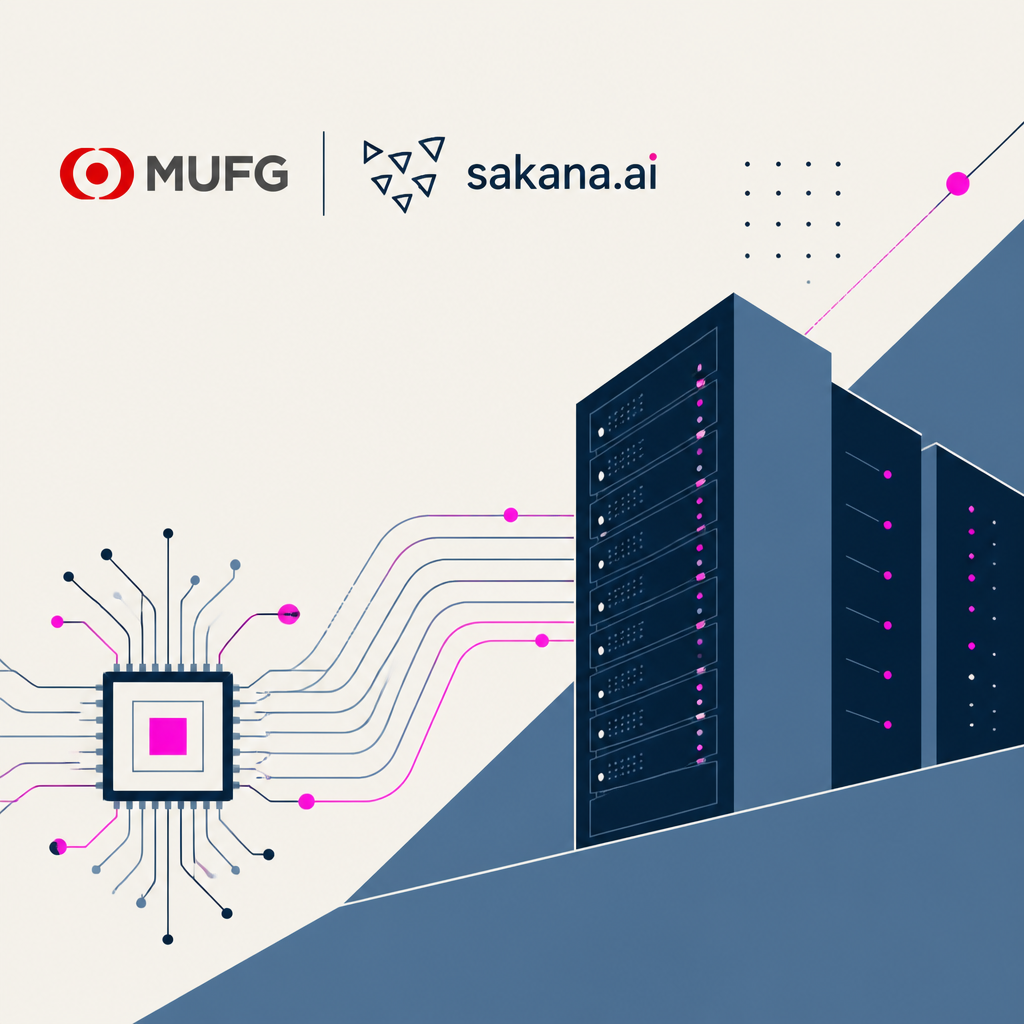
Sakana AI and Mitsubishi UFJ Bank completed a six-month proof-of-concept for an AI agent system that supports loan decision-making and documentation across multiple stages of the lending process. The system was tested with approximately 100 bank employees across multiple locations, with approximately 30 core team members driving development, and demonstrated the ability to streamline complex lending workflows while supporting both junior and experienced staff. Mitsubishi UFJ Bank plans to deploy the system across its nationwide branches in phases, with plans to expand AI support to additional banking operations beyond lending.
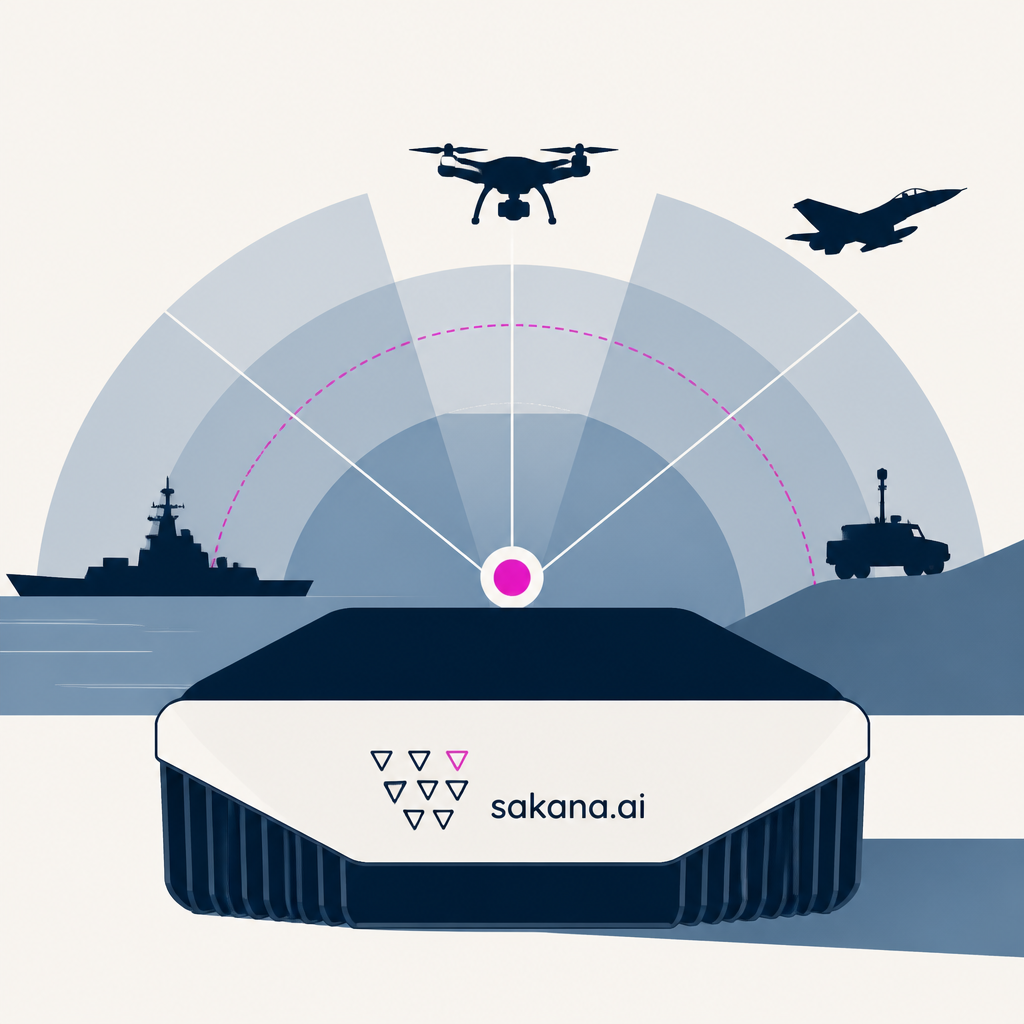
Sakana AI signed a multi-year research contract with Japan's Defense Equipment Agency to develop systems that integrate data from land, sea, and air domains including drones to enhance command and control capabilities. The project will combine multiple AI technologies to analyze sensor data and improve decision-making speed across defense and intelligence operations. Sakana AI is positioning defense and intelligence as a core business focus alongside finance, establishing a domestic specialist team to operationalize its AI research in the defense sector.
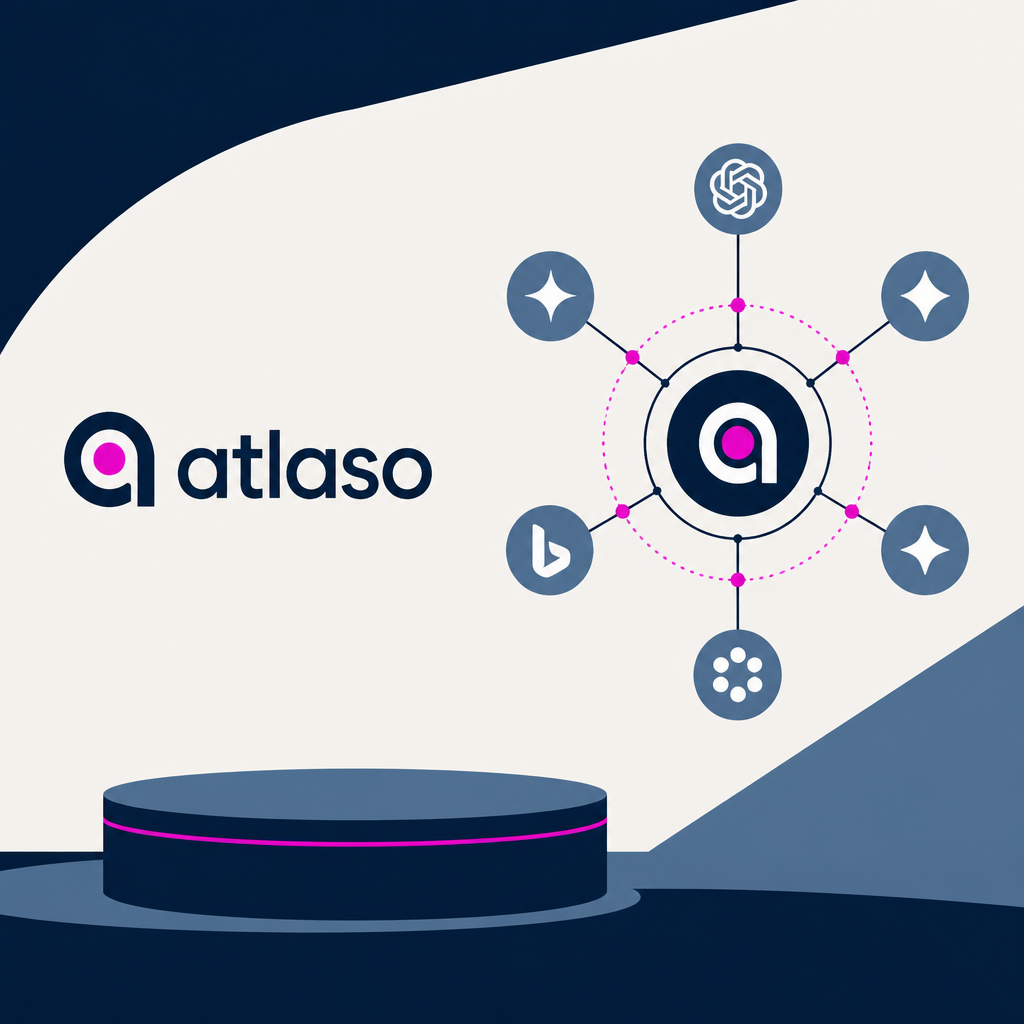
Atlaso is a software platform that lets users maintain a single unified memory profile across multiple AI assistants and applications instead of managing separate memory systems for each tool.The platform integrates with various AI services to centralize user context and preferences in one place.This eliminates the friction of re-explaining preferences and context to different AI tools by providing consistent personalization across the entire AI ecosystem.
AI agent reliability problems stem from insufficient infrastructure around context management, tool retrieval, and execution guardrails rather than model capability limitations. Teams building production agents must implement compiled context layers that structure organizational knowledge (Karpathy's wiki reached 100 articles and 400,000 words), hypothetical-invocation matching for tool selection instead of semantic similarity, and execution isolation layers that validate every tool call before it reaches downstream systems. The differentiator between reliable and unreliable agent systems is investment in context plumbing, observability, continuous evaluation against production data, and configuration management—not upgrading to smarter models.
Platform engineering teams face a new challenge as AI coding agents generate hundreds of concurrent environment requests per day, orders of magnitude more than human developers. GitHub's Copilot alone opened over 1 million pull requests in five months, with agents requiring environment validation in seconds rather than hours, making traditional provisioning and shared staging models economically unfeasible. Platform teams must shift from provisioning isolated environments to serving shared infrastructure that routes only changed services through ephemeral deployments, enabling agents to provision environments as API calls within their own validation loops.
xAI released Grok 4.5 on July 8, claiming it matches Claude Opus 4.8's coding performance while using roughly 4.2 times fewer tokens at less than half the price. A developer tested both models on three real coding tasks (bug fix, refactor, feature build) in the same Rust repository and found Grok used 1.01 million tokens versus Opus's 4.33 million tokens while producing functionally identical results, with Grok costing $1.00 versus Opus's $5.14. Developers now have a viable alternative to Claude for coding work if they prioritize token efficiency and cost over maximum code thoroughness.
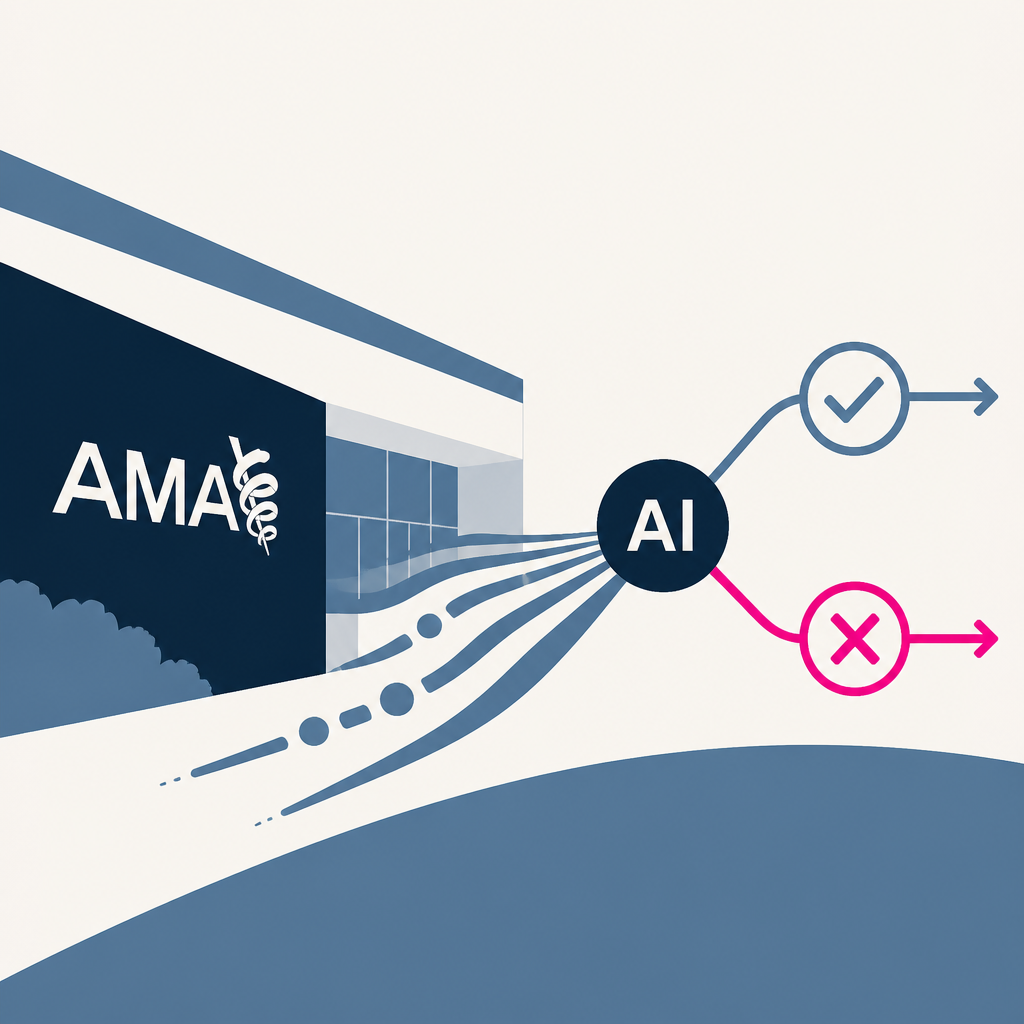
AI is being explored to expedite prior authorization decisions in healthcare by processing large volumes of information, but a 2025 American Medical Association survey found 61 percent of physicians worried that AI tools will increase wrongful denials of medically necessary treatments. The technology could reduce care delays for straightforward approvals but faces resistance due to concerns about increased coverage denials. If AI is implemented poorly, it could worsen patient outcomes rather than improve the authorization process.
OpenAI released the GPT-5.6 model family with multiple reasoning-effort settings, following the trend of reasoning models popularized by o1 and DeepSeek-R1. GPT-5.6 comes in three sizes, each with approximately five or six reasoning-effort levels. The development of models with controllable reasoning modes allows users to toggle between verbose reasoning outputs and standard responses, achieved through supervised fine-tuning and reinforcement learning stages that teach models to condition their behavior on explicit flags.
SpaceX AI open-sourced Grok Build, a terminal coding agent, to compete with Anthropic's Claude Code while Anthropic simultaneously pays SpaceX AI $1.25 billion monthly for computing power. Grok Build scored approximately 70% on the SWE-bench coding benchmark and uses Grok 4.5, positioned as one of the cheapest models at its performance level. The move creates an unusual dynamic where SpaceX AI benefits from the broader coding-agent market expansion regardless of whether developers choose competing products, while simultaneously dealing with internal organizational problems including all eleven xAI co-founders departing and privacy issues that emerged during the open-source release.
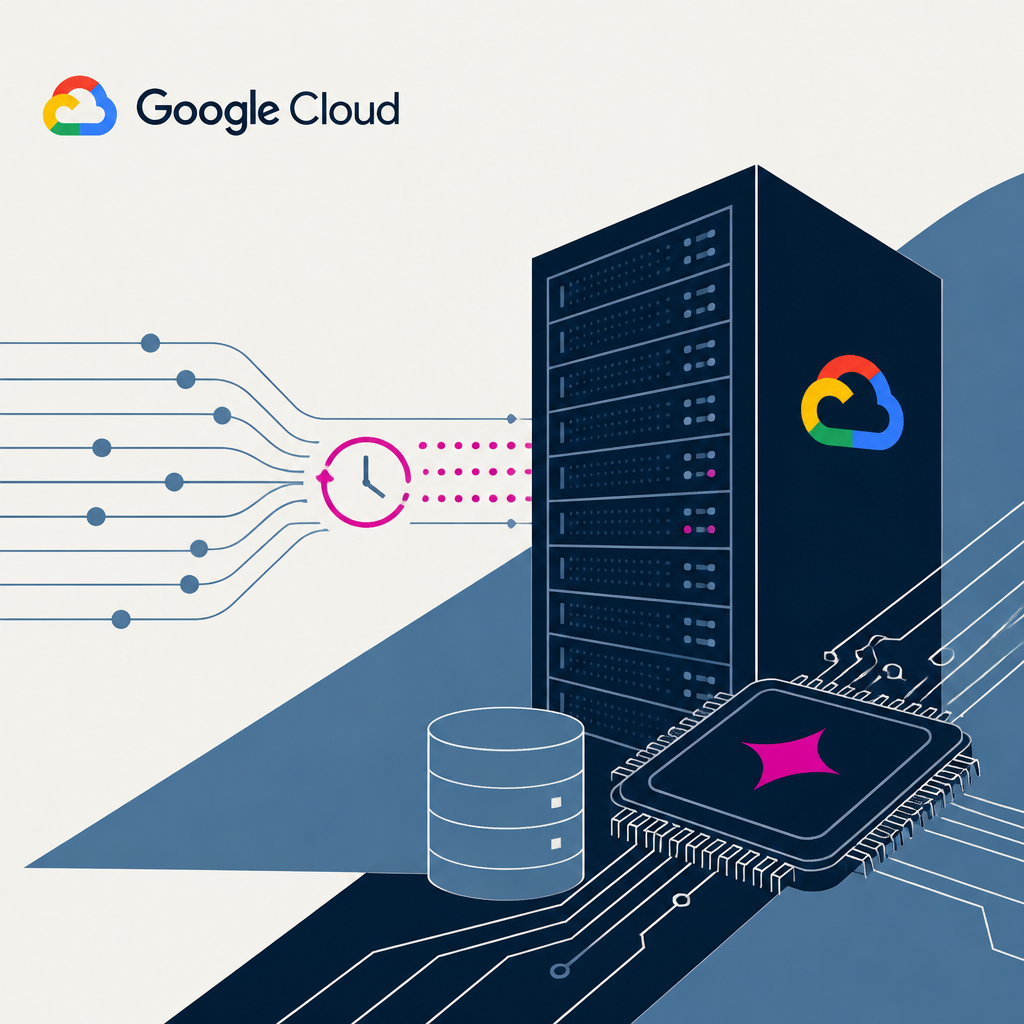
Google Cloud released Always-On Memory Agent, a reference implementation that maintains continuous context for AI agents by running as a 24/7 background process using Gemini 3.1 Flash-Lite and SQLite instead of vector databases and embeddings. The agent consolidates memories every 30 minutes by default, linking related information and generating insights while idle, and supports ingestion of 27 file types across text, images, audio, video, and documents. This approach enables agents to build evolving context over time, allowing applications like research assistants and support systems to answer questions with cited references to previously stored information.
Sakana AI developed Error Diffusion, a local learning rule that trains neural networks compliant with Dale's principle (separate excitatory and inhibitory neurons with non-negative weights) without using backpropagation or weight transport. The method achieved 96.7% accuracy on MNIST and 61.7% on CIFAR-10, with three key innovations including layer-specific sigmoid widths and batch-centered error routing. The approach represents the first demonstration of Error Diffusion on convolutional networks and reinforcement learning tasks, though performance lags behind standard backpropagation methods.
Simon Willison's Weblog·1 month ago·
20
● 5 sources
Anthropic announced that Claude Fable 5 will become a permanent feature in Max and Team Premium subscription plans starting July 20, available at 50% of normal limits, while Pro and Team Standard users retain access through credits and receive a $100 one-time credit. The move reverses Anthropic's earlier plan to remove Fable 5 from subscriptions and offer it only via API, a decision prompted by competition from GPT-5.6 Sol and Kimi 3 that made subscription-only access untenable. The change may require Anthropic to allocate more GPU capacity to serving the model, potentially affecting other operational priorities.
Kimi K3, released by Moonshot, achieved top-tier performance rankings with scores of 57 on Artificial Analysis's Intelligence Index and 64% on DeepSWE, sparking reassessment of Chinese open-weight models' capabilities relative to Western frontier models. The model's Kimi Delta Attention mechanism claims up to 6x faster throughput at 1M context length, and it scored 57 on Artificial Analysis's Coding Agent Index, matching GPT-5.6 Terra while outperforming other top models on specific benchmarks. As frontier intelligence becomes cheaper and more accessible, technical focus is shifting toward agent orchestration, memory architectures, and domain-specific tooling rather than raw model access.
Every AI story that matters,
in your inbox by 8am.
TLDRocket reads all relevant sources, removes duplicate coverage, and summarises the
day in two minutes. Follow companies and topics for alerts, or get the
briefing in Slack. Free, no spam, unsubscribe anytime.
Reading TLDRocket needs no cookies, and the readership counts we rely on come from
our own cookieless analytics. Google Analytics is the exception: it sets cookies and
reports to Google, so it stays switched off until you allow it. You can change your
mind any time from “Cookie settings” in the footer.
Strictly necessary
Session security and form protection (tldrocket-session,
XSRF-TOKEN, 2 hours). The site cannot work without them,
so they need no consent.
Always on
Google Analytics 4 (_ga,
_ga_<id>, up to 2 years). Measures which
stories and sections readers use. Google acts as a third-party processor and may
store the data outside the EU. No advertising, no profiling, no data sold.