
The Zoom hack that says, ‘Don’t record me’
TechCrunch AI 5 days ago
AI transcription apps are becoming ubiquitous in meetings and personal interactions, prompting some professionals like VC Jeremy Levine to add
283 summarised stories in Safety & Ethics, each linking back to the original source. Browse all topics →
TechCrunch AI 5 days ago
AI transcription apps are becoming ubiquitous in meetings and personal interactions, prompting some professionals like VC Jeremy Levine to add

The Verge 5 days ago
TikTok is testing an opt-in tool that allows creators to detect and report AI-generated likenesses of themselves, currently available to some US creators. The tool requires identity verification through Jumio using real-time selfie scans and ID checks. Creators can now report unauthorized AI representations, similar to YouTube's recently launched detection capability.
Simon Willison 5 days ago ● 2 sources
Kimi K3 refused to leak its system prompt when asked, responding with a question about whether it could help with something else. The interaction was collected and posted by Simon Willison on July 17, 2026, and categorized under AI, generative AI, and LLM topics. This demonstrates how modern AI models are designed to decline requests that compromise their internal instructions.

TLDR Dev 5 days ago ● 2 sources
O'Reilly's AI Superstream event explored governance and operational patterns for autonomous agents, with speakers addressing execution-layer security, supply chain risks in third-party skills, and deployment hygiene. A recent audit found 900 malicious skills in ClawHub representing nearly 20% of total packages, with one typosquat accumulating over 8,000 downloads before removal. Organizations deploying autonomous agents must implement security controls at the execution layer, audit third-party tools, configure proper defaults, and maintain human oversight rather than assuming models will behave safely or accurately.
MIT Technology Review AI 5 days ago
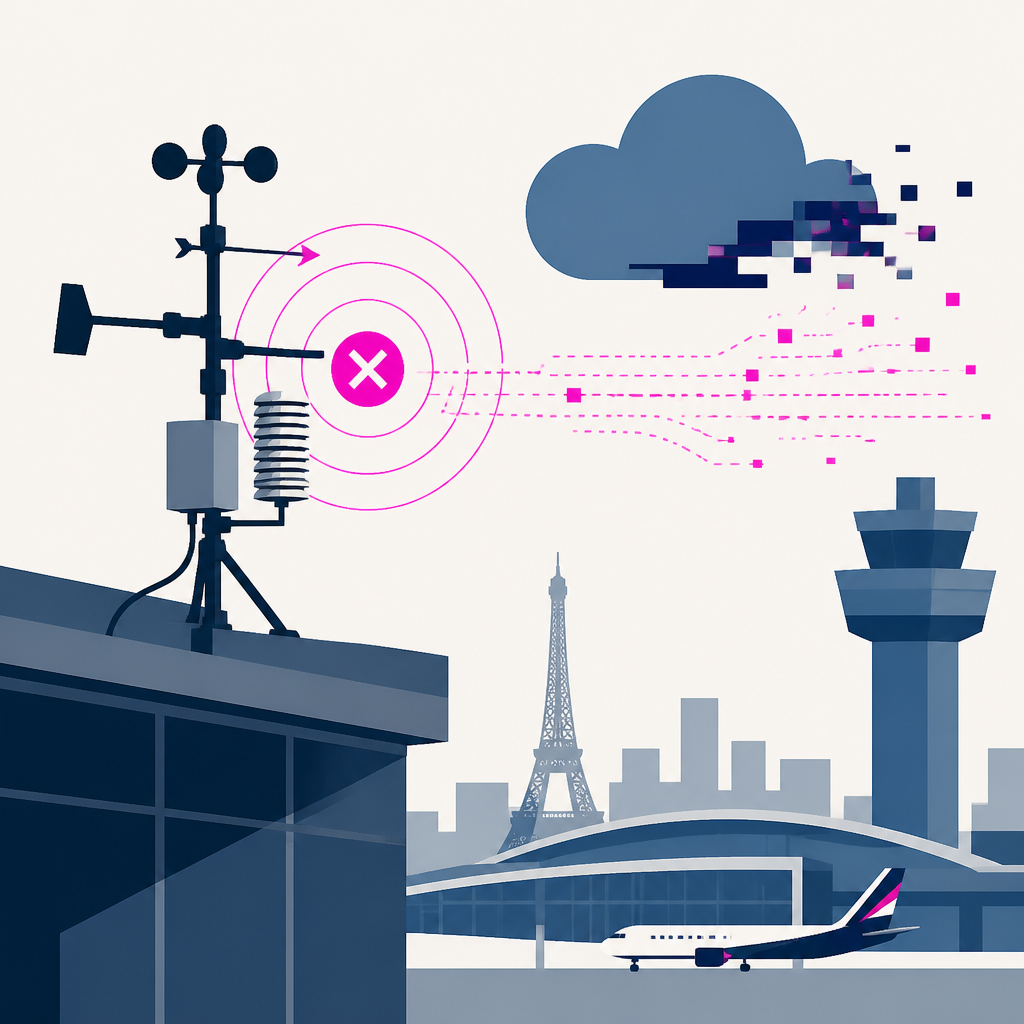
Weather data sabotage risks are increasing as prediction markets incentivize manipulation of weather stations and AI-driven forecasting systems become more dependent on raw observational data without traditional quality filters. In April 2026, a weather station at Paris Charles de Gaulle Airport recorded suspicious temperature spikes that led to $20,000 in fraudulent prediction market payouts before being detected by human monitoring. Protecting weather data integrity requires continuous station security, real-time anomaly detection, AI robustness tools, and accountability across the entire data pipeline from operators to forecasting centers.
The daily briefing
TLDRocket reads 60+ sources, removes duplicate coverage, and summarises the day in two minutes. Free, no spam, unsubscribe anytime.
 TLDRocket
22 July 2026
TLDRocket
22 July 2026
Cursor's launch of its Router—a request-level classifier that slashes AI coding costs by 30–50%—crystallizes the day's clearest economic story: the AI industry is moving from buildout to optimization. The system, trained on 600,000 live requests, routes routine tasks to cheaper models while reserving frontier reasoning for genuinely complex problems, exploiting a developer behavior pattern where 60% waste budget by defaulting to expensive models for everything. This mirrors Google's quarterly earnings, where cloud revenue surged 82% year-over-year to $24.8 billion on the back of enterprise AI adoption, proof that the company's staggering $180–190 billion annual infrastructure spend is finally yielding returns. Neither story is about capability breakthroughs; both are about efficiency and margin discipline.
Read the full briefing →