OpenAI launched GPT-6 Astra on Thursday, but many developers still can’t access the model’s API endpoint for testing despite documentation and pricing. The rollout was expected to expand in the near future, starting with ChatGPT Pro subscribers, and OpenAI said the broader rollout to finish would take “a few days.” Access delays trigger one “banked reset” per day for paying ChatGPT subscribers without Astra access starting September 3, while developers waiting for API access received no similar announcement.
OpenAI’s Astra scored very differently on ARC-AGI-3 depending on whether it was run through ARC Prize’s harness or OpenAI’s Provider Adapter. With the Provider Adapter, the unchanged GPT-6 Astra scored 98.6% and cost $17,332, versus 62.7% and $26,098 in ARC Prize’s standard harness. The result shifts attention from model selection to harness engineering because the surrounding software changes both score and cost.
OpenAI announced GPT-6 Astra and said the “AGI era” is now here. The discussion also points to next week’s Apple keynote format. As a result, attention shifts from the model release to broader claims about AGI alongside Nvidia’s Hugging Face acquisition and Apple leadership changes.
OpenAI’s GPT-6 Astra tested on ARC-AGI-3 achieved state-of-the-art performance while solving levels by compacting and reusing internal representations. It scored 62.7% on ARC-AGI-3 Semi-Private for $26,098 under the Standard harness and 99.9% for $18,817 under the Provider Adapter harness. Reporting will now include both harness results on the ARC-AGI leaderboard, with Provider Adapter runs also improving speed and reducing total tokens.
Artificial Analysis reported GPT-6 Astra benchmark results showing it ties Fable 5 on its Coding Agent Index while changing token use and pricing relative to GPT-5.6 Sol. GPT-6 Astra’s input/output token prices were raised to $10/$50 per million from $4/$20 (a 2.5x increase). As a result, Astra is more token efficient and less costly per task in coding, but it is 75% more expensive per task in the Intelligence Index, alongside a drop in hallucination rate from 92% to 51% at max effort and mixed gains across other evaluations.
OpenAI introduced GPT-6 Astra as a more tool-using “reasoning model” aimed at getting real work done, backed by demos that involve turning instructions into computer actions and file outputs. Astra’s API model page lists a 1,050,000-token context window. As a result, Astra can handle longer, multi-step projects with tools and memory-like state across requests, and reviewers emphasize that the big ARC-AGI-3 result depends on the specific harness used.
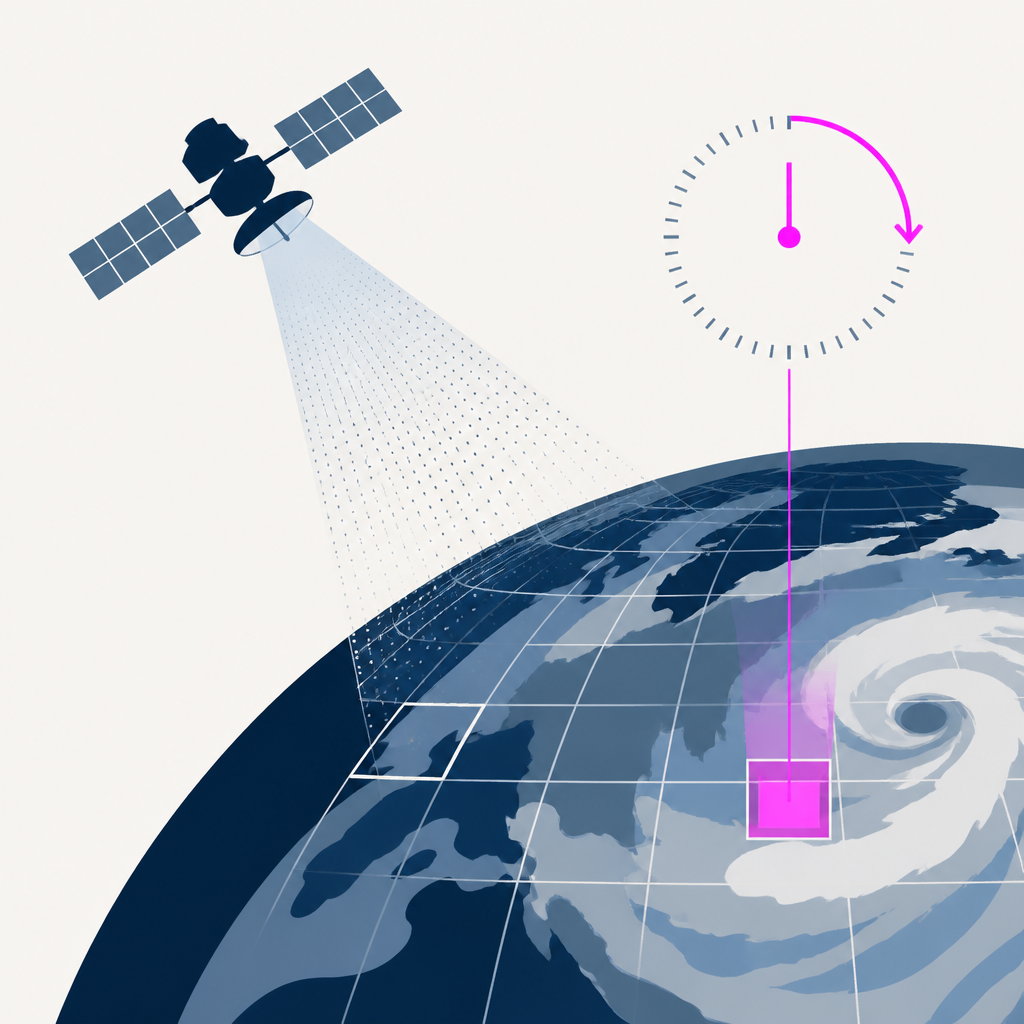
Google DeepMind released WeatherNext 3, a global weather forecasting model that uses live geostationary satellite data and reinitializes every hour to improve local detail and reduce latency versus relying on delayed NWP analysis.
Google released the Gemini 3.8 Flash AI model while its Gemini 3.5 Pro flagship still has not shipped as expected. Gemini 3.8 Flash passed DeepSWE v1.1 runs with about 74% success at maximum effort, and it cost an average of $2.36 per task versus $11.84 for Anthropic’s Claude Opus 5. Google will continue shipping faster, cheaper Flash updates, but the missing Pro release and internal delays are widening scrutiny over its ability to catch up on the frontier.
Every AI story that matters,
in your inbox by 8am.
TLDRocket reads all relevant sources, removes duplicate coverage, and summarises the
day in two minutes. Follow companies and topics for alerts, or get the
briefing in Slack. Free, no spam, unsubscribe anytime.
Reading TLDRocket needs no cookies, and the readership counts we rely on come from
our own cookieless analytics. Google Analytics is the exception: it sets cookies and
reports to Google, so it stays switched off until you allow it. You can change your
mind any time from “Cookie settings” in the footer.
Strictly necessary
Session security and form protection (tldrocket-session,
XSRF-TOKEN, 2 hours). The site cannot work without them,
so they need no consent.
Always on
Google Analytics 4 (_ga,
_ga_<id>, up to 2 years). Measures which
stories and sections readers use. Google acts as a third-party processor and may
store the data outside the EU. No advertising, no profiling, no data sold.