
The New Stack
·
5 days ago
The article argues that AI tools like Claude Code and GitHub Copilot have not actually shifted the software development bottleneck from coding to code review, because the real constraint lies downstream in deployment and release processes. Research from Octopus Deploy shows 92% of teams ship code in batches of 2 to 50 changes rather than deploying individual changes, with changes accumulating after code review. Addressing this deployment bottleneck, not code review speed, is where organizations should focus to realize benefits from AI-assisted coding tools.

The Verge
·
5 days ago
Netflix reported that approximately 300 titles on its platform have used generative AI, primarily in post-production work. The tools were applied to create complex sequences such as crowd scenes, battle sequences, and establishing shots for shows like Glory and The American Experiment. The company said it uses generative AI to deliver higher quality output more quickly and at lower cost.
AWS Machine Learning
·
5 days ago
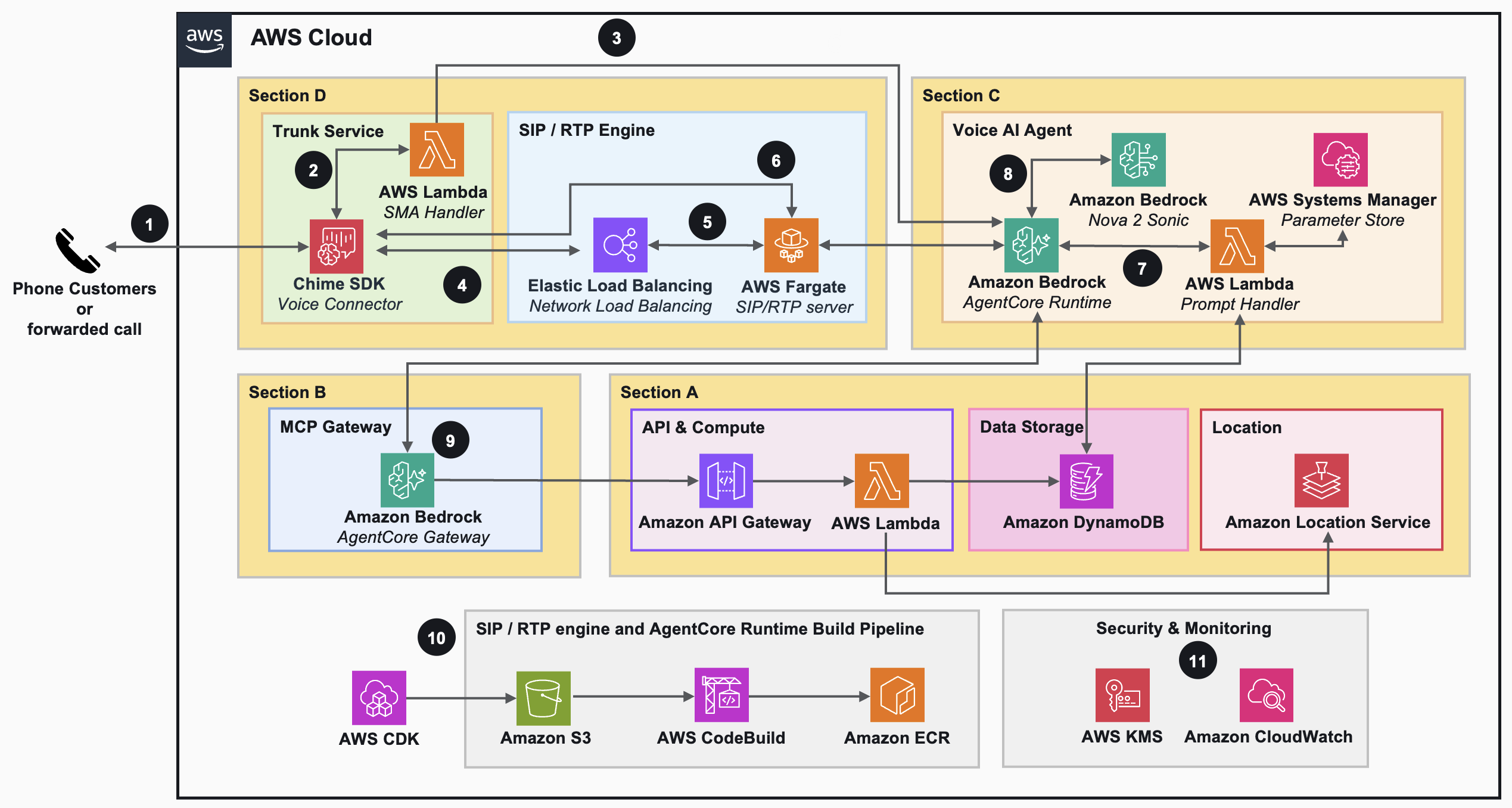
Amazon published a technical guide for building a restaurant AI voice ordering system using Amazon Bedrock AgentCore, Amazon Nova 2 Sonic, and Amazon Chime SDK Voice Connector that can answer incoming calls and take orders end-to-end. The system deploys as three layers—a telephony layer handling phone-specific concerns, an agent layer running the conversation logic in isolated microVMs, and a backend layer managing menus and orders through the Model Context Protocol. The solution addresses the problem of restaurants missing approximately 150 phone calls per location monthly, with 60 percent of those being customers attempting to place orders or book tables.
Sakana AI
● 5 sources
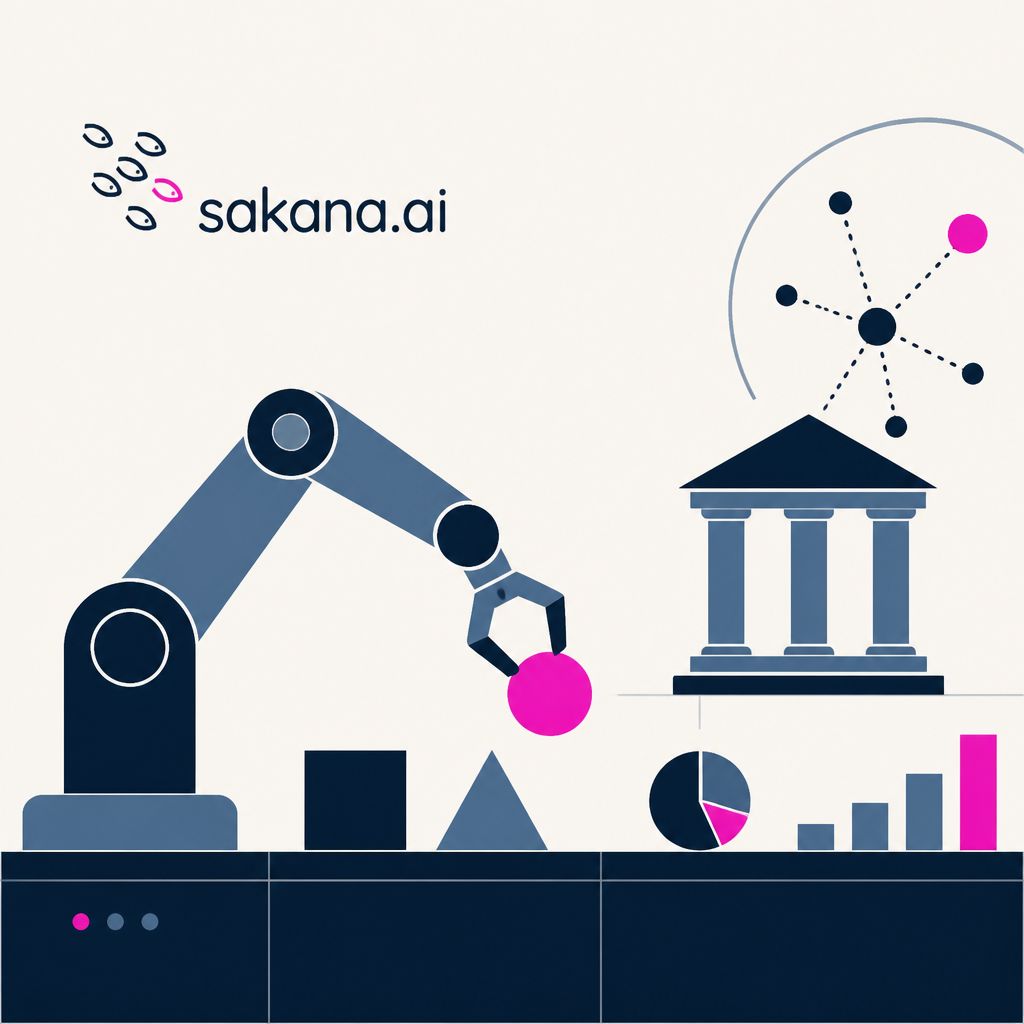
Sakana AI launched an Applied Team in early 2025 to implement AI technology based on swarm intelligence into finance and defense sectors. Software engineers at the company are developing AI agents to support banking loan workflows, handling tasks like initial analysis, information organization, and memo drafting while preserving human decision-making. The company aims to make its technology a standard for AI adoption in Japanese enterprises by creating software where AI naturally integrates into work processes alongside human judgment.
The Neuron
·
5 days ago
● 4 sources
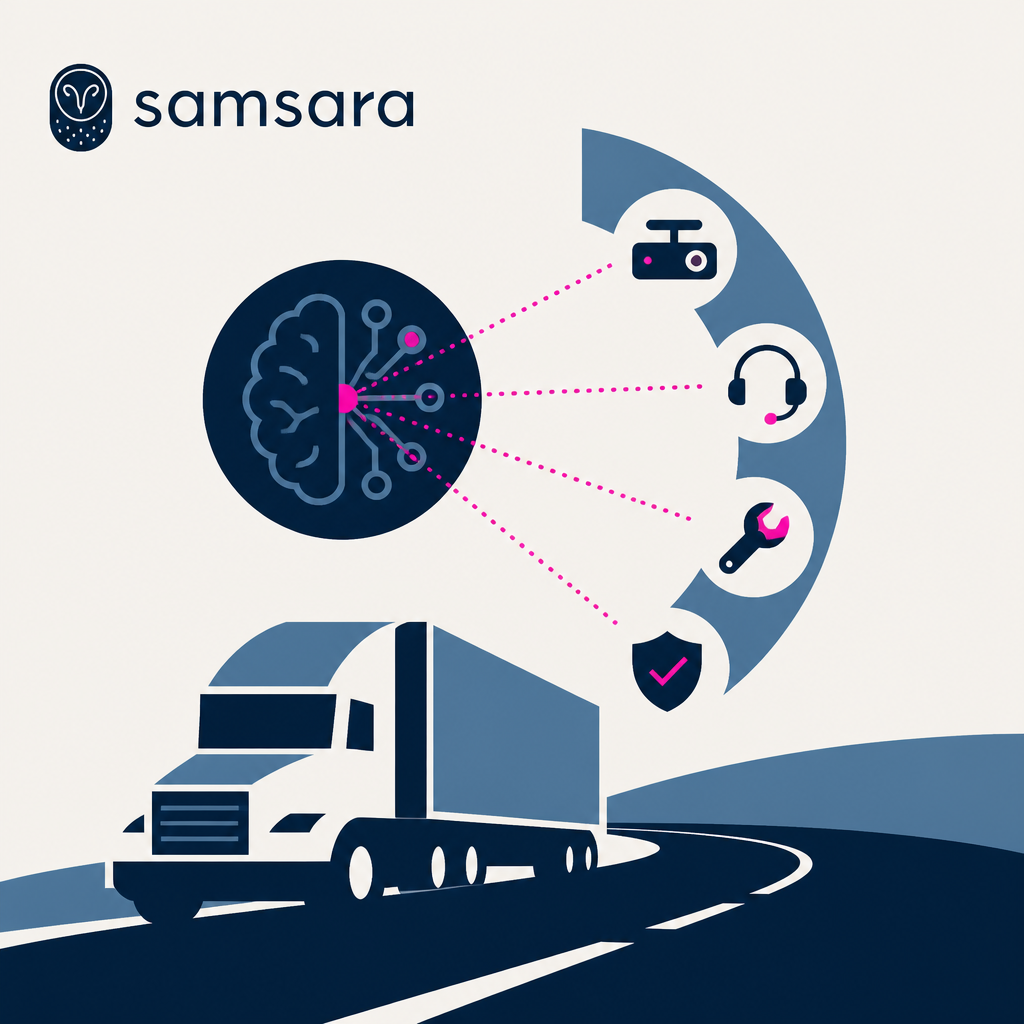
Samsara is deploying AI systems across fleet management operations including dash cams, dispatching, maintenance, and safety workflows for truck drivers. The company's AI agents handle real-world physical operations where decision errors directly impact vehicles, workers, and equipment safety. This represents a shift from office-based AI software to autonomous systems managing logistics and transportation infrastructure.
Latent Space
·
5 days ago
Lila Sciences is building an automated laboratory with AI-guided robotics and equipment designed to generate scientific data continuously, creating over 10 trillion experimentally validated scientific reasoning tokens. The company operates a wet lab with integrated instruments connected like a data center, achieving results such as a 2,500x speedup in gas sorption measurement and generating candidate electrocatalysts that outperformed expert-designed alternatives. This approach aims to develop a general scientific reasoner capable of solving problems across biology, chemistry, materials science, and drug discovery by treating the lab as an infinite data generation mechanism.

Sifted
·
5 days ago
● 4 sources
Scaling companies are struggling to move AI beyond experimental pilots into production due to operational challenges including cost management, governance, and workforce adaptation. A key concrete issue is that companies embedding AI into core workflows are seeing gross margins drop from 80-90% to 50-60% due to unpredictable token costs, prompting adoption of multi-model strategies and financial operations oversight. Successfully scaling requires clear governance frameworks, transparent human-in-the-loop processes, domain expertise, and organizational commitment to AI adoption across all levels.
TLDR
·
5 days ago
AI agents are reducing the technical barrier to writing correct code, diminishing raw programming talent as a competitive advantage. The shift means engineers must develop skills in identifying and fixing non-obvious problems rather than writing code from scratch. This changes what makes engineers valuable, favoring judgment and problem-solving over coding proficiency alone.

Sifted
·
5 days ago
Visma, a European accounting software company, operates over 600 AI initiatives across its portfolio of accounting businesses to automate accounting tasks like invoice processing and bank reconciliation. The company's AI applications focus on four value categories: automation saving time, anomaly detection, advisory insights, and agentic workflow automation, with portfolio companies like Chaintrust and Dinero implementing these technologies in production systems. This shift moves accountants from manual data entry work to higher-value advisory roles such as client consultation and financial analysis.
The Neuron
·
5 days ago
Precigenetics has developed Cell Cinema, a label-free imaging system that tracks living cells over time by converting their chemical-spatial states into high-dimensional token vectors, enabling AI models to learn from live cell response trajectories rather than only terminal endpoint data. The system measures how melanoma cells respond to ferroptosis induction and targeted therapy through time-indexed observations of the same living cell, producing a cells-by-time-by-features tensor that preserves response history. This approach aims to enable AI models to predict drug responses and toxicity in living human-relevant cells before clinical trials, shifting drug discovery from terminal assays to conditional trajectory prediction on instrumented living systems.

Meta AI Blog
Alta Daily, a fashion app launched in 2025, uses Meta's Segment Anything Model to digitize users' wardrobes and recommend outfit combinations from photos. The app has processed more than 20 million images using SAM, reducing costs compared to external segmentation APIs that charged several cents per image. Users can now photograph their clothes and receive personalized outfit recommendations displayed on their digital avatar while tracking daily wear to avoid repetition.

Meta AI Blog
Meta and the World Resources Institute released Canopy Height Maps v2, an open-source model that uses satellite imagery to measure forest structure globally for conservation and land management. The model's accuracy metric (R²) improved from 0.53 to 0.86, and it was built using Meta's DINOv3 vision model trained on 493 million satellite images. Governments and organizations in the UK, EU, and US cities are already using the maps to monitor forests, track tree-planting commitments, and plan urban cooling interventions.

Anthropic News
The Government of Alberta used Claude Code to scan 466 million lines of government code across 27 provincial ministries, identifying security vulnerabilities and gaps that had never undergone systematic review. The scan, conducted by roughly 50 autonomous agents working in parallel, took 20 hours to complete work that the team estimates would have required 6.5 years using traditional approaches. Alberta's team used Claude to fix identified vulnerabilities, write missing automated tests, and rebuild outdated systems in modern languages, with plans to consolidate 185 legacy applications into 16 reusable applications and expand the approach across all provincial government ministries.

Apple ML Research
·
5 days ago
Apple TV developed a personalized video search system combining text-based and ID-based embeddings to improve search ranking after each keystroke. The system achieved 8.63% improvement in NDCG@10 on ambiguous 1-3 character queries and 1.14% tap-through rate increase in online testing. The personalization approach delivers greater value for users with longer watch histories and on underspecified queries where intent is still forming.
OpenAI Blog
·
5 days ago
Cars24 deployed OpenAI-powered voice and chat agents to automate customer conversations. The system handles over 1 million conversation minutes monthly and recovers 12% of previously lost leads. The implementation has enabled agentic workflows across multiple teams within the company.
