Deep Learning Weekly
·
1 hour ago
This week's deep learning newsletter covers Thinking Machines Lab's release of Inkling, a 975B-parameter open-weights multimodal MoE model, OpenAI's GPT-Red system which cut prompt injection failures by 6x through adversarial training, and research showing video generation models can serve as general-purpose vision learners, achieving state-of-the-art performance on diverse vision tasks while requiring 7 to 500 times less training data than specialized models. The issue also features MLOps optimizations, agentic system architectures, and a comprehensive survey on metacognition in large language models.

TLDR Dev
·
5 hours ago
AI frameworks like Self-Harness and HarnessX enable agents to automatically analyze and optimize their own runtime scaffolding—the execution logic connecting models to tools—rather than requiring manual updates by developers. Self-Harness improved MiniMax M2.5's pass rate from 40.5% to 61.9% on Terminal-Bench-2.0, while HarnessX with model co-evolution achieved a 14.5% gain from harness evolution alone plus an additional 4.7% boost on benchmarks like ALFWorld and SWE-bench Verified. This shift moves AI development from manual prompt engineering toward building trace-logging infrastructure and evaluation systems that allow agents to self-improve without retraining base models.
TLDR
·
6 hours ago
Thinking Machines Lab, founded by Mira Murati, released its first AI model called Inkling, a foundation model with 975 billion parameters designed to perform broadly across multiple domains. The model emphasizes cost-efficiency and can be customized through Tinker, a cloud-based fine-tuning tool. The release represents an attempt to compete with established AI giants by offering a more balanced and adaptable alternative.
The Batch
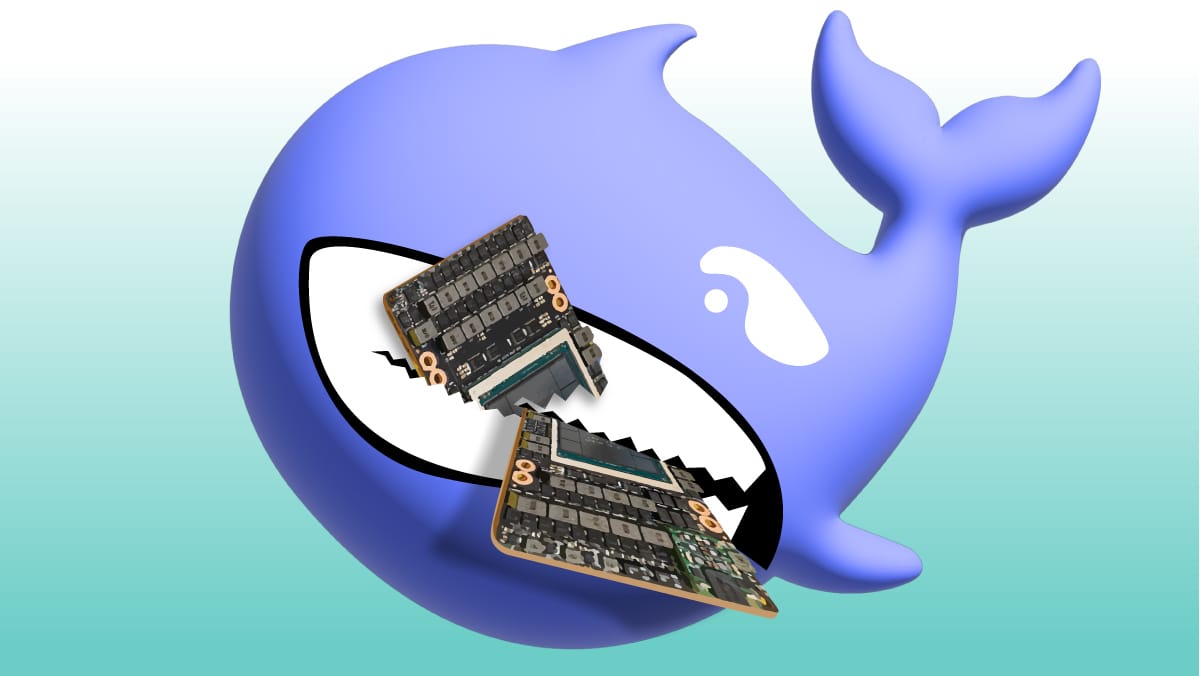
DeepSeek released an open-weight reasoning model (DeepSeek-R1) that matches OpenAI's o1 performance, triggering a stock market sell-off of Nvidia and other U.S. tech companies. DeepSeek-R1 costs $2.19 per million output tokens compared to o1's $60 per million, a nearly 30-fold price difference. The advancement demonstrates that algorithmic innovation and optimized training can compete with raw computational scaling, shifting focus away from the assumption that more computing power is the only path to AI progress.
