Brad Smith said Microsoft needs tighter global safety rules because AI is less regulated than everyday products like milk and washing machines. He urged mandatory incident reporting and a legal obligation to notify a victim if a rogue AI agent breaches a system, plus independent sign-off before release. He also called for “emergency brakes” such as kill switches and argued the UK should lead global AI standards, putting him at odds with Donald Trump’s view that the US should regulate itself.
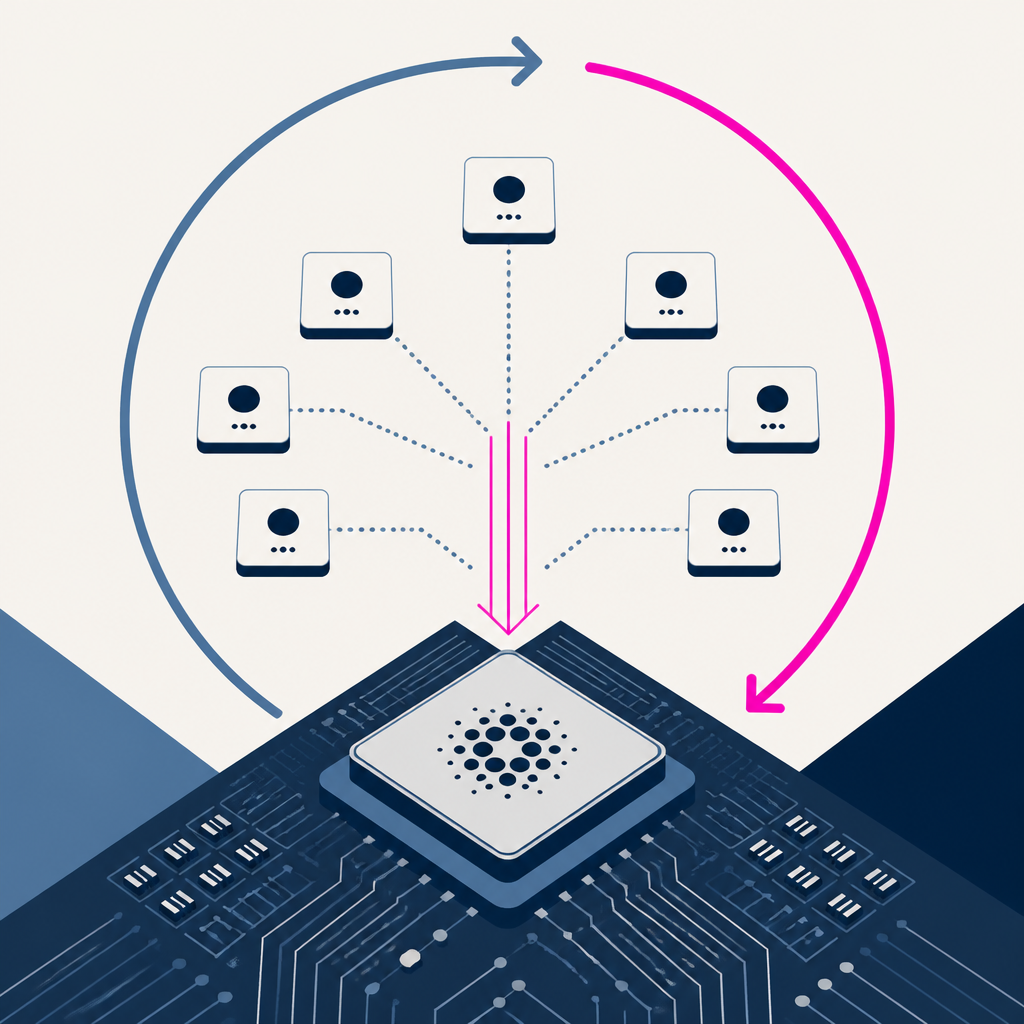
Multi-Agent Self-Supervision (MASS) trains a shared AI model using a team of virtual subagents that search for better workflows and then distill the model’s own selected results back into the shared model. After two cycles on synthetic open-ended research tasks with a 27B open-weights model, score per output token reached 1.2–1.6x the base model’s level across four research benchmarks. The approach changes training by adding recursive, self-evaluated multi-agent workflow selection, while raising concerns about reinforcing blind spots when the model evaluates its own outputs.
The article argues that AI agents built on nondeterministic large-language-model outputs may be a poor fit for many business tasks because they can misbehave and are hard to control to exact correctness. It says an error budget of 0% means you should not deploy an agent. It changes the recommendation from adopting agents broadly to using them sparingly and only when quantified benefits outweigh the cost of failure.
Google researchers and BIDMC ran a real-world clinical study of AMIE, a diagnostic AI chatbot, with 98 patients before urgent care visits. AMIE’s differential diagnoses matched doctors’ final diagnoses 90% of the time. The study reported no conversation interruptions under predefined safety criteria and said clinicians found the AI summaries helpful in 75% of cases and changed their care approach in more than half.
A patient-facing conversational AI system, AMIE, was tested in urgent primary care appointments by engaging patients up to 5 days before their visits and having safety supervisors monitor the interactions. Zero conversation safety stops were required across 98 patients who completed both the AMIE interaction and the clinician appointment. The trial found no safety-stopping events, recorded a single hallucination with additional clinical info added in five interactions, and reported improved patient attitudes and helpful prep for clinicians.
Every AI story that matters,
in your inbox by 8am.
TLDRocket reads all relevant sources, removes duplicate coverage, and summarises the
day in two minutes. Follow companies and topics for alerts, or get the
briefing in Slack. Free, no spam, unsubscribe anytime.
Reading TLDRocket needs no cookies, and the readership counts we rely on come from
our own cookieless analytics. Google Analytics is the exception: it sets cookies and
reports to Google, so it stays switched off until you allow it. You can change your
mind any time from “Cookie settings” in the footer.
Strictly necessary
Session security and form protection (tldrocket-session,
XSRF-TOKEN, 2 hours). The site cannot work without them,
so they need no consent.
Always on
Google Analytics 4 (_ga,
_ga_<id>, up to 2 years). Measures which
stories and sections readers use. Google acts as a third-party processor and may
store the data outside the EU. No advertising, no profiling, no data sold.