OpenAI published AI-generated full or partial solutions to more than 370 outstanding math problems, sparking debate among mathematicians over whether the approach helps or harms the discipline. OpenAI said its unreleased internal model used about three hours of computing time per solution on average. The field is shifting toward “Math 2.0,” with calls for changed publication and research norms and more human-led scrutiny and community building rather than solution-only progress.
OpenAI said its average teen use of ChatGPT for Teens is limited and learning-focused, but Common Sense Media research found the platform’s safeguards still create an unacceptable risk for teens and parents. In testing, discussions lasting about 1 hour about suicidal ideation, self-harm, or disordered eating on newly created, parent-linked accounts triggered zero alerts to parents. As a result, the nonprofit calls for banning under-18 use until safeguards are proven reliable, while OpenAI disputes the research methodology as not reflecting real-world performance.
The Curve’s third season brought together people to debate AI alignment and pacing while expressing concern that labs are moving faster than they can implement safer alignment plans. Situational awareness was reported down by 0.41 points on a 10-point scale despite rapid AI progress in the prior year. As a result, attendees emphasised the need to slow execution of “automated alignment” and increase coordination between DC, the public, and labs under Chatham House rules.
Aston Martin is using back-end AI in operational systems while keeping AI agents off its customer-facing website. The company screens each AI idea first for its impact on profit and loss, and then for efficiency gains. It adds governance by assigning people to own each agent’s outcomes and focuses on fixing data and processes before scaling AI on top of its ERP, with use-case timelines shrinking from quarters to weeks.
Midwest Wheel is building toward AI agents that can fix operational problems by tying new capabilities to a single Infor business system and using agentic AI governance to decide what runs automatically versus with human oversight. The company embedded AI features after moving to the cloud, including automation that scans emailed PDF invoices into its system and a product recommender in order entry, with “just a few weeks” to build the new tools. The approach shifts AI from merely identifying issues to taking action under defined rules, while keeping humans in the loop for tasks that touch cash or accounts.
Infor is developing industry-specific AI agents for manufacturing, aerospace and defense, automotive, and food and beverage to reduce hallucinations in enterprise workflows. Its 2026.10 release adds security and scope guardrails, building on Infor’s existing industry applications with micro-vertical configuration. As a result, some agent actions can proceed autonomously, but moving orders between customers still requires human approval and Infor plans to hire domain experts to improve business-context accuracy.
Infor is rolling out AI-powered process automation that embeds industry-specific agents and workflows into its applications, pairing that with implementation expertise from forward-deployed engineers. It says the prototype-to-production timeline is now about one to two weeks, or at worst three weeks. As a result, customers move faster to production while getting observability and auditability for automated decisions.
The article recounts AI safety concerns raised in September and follows a Fortune Titans conversation with OpenAI CEO Sam Altman about whether AI can be built safely. It says Altman considers a public offering “ill-advised” and would not pursue one before 2027. It argues leaders should shift toward a hands-on “founder mode” and that companies must rethink what they can become as AI reshapes leadership and operations.
The IMF managing director Kristalina Georgieva urged countries to make faster debt and inequality cuts while managing risks from the AI boom ahead of the IMF-World Bank meetings. She pointed to a rise in the Asia-Pacific share of global economic activity to 43% from 25% in 1991. The policy focus shifts toward tighter public spending, higher borrowing costs, stronger AI regulation, and worker training to protect vulnerable groups.
Qlik built Qlik Answers, a grounded, source-cited enterprise AI assistant on Amazon Bedrock, and has expanded its use since its February 2026 general availability. Since launch, Qlik’s Discovery Agent has surfaced more than 100,000 discoveries, and most Qlik Cloud accounts with agentic tools enabled are actively using them. The system’s architecture now separates fast routing from deeper reasoning and uses Bedrock Guardrails plus grounding-validation to deploy safely and at regional scale.
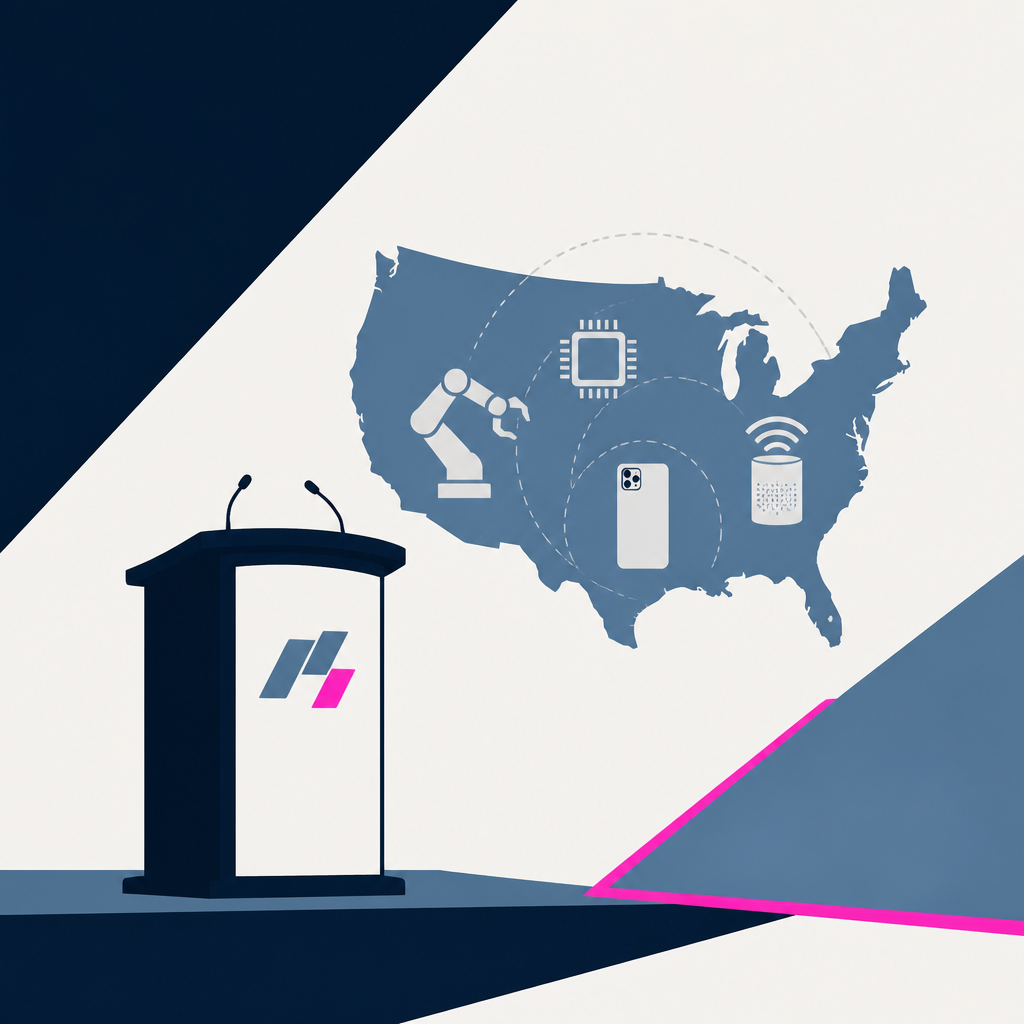
The Consumer Technology Association crunched numbers to assess the practicality of Donald Trump’s “Genesis Mission” goal of 100% US-made technology components. It estimates the reshoring shift would require businesses and consumers to pay costs tied to the December executive-order plan. As a result, the CTA adds a quantified critique that the self-sustaining, no-reliance-on-neighbors-or-allies supply-chain approach is not grounded in reality.
ICANN is accepting new top-level domain applications and reported receiving 1,615 submissions from 481 applicants. Ten companies applied for the .agent domain and seven applied for .agi. The result is that AI-related domain suffixes like .agent and .agi could become available if approved.
An Arizona appellate court upheld a manslaughter conviction but ordered resentencing after ruling that an AI-generated victim video carried “undue emotional weight.” The ruling was tied to a maximum sentence of 10.5 years issued at the original sentencing in a 2021 road rage case. The judge must reconsider the prison term length without relying on the AI video’s impact statement as previously used.
Meta and Sierra released the Personal Agent Protocol (PAP) to define how personal AI agents authenticate and act across merchants’ services. Version 0.1 is scheduled later this month. As a result, participating businesses can set access to public data, read-only account details, or write actions like returns, with payments and push notifications deferred to later extensions.
The Algorithmic Bridge·1 week ago·
15
● 19 sources
OpenAI staff and the wider AI research community are being discussed as publishing a large set of mathematical results that the author compares to a magic show, while arguing this shifts humans from makers to spectators. The document contains over 700 math solutions in varying verification stages. The author concludes this changes humanity’s relationship to mathematics—humans may no longer be able to understand or meaningfully use the discoveries, even if the results remain technically verified.
Planned new grid-connected gas power in the U.S. has nearly tripled as data-center electricity demand from artificial intelligence grows, while planned wind additions decline. Planned gas capacity through 2030 rose to 60.4 gigawatts, up from 20.4 gigawatts in early 2023. As a result, more states are shifting toward gas projects (with Texas and four others accounting for about 60% of the total planned capacity) and more communities are pushing back, including delays and cancellations of data centers.
Common Sense Media said OpenAI’s ChatGPT for Teens poses an “unacceptable risk” for youth safety. It said the product was introduced in August and found it does not send parent alerts when it should. Common Sense Media’s critique urges stricter teen protections and highlights gaps in crisis handling and homework help.
OpenAI is in talks with UAE funds and BlackRock to anchor a private fundraising round of at least $30 billion. The round would reportedly use a fixed $1.4 trillion pre-money valuation despite no lead investor being selected. If completed, it would set OpenAI’s valuation at about $1.43 trillion post-money and follow its earlier $122 billion raise in March.
Meta Platforms and Sierra Technologies, along with Walmart and Stripe, are developing the Personal Agent Protocol to standardize how autonomous AI agents transact with businesses online. The protocol was introduced by Sierra co-founder Bret Taylor on the day after six major banks called for comprehensive standards and protections in a paper. This creates open “rails” for agent authentication and visibility, aiming to reduce privacy, safety, and fraud concerns while making agent-based commerce easier to trust and adopt.
The article argues that AI leaders at The Curve are increasingly discussing whether to impose a hard cap on how intelligent large language models can become, tied to concerns about recursive self-improvement and faster releases. One concrete detail is that the former view presented at the conference suggests a potential catastrophe could occur as soon as next year. As a result, the discussion shifts toward possible enforcement and safety limits—such as speed limits, compute limits, and collaboration on evaluations—while noting that existing governance tools may not yet be sufficient.
Every AI story that matters,
in your inbox by 8am.
TLDRocket reads all relevant sources, removes duplicate coverage, and summarises the
day in two minutes. Follow companies and topics for alerts, or get the
briefing in Slack. Free, no spam, unsubscribe anytime.
Reading TLDRocket needs no cookies, and the readership counts we rely on come from
our own cookieless analytics. Google Analytics is the exception: it sets cookies and
reports to Google, so it stays switched off until you allow it. You can change your
mind any time from “Cookie settings” in the footer.
Strictly necessary
Session security and form protection (tldrocket-session,
XSRF-TOKEN, 2 hours). The site cannot work without them,
so they need no consent.
Always on
Google Analytics 4 (_ga,
_ga_<id>, up to 2 years). Measures which
stories and sections readers use. Google acts as a third-party processor and may
store the data outside the EU. No advertising, no profiling, no data sold.