
ChinaTalk
·
6 days ago
China's "Eastern Data, Western Compute" policy, intended to shift data center infrastructure westward, has largely failed to materialize as promoted, with 94% of China's population and most computing capacity remaining in eastern and exurban regions rather than remote western provinces. Analysis of actual chip distribution shows the top data center locations are concentrated in Hebei, Guangdong, Jiangsu, and Guizhou, with the real pattern being expansion into exurbs around major eastern cities rather than genuine westward movement, driven by practical constraints including labor shortages, latency issues, and semiconductor supply constraints. Poorer western provinces may face mounting debt from speculative data center projects built on unrealistic development assumptions, while the policy's original promise to help interior regions become meaningful AI economy participants remains unfulfilled.

TLDR
·
6 days ago
Data access, rather than compute or talent, has emerged as the primary competitive moat differentiating AI model companies like Anthropic and OpenAI from larger tech incumbents. According to OpenAI engineer Will DePue, data spending across vendors is currently around $7 billion annually and could reach $70 billion by 2030 as public internet data becomes exhausted. The structural advantage in AI development will increasingly shift toward companies controlling proprietary datasets and the licensing deals to access them, rather than those simply owning computational infrastructure.
The Neuron
·
6 days ago
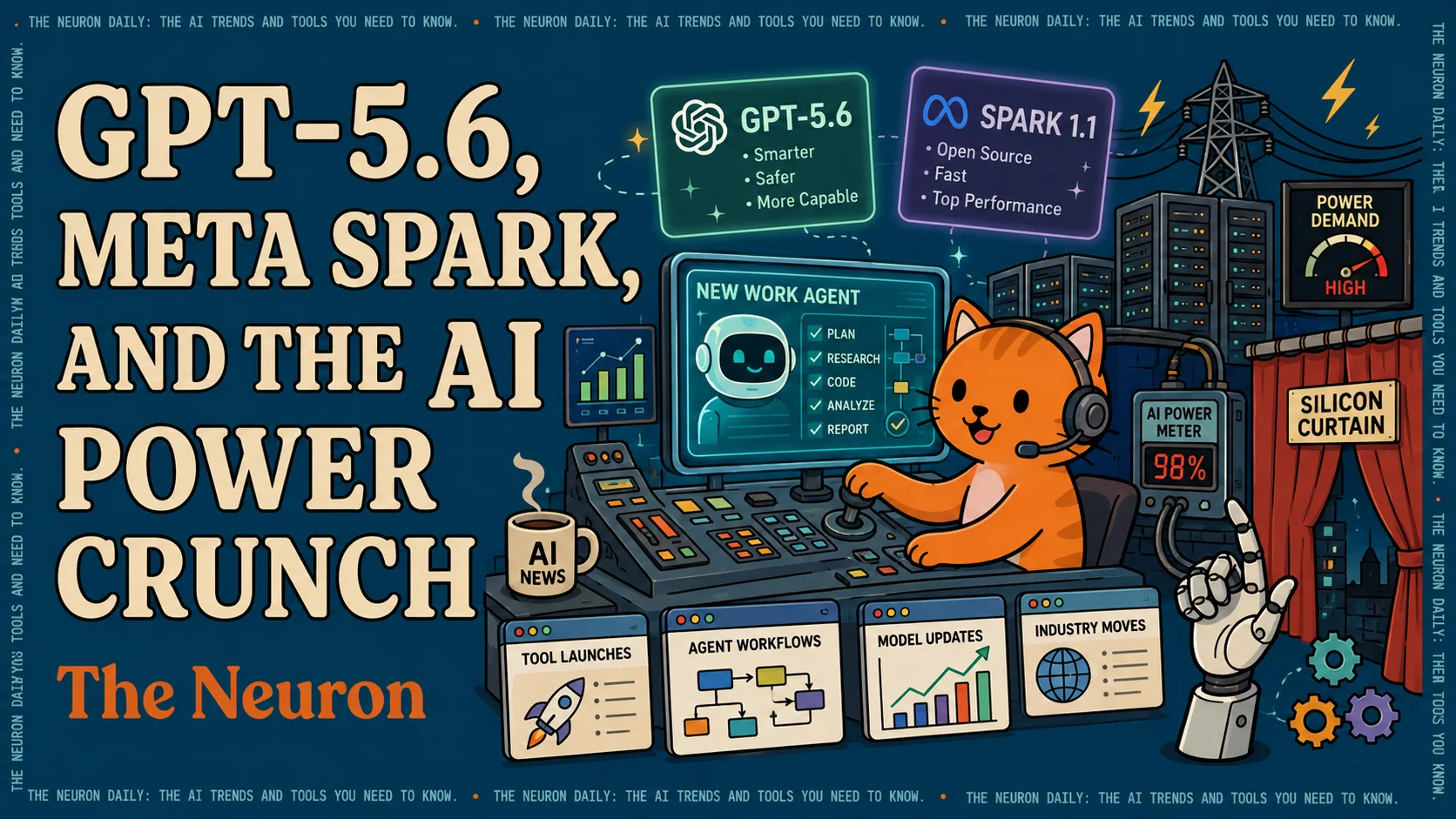
Meta released Muse Spark 1.1 through its public Model API with 1M-token context, tool use, and computer capabilities positioned as a direct challenge to OpenAI and Anthropic in coding agents. The model offers lower pricing than many competing frontier models while supporting multimodal reasoning and improved coding performance. Meta now competes directly for workflow automation, pushing other companies to defend their pricing and model positioning in the coding-agent market.
