
Yugabyte targets the missing memory and knowledge layer for enterprise AI agents
SiliconANGLE Paul Nashawaty
Yugabyte launched Meko, a data layer giving AI agents persistent memory and shared knowledge. Right now most agents forget everything between tasks, which kills teamwork at scale.
Based on reporting by SiliconANGLE, Paul Nashawaty — read the original for the full story.
Summary, retelling and take written by AI under human oversight; images are AI-generated illustrations. How we work · Report an error
Most enterprise AI agents today are basically goldfish. They can summarize a document or write some code, sure, but ask them to build on what a different agent figured out yesterday and they draw a blank. Yugabyte co-founder and CEO Karthik Ranganathan thinks that's the real bottleneck holding back agentic AI right now — not the models, not the orchestration, but the plumbing underneath both of them.
His company just launched Meko, a data infrastructure platform meant to give multi-agent systems something they've never really had: durable memory, shared context and a paper trail explaining how they got from question to answer. Ranganathan's framing is blunt. Agents currently hand each other outputs without any of the reasoning behind them, like a coworker who only tells you the final number and never the spreadsheet. Multiply that across a company running dozens of agents and you get wasted compute, redundant work, and nobody able to explain why an automated decision happened the way it did.
Yugabyte's answer sits on top of its existing distributed SQL database, which already juggles relational, vector, graph and NoSQL data. Meko adds a layer that organizes how agents store and retrieve memory, promoting useful bits from throwaway conversation context into something Ranganathan calls collective knowledge, shareable across teams via the Model Context Protocol. Crucially, it keeps lineage: which conversation, which agent, which chain of reasoning produced a given piece of knowledge. That matters because agents are nondeterministic — they get corrected, constrained, nudged — and those corrections often contain the exact institutional knowledge that otherwise evaporates the second the chat window closes.
There's also a compliance angle nobody should ignore. As agents creep into regulated workflows, logging what happened stops being enough; companies will need to show why it happened, using what data, and whether that data was even accurate. Meko is pitched to capture that trail down to query-level detail and timing, which is a much heavier lift than a typical audit log.
Yugabyte backs the pitch with numbers from its own economic study: a modeled $15.62 million net benefit over three years for enterprises running mission-critical workloads on distributed PostgreSQL, plus a claimed 55% cut in downtime-related revenue exposure. Whether those figures hold up outside a vendor-commissioned study is a fair question, but the underlying point stands on its own — agent sprawl multiplies data volume fast, and a shaky data layer erases whatever productivity gains the agents were supposed to deliver in the first place.
My take — AI-written commentary, not fact-checked reporting
This is a vendor pitch dressed up as an infrastructure thesis, but the thesis happens to be right: everyone's obsessing over which model is smartest while the actual failure mode in production is agents that can't remember what happened five minutes ago. Expect every database company to scramble toward this exact story within a year, and expect most of the audit-trail promises to be thinner in practice than in the press release.
Read more about this at: SiliconANGLE
Related stories
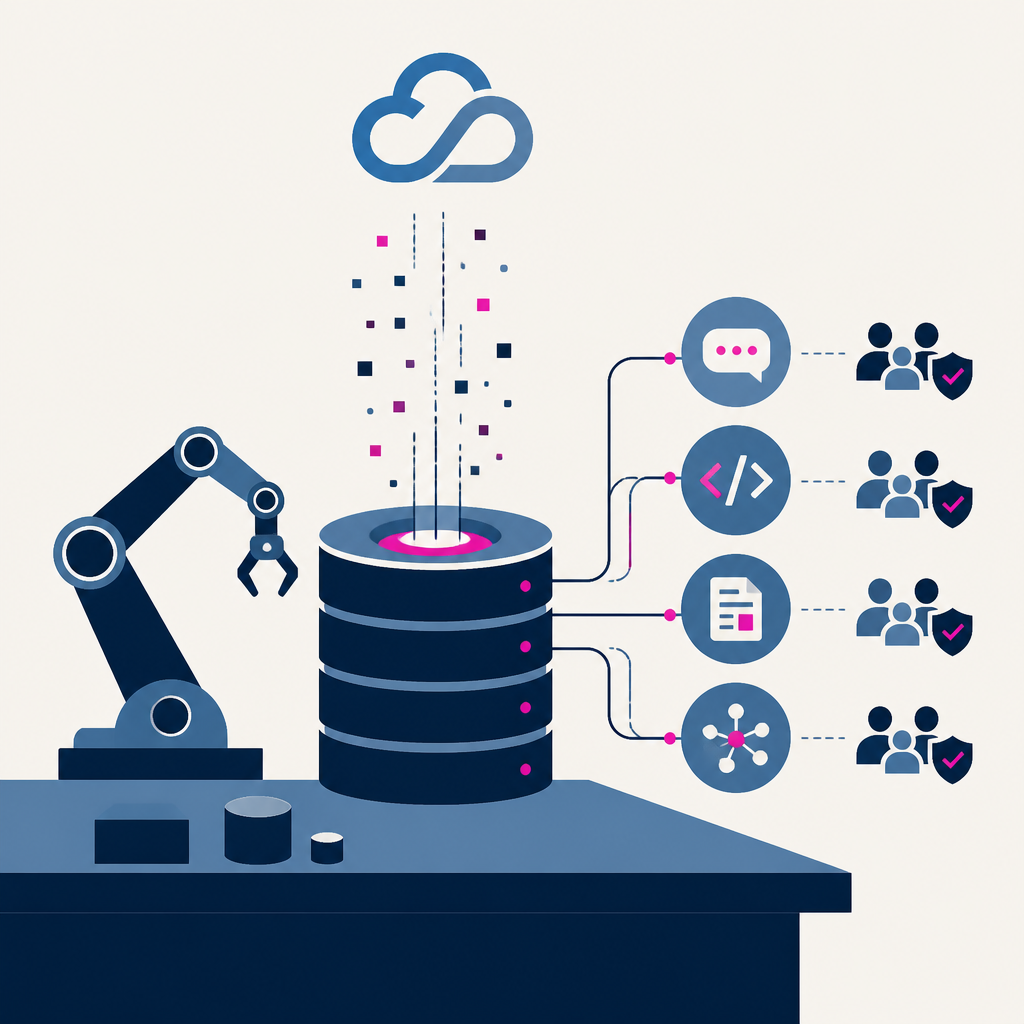 Tencent Cloud Open-Sources TencentDB Agent Memory v2.0: A Team-Level Memory Hub for AI Coding Agents
MarkTechPost · 1 month ago ·
23
Tencent Cloud Open-Sources TencentDB Agent Memory v2.0: A Team-Level Memory Hub for AI Coding Agents
MarkTechPost · 1 month ago ·
23
 Google Cloud’s Always-On Memory Agent Replaces RAG and Embeddings With Continuous LLM Consolidation on Gemini 3.1 Flash-Lite
MarkTechPost · 2 months ago ·
21
Google Cloud’s Always-On Memory Agent Replaces RAG and Embeddings With Continuous LLM Consolidation on Gemini 3.1 Flash-Lite
MarkTechPost · 2 months ago ·
21