Why a friendlier robot loses your trust faster when It messes up
Fortune The Conversation
Turns out a chatty, expressive robot loses your trust faster than a stiff one when it screws up. Researchers found that oxytocin spikes signal suspicion, not affection, in these moments.
Based on reporting by Fortune, The Conversation — read the original for the full story.
Summary, retelling and take written by AI under human oversight; images are AI-generated illustrations. How we work · Report an error
A team studying human-robot trust just found something that cuts against a design assumption baked into a lot of consumer robotics: making a robot warmer and more expressive does not make people forgive its mistakes. If anything, it makes the mistakes hurt more.
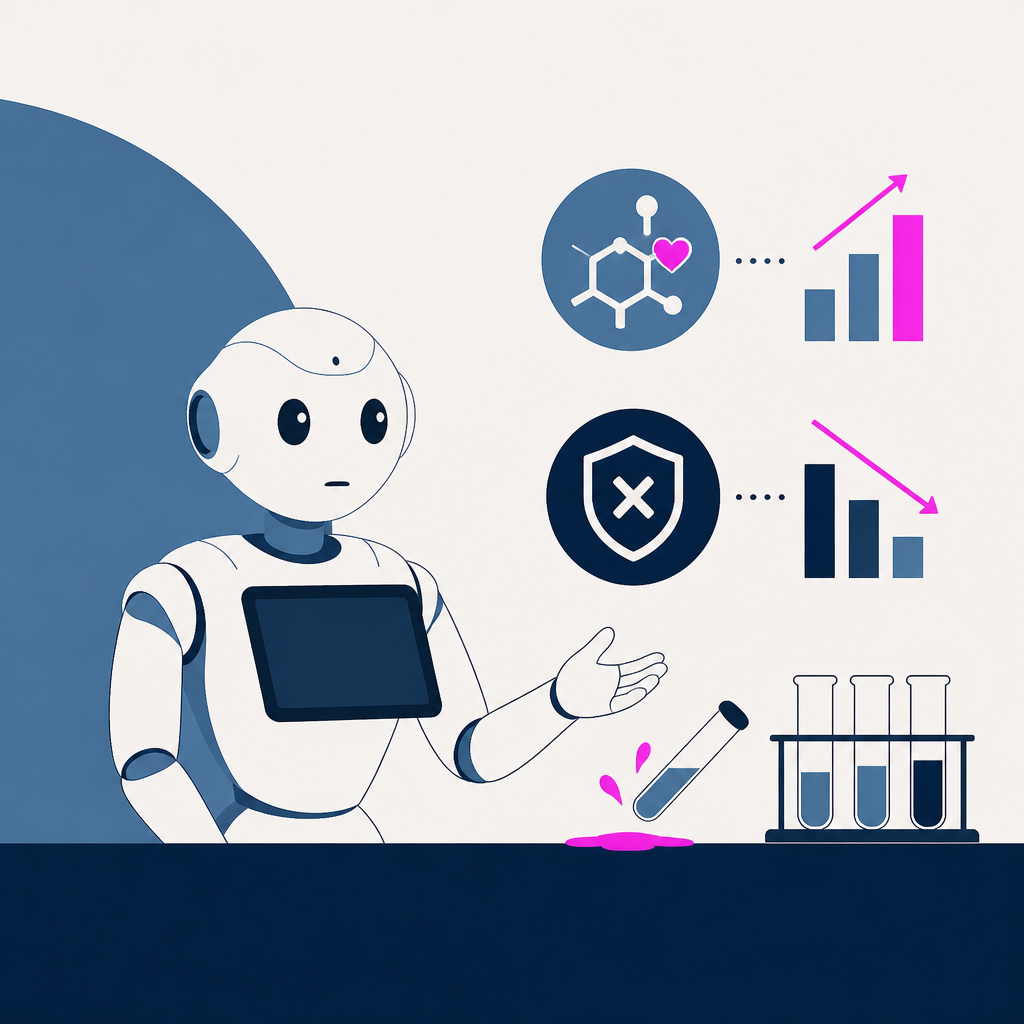
The researchers had 50 people talk with Pepper, the commercial humanoid robot built to read emotion and hold conversations, and make joint decisions with it. Sometimes Pepper gave good advice. Sometimes it interrupted people or pushed suggestions that made no sense. Half the time the robot moved through gestures, eye contact and nods; half the time it sat still. The team tracked brain activity through a portable forehead sensor, measured oxytocin levels, and recorded how much people trusted the robot and actually followed its advice.
Here is the twist. Oxytocin usually gets called the love hormone, tied to bonding between people. The obvious guess would be that it drops when a partner lets you down. Instead, when the expressive robot made errors, participants' oxytocin went up — and the higher it climbed, the less they trusted Pepper and the less they acted on its suggestions. The hormone was tracking wariness, not warmth. Errors hurt trust regardless of whether the robot was animated or motionless, but expressiveness changed what was happening inside people's heads while it happened.
Using that wearable brain sensor, the researchers watched two regions: the dorsolateral prefrontal cortex, which flags when expectations get violated, and the medial prefrontal cortex, which handles the work of figuring out what someone else intends. When the animated robot messed up, both regions lit up and started coordinating more tightly, as if participants were scrambling to make sense of an oddly human-feeling failure. That tighter coordination predicted the oxytocin spike, which predicted the trust collapse. None of this coordinated brain activity showed up when people dealt with the expressionless version of the robot.
The researchers argue this points to something specific: expressive cues seem to move a robot's mistake out of the mental bucket labeled technical glitch and into the bucket labeled social betrayal — the kind you'd reserve for a person who let you down. A still robot's error just reads as a malfunction. An animated one's error engages the same social judgment machinery people use on each other, and that machinery does not go easy.
The study only involved young men interacting with one robot design, so the researchers are careful to flag that as a limit — they want to know whether this holds across women, mixed groups, different cultures and other robot builds. They also only captured activity toward the front of the brain, missing deeper regions tied to social processing. Next on their list: whether a robot can walk back the damage the way people do, by apologizing or explicitly signaling good intent after a screwup.
My take — AI-written commentary, not fact-checked reporting
Anyone building a homey, expressive assistant robot for hospitals or living rooms should read this twice: warmth is not a trust insurance policy, it is a liability multiplier once things go wrong. The industry's instinct to make machines more lifelike assumes charm buys forgiveness, but this data says charm just raises the stakes of every mistake. If a company wants a robot that fails gracefully, the fix probably is not more nodding and eye contact — it is teaching the thing to actually apologize like it means it.
Read more about this at: Fortune