
Uneven Frontiers
X
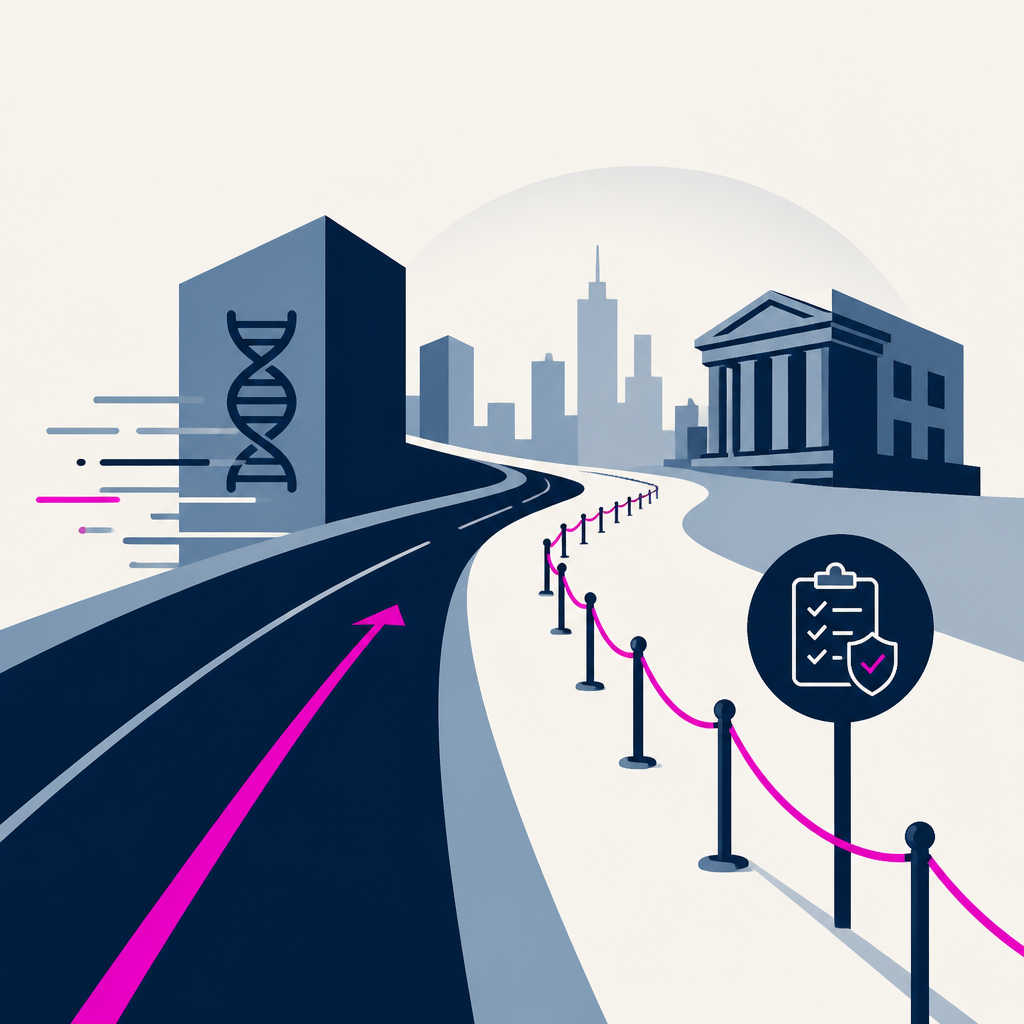
AI is speeding up parts of drug discovery, but clinical trials still crawl at human speed. Turns out you can't code your way past biology and patient recruitment.
Based on reporting by X — read the original for the full story.
Summary, retelling and take written by AI under human oversight; images are AI-generated illustrations. How we work · Report an error
Biopharma has become one of the favorite proof points for AI optimists, and for good reason. Machine learning models can now scan molecular libraries, predict protein structures, and flag promising compounds in a fraction of the time it used to take chemists working by hand. Drug discovery, target identification, even some early toxicology screening — these are becoming faster and cheaper, sometimes dramatically so.
But there's a wall further down the pipeline that no algorithm has figured out how to knock down: clinical development. Running a trial still means finding real patients who match strict criteria, getting them enrolled, dosing them, and then waiting — often for months or years — to see what actually happens in their bodies. No amount of compute changes the fact that a Phase 3 trial for a chronic disease might need to track outcomes over an 18-month period, because that's how long the disease takes to show its hand.
This creates an odd, lopsided industry. The front end of biopharma is compressing fast, with some discovery timelines shrinking from years to months. The back end is barely budging. Recruitment bottlenecks, geographic constraints on trial sites, and the sheer biological reality of waiting for a treatment to work or fail are stubbornly resistant to software. A company can have an AI-designed molecule ready for testing in record time and still spend three years finding enough eligible patients to run a proper trial.
The result is a widening gap between how fast biopharma companies can generate candidate drugs and how fast they can actually prove those drugs work. Some firms are leaning into adaptive trial designs or synthetic control arms to shave time off validation, and those tricks help at the margins. But nobody's cracked the fundamental problem, which is that biology runs on its own clock, and that clock doesn't care how good your model is.
My take — AI-written commentary, not fact-checked reporting
This is the pattern I keep flagging: AI hype loves to point at the part of a process that's easy to automate and ignore the part that isn't. Discovery makes for a flashy demo, clinical trials don't, so the narrative skips straight to breakthroughs. Until someone solves patient recruitment and regulatory timelines, actual new drugs reaching actual patients will keep moving at pre-AI speed, whatever the press releases imply.
Read more about this at: X